mirror of
https://github.com/qmk/qmk_firmware.git
synced 2025-09-10 17:15:43 +00:00
Compare commits
1 Commits
0.6.418
...
breakpoint
| Author | SHA1 | Date | |
|---|---|---|---|

|
98eac56218 |
@@ -16,18 +16,12 @@ insert_final_newline = true
|
||||
trim_trailing_whitespace = false
|
||||
indent_size = 4
|
||||
|
||||
[{qmk,*.py}]
|
||||
charset = utf-8
|
||||
max_line_length = 200
|
||||
|
||||
# Make these match what we have in .gitattributes
|
||||
[*.mk]
|
||||
end_of_line = lf
|
||||
indent_style = tab
|
||||
|
||||
[Makefile]
|
||||
end_of_line = lf
|
||||
indent_style = tab
|
||||
|
||||
[*.sh]
|
||||
end_of_line = lf
|
||||
|
||||
3
.gitignore
vendored
3
.gitignore
vendored
@@ -70,6 +70,3 @@ util/Win_Check_Output.txt
|
||||
secrets.tar
|
||||
id_rsa_*
|
||||
/.vs
|
||||
|
||||
# python things
|
||||
__pycache__
|
||||
|
||||
@@ -13,6 +13,8 @@ env:
|
||||
- MAKEFLAGS="-j3 --output-sync"
|
||||
services:
|
||||
- docker
|
||||
before_install:
|
||||
- docker build -t qmkfm/qmk_firmware .
|
||||
install:
|
||||
- npm install -g moxygen
|
||||
script:
|
||||
|
||||
24
Dockerfile
24
Dockerfile
@@ -1,4 +1,26 @@
|
||||
FROM qmkfm/base_container
|
||||
FROM debian:9
|
||||
|
||||
RUN apt-get update && apt-get install --no-install-recommends -y \
|
||||
avr-libc \
|
||||
avrdude \
|
||||
binutils-arm-none-eabi \
|
||||
binutils-avr \
|
||||
build-essential \
|
||||
dfu-programmer \
|
||||
dfu-util \
|
||||
gcc \
|
||||
gcc-avr \
|
||||
git \
|
||||
libnewlib-arm-none-eabi \
|
||||
software-properties-common \
|
||||
unzip \
|
||||
wget \
|
||||
zip \
|
||||
&& rm -rf /var/lib/apt/lists/*
|
||||
|
||||
# upgrade gcc-arm-none-eabi from the default 5.4.1 to 6.3.1 due to ARM runtime issues
|
||||
RUN wget -q https://developer.arm.com/-/media/Files/downloads/gnu-rm/6-2017q2/gcc-arm-none-eabi-6-2017-q2-update-linux.tar.bz2 -O - | \
|
||||
tar xj --strip-components=1 -C /
|
||||
|
||||
VOLUME /qmk_firmware
|
||||
WORKDIR /qmk_firmware
|
||||
|
||||
97
bin/qmk
97
bin/qmk
@@ -1,97 +0,0 @@
|
||||
#!/usr/bin/env python3
|
||||
"""CLI wrapper for running QMK commands.
|
||||
"""
|
||||
import os
|
||||
import subprocess
|
||||
import sys
|
||||
from glob import glob
|
||||
from time import strftime
|
||||
from importlib import import_module
|
||||
from importlib.util import find_spec
|
||||
|
||||
# Add the QMK python libs to our path
|
||||
script_dir = os.path.dirname(os.path.realpath(__file__))
|
||||
qmk_dir = os.path.abspath(os.path.join(script_dir, '..'))
|
||||
python_lib_dir = os.path.abspath(os.path.join(qmk_dir, 'lib', 'python'))
|
||||
sys.path.append(python_lib_dir)
|
||||
|
||||
# Change to the root of our checkout
|
||||
os.environ['ORIG_CWD'] = os.getcwd()
|
||||
os.chdir(qmk_dir)
|
||||
|
||||
# Make sure our modules have been setup
|
||||
with open('requirements.txt', 'r') as fd:
|
||||
for line in fd.readlines():
|
||||
line = line.strip().replace('<', '=').replace('>', '=')
|
||||
|
||||
if line[0] == '#':
|
||||
continue
|
||||
|
||||
if '#' in line:
|
||||
line = line.split('#')[0]
|
||||
|
||||
module = line.split('=')[0] if '=' in line else line
|
||||
if not find_spec(module):
|
||||
print('Your QMK build environment is not fully setup!\n')
|
||||
print('Please run `./util/qmk_install.sh` to setup QMK.')
|
||||
exit(255)
|
||||
|
||||
# Figure out our version
|
||||
command = ['git', 'describe', '--abbrev=6', '--dirty', '--always', '--tags']
|
||||
result = subprocess.run(command, text=True, capture_output=True)
|
||||
|
||||
if result.returncode == 0:
|
||||
os.environ['QMK_VERSION'] = 'QMK ' + result.stdout.strip()
|
||||
else:
|
||||
os.environ['QMK_VERSION'] = 'QMK ' + strftime('%Y-%m-%d-%H:%M:%S')
|
||||
|
||||
# Setup the CLI
|
||||
import milc
|
||||
milc.EMOJI_LOGLEVELS['INFO'] = '{fg_blue}ψ{style_reset_all}'
|
||||
|
||||
# If we were invoked as `qmk <cmd>` massage sys.argv into `qmk-<cmd>`.
|
||||
# This means we can't accept arguments to the qmk script itself.
|
||||
script_name = os.path.basename(sys.argv[0])
|
||||
if script_name == 'qmk':
|
||||
if len(sys.argv) == 1:
|
||||
milc.cli.log.error('No subcommand specified!\n')
|
||||
|
||||
if len(sys.argv) == 1 or sys.argv[1] in ['-h', '--help']:
|
||||
milc.cli.echo('usage: qmk <subcommand> [...]')
|
||||
milc.cli.echo('\nsubcommands:')
|
||||
subcommands = glob(os.path.join(qmk_dir, 'bin', 'qmk-*'))
|
||||
for subcommand in sorted(subcommands):
|
||||
subcommand = os.path.basename(subcommand).split('-', 1)[1]
|
||||
milc.cli.echo('\t%s', subcommand)
|
||||
milc.cli.echo('\nqmk <subcommand> --help for more information')
|
||||
exit(1)
|
||||
|
||||
if sys.argv[1] in ['-V', '--version']:
|
||||
milc.cli.echo(os.environ['QMK_VERSION'])
|
||||
exit(0)
|
||||
|
||||
sys.argv[0] = script_name = '-'.join((script_name, sys.argv[1]))
|
||||
del sys.argv[1]
|
||||
|
||||
# Look for which module to import
|
||||
if script_name == 'qmk':
|
||||
milc.cli.print_help()
|
||||
exit(0)
|
||||
elif not script_name.startswith('qmk-'):
|
||||
milc.cli.log.error('Invalid symlink, must start with "qmk-": %s', script_name)
|
||||
else:
|
||||
subcommand = script_name.replace('-', '.').replace('_', '.').split('.')
|
||||
subcommand.insert(1, 'cli')
|
||||
subcommand = '.'.join(subcommand)
|
||||
|
||||
try:
|
||||
import_module(subcommand)
|
||||
except ModuleNotFoundError as e:
|
||||
if e.__class__.__name__ != subcommand:
|
||||
raise
|
||||
|
||||
milc.cli.log.error('Invalid subcommand! Could not import %s.', subcommand)
|
||||
exit(1)
|
||||
|
||||
if __name__ == '__main__':
|
||||
milc.cli()
|
||||
@@ -1 +0,0 @@
|
||||
qmk
|
||||
@@ -1 +0,0 @@
|
||||
qmk
|
||||
@@ -1 +0,0 @@
|
||||
qmk
|
||||
@@ -1 +0,0 @@
|
||||
qmk
|
||||
@@ -1,27 +0,0 @@
|
||||
# Look for a json keymap file
|
||||
ifneq ("$(wildcard $(MAIN_KEYMAP_PATH_5)/keymap.json)","")
|
||||
KEYMAP_C := $(KEYBOARD_OUTPUT)/src/keymap.c
|
||||
KEYMAP_JSON := $(MAIN_KEYMAP_PATH_5)/keymap.json
|
||||
KEYMAP_PATH := $(MAIN_KEYMAP_PATH_5)
|
||||
else ifneq ("$(wildcard $(MAIN_KEYMAP_PATH_4)/keymap.json)","")
|
||||
KEYMAP_C := $(KEYBOARD_OUTPUT)/src/keymap.c
|
||||
KEYMAP_JSON := $(MAIN_KEYMAP_PATH_4)/keymap.json
|
||||
KEYMAP_PATH := $(MAIN_KEYMAP_PATH_4)
|
||||
else ifneq ("$(wildcard $(MAIN_KEYMAP_PATH_3)/keymap.json)","")
|
||||
KEYMAP_C := $(KEYBOARD_OUTPUT)/src/keymap.c
|
||||
KEYMAP_JSON := $(MAIN_KEYMAP_PATH_3)/keymap.json
|
||||
KEYMAP_PATH := $(MAIN_KEYMAP_PATH_3)
|
||||
else ifneq ("$(wildcard $(MAIN_KEYMAP_PATH_2)/keymap.json)","")
|
||||
KEYMAP_C := $(KEYBOARD_OUTPUT)/src/keymap.c
|
||||
KEYMAP_JSON := $(MAIN_KEYMAP_PATH_2)/keymap.json
|
||||
KEYMAP_PATH := $(MAIN_KEYMAP_PATH_2)
|
||||
else ifneq ("$(wildcard $(MAIN_KEYMAP_PATH_1)/keymap.json)","")
|
||||
KEYMAP_C := $(KEYBOARD_OUTPUT)/src/keymap.c
|
||||
KEYMAP_JSON := $(MAIN_KEYMAP_PATH_1)/keymap.json
|
||||
KEYMAP_PATH := $(MAIN_KEYMAP_PATH_1)
|
||||
endif
|
||||
|
||||
# Generate the keymap.c
|
||||
ifneq ("$(KEYMAP_JSON)","")
|
||||
_ = $(shell test -e $(KEYMAP_C) || bin/qmk-json-keymap $(KEYMAP_JSON) -o $(KEYMAP_C))
|
||||
endif
|
||||
@@ -98,38 +98,31 @@ MAIN_KEYMAP_PATH_3 := $(KEYBOARD_PATH_3)/keymaps/$(KEYMAP)
|
||||
MAIN_KEYMAP_PATH_4 := $(KEYBOARD_PATH_4)/keymaps/$(KEYMAP)
|
||||
MAIN_KEYMAP_PATH_5 := $(KEYBOARD_PATH_5)/keymaps/$(KEYMAP)
|
||||
|
||||
# Check for keymap.json first, so we can regenerate keymap.c
|
||||
include build_json.mk
|
||||
|
||||
ifeq ("$(wildcard $(KEYMAP_PATH))", "")
|
||||
# Look through the possible keymap folders until we find a matching keymap.c
|
||||
ifneq ("$(wildcard $(MAIN_KEYMAP_PATH_5)/keymap.c)","")
|
||||
-include $(MAIN_KEYMAP_PATH_5)/rules.mk
|
||||
KEYMAP_C := $(MAIN_KEYMAP_PATH_5)/keymap.c
|
||||
KEYMAP_PATH := $(MAIN_KEYMAP_PATH_5)
|
||||
else ifneq ("$(wildcard $(MAIN_KEYMAP_PATH_4)/keymap.c)","")
|
||||
-include $(MAIN_KEYMAP_PATH_4)/rules.mk
|
||||
KEYMAP_C := $(MAIN_KEYMAP_PATH_4)/keymap.c
|
||||
KEYMAP_PATH := $(MAIN_KEYMAP_PATH_4)
|
||||
else ifneq ("$(wildcard $(MAIN_KEYMAP_PATH_3)/keymap.c)","")
|
||||
-include $(MAIN_KEYMAP_PATH_3)/rules.mk
|
||||
KEYMAP_C := $(MAIN_KEYMAP_PATH_3)/keymap.c
|
||||
KEYMAP_PATH := $(MAIN_KEYMAP_PATH_3)
|
||||
else ifneq ("$(wildcard $(MAIN_KEYMAP_PATH_2)/keymap.c)","")
|
||||
-include $(MAIN_KEYMAP_PATH_2)/rules.mk
|
||||
KEYMAP_C := $(MAIN_KEYMAP_PATH_2)/keymap.c
|
||||
KEYMAP_PATH := $(MAIN_KEYMAP_PATH_2)
|
||||
else ifneq ("$(wildcard $(MAIN_KEYMAP_PATH_1)/keymap.c)","")
|
||||
-include $(MAIN_KEYMAP_PATH_1)/rules.mk
|
||||
KEYMAP_C := $(MAIN_KEYMAP_PATH_1)/keymap.c
|
||||
KEYMAP_PATH := $(MAIN_KEYMAP_PATH_1)
|
||||
else ifneq ($(LAYOUTS),)
|
||||
# If we haven't found a keymap yet fall back to community layouts
|
||||
include build_layout.mk
|
||||
else
|
||||
$(error Could not find keymap)
|
||||
# this state should never be reached
|
||||
endif
|
||||
ifneq ("$(wildcard $(MAIN_KEYMAP_PATH_5)/keymap.c)","")
|
||||
-include $(MAIN_KEYMAP_PATH_5)/rules.mk
|
||||
KEYMAP_C := $(MAIN_KEYMAP_PATH_5)/keymap.c
|
||||
KEYMAP_PATH := $(MAIN_KEYMAP_PATH_5)
|
||||
else ifneq ("$(wildcard $(MAIN_KEYMAP_PATH_4)/keymap.c)","")
|
||||
-include $(MAIN_KEYMAP_PATH_4)/rules.mk
|
||||
KEYMAP_C := $(MAIN_KEYMAP_PATH_4)/keymap.c
|
||||
KEYMAP_PATH := $(MAIN_KEYMAP_PATH_4)
|
||||
else ifneq ("$(wildcard $(MAIN_KEYMAP_PATH_3)/keymap.c)","")
|
||||
-include $(MAIN_KEYMAP_PATH_3)/rules.mk
|
||||
KEYMAP_C := $(MAIN_KEYMAP_PATH_3)/keymap.c
|
||||
KEYMAP_PATH := $(MAIN_KEYMAP_PATH_3)
|
||||
else ifneq ("$(wildcard $(MAIN_KEYMAP_PATH_2)/keymap.c)","")
|
||||
-include $(MAIN_KEYMAP_PATH_2)/rules.mk
|
||||
KEYMAP_C := $(MAIN_KEYMAP_PATH_2)/keymap.c
|
||||
KEYMAP_PATH := $(MAIN_KEYMAP_PATH_2)
|
||||
else ifneq ("$(wildcard $(MAIN_KEYMAP_PATH_1)/keymap.c)","")
|
||||
-include $(MAIN_KEYMAP_PATH_1)/rules.mk
|
||||
KEYMAP_C := $(MAIN_KEYMAP_PATH_1)/keymap.c
|
||||
KEYMAP_PATH := $(MAIN_KEYMAP_PATH_1)
|
||||
else ifneq ($(LAYOUTS),)
|
||||
include build_layout.mk
|
||||
else
|
||||
$(error Could not find keymap)
|
||||
# this state should never be reached
|
||||
endif
|
||||
|
||||
ifeq ($(strip $(CTPC)), yes)
|
||||
@@ -320,6 +313,7 @@ ifneq ("$(wildcard $(USER_PATH)/config.h)","")
|
||||
CONFIG_H += $(USER_PATH)/config.h
|
||||
endif
|
||||
|
||||
|
||||
# Object files directory
|
||||
# To put object files in current directory, use a dot (.), do NOT make
|
||||
# this an empty or blank macro!
|
||||
@@ -329,7 +323,7 @@ ifneq ("$(wildcard $(KEYMAP_PATH)/config.h)","")
|
||||
CONFIG_H += $(KEYMAP_PATH)/config.h
|
||||
endif
|
||||
|
||||
# project specific files
|
||||
# # project specific files
|
||||
SRC += $(KEYBOARD_SRC) \
|
||||
$(KEYMAP_C) \
|
||||
$(QUANTUM_SRC)
|
||||
|
||||
@@ -133,7 +133,7 @@ ifeq ($(strip $(LED_MATRIX_ENABLE)), IS31FL3731)
|
||||
OPT_DEFS += -DIS31FL3731
|
||||
COMMON_VPATH += $(DRIVER_PATH)/issi
|
||||
SRC += is31fl3731-simple.c
|
||||
QUANTUM_LIB_SRC += i2c_master.c
|
||||
SRC += i2c_master.c
|
||||
endif
|
||||
|
||||
RGB_MATRIX_ENABLE ?= no
|
||||
@@ -157,21 +157,21 @@ ifeq ($(strip $(RGB_MATRIX_ENABLE)), IS31FL3731)
|
||||
OPT_DEFS += -DIS31FL3731 -DSTM32_I2C -DHAL_USE_I2C=TRUE
|
||||
COMMON_VPATH += $(DRIVER_PATH)/issi
|
||||
SRC += is31fl3731.c
|
||||
QUANTUM_LIB_SRC += i2c_master.c
|
||||
SRC += i2c_master.c
|
||||
endif
|
||||
|
||||
ifeq ($(strip $(RGB_MATRIX_ENABLE)), IS31FL3733)
|
||||
OPT_DEFS += -DIS31FL3733 -DSTM32_I2C -DHAL_USE_I2C=TRUE
|
||||
COMMON_VPATH += $(DRIVER_PATH)/issi
|
||||
SRC += is31fl3733.c
|
||||
QUANTUM_LIB_SRC += i2c_master.c
|
||||
SRC += i2c_master.c
|
||||
endif
|
||||
|
||||
ifeq ($(strip $(RGB_MATRIX_ENABLE)), IS31FL3737)
|
||||
OPT_DEFS += -DIS31FL3737 -DSTM32_I2C -DHAL_USE_I2C=TRUE
|
||||
COMMON_VPATH += $(DRIVER_PATH)/issi
|
||||
SRC += is31fl3737.c
|
||||
QUANTUM_LIB_SRC += i2c_master.c
|
||||
SRC += i2c_master.c
|
||||
endif
|
||||
|
||||
ifeq ($(strip $(RGB_MATRIX_ENABLE)), WS2812)
|
||||
@@ -271,7 +271,7 @@ ifeq ($(strip $(HAPTIC_ENABLE)), DRV2605L)
|
||||
COMMON_VPATH += $(DRIVER_PATH)/haptic
|
||||
SRC += haptic.c
|
||||
SRC += DRV2605L.c
|
||||
QUANTUM_LIB_SRC += i2c_master.c
|
||||
SRC += i2c_master.c
|
||||
OPT_DEFS += -DHAPTIC_ENABLE
|
||||
OPT_DEFS += -DDRV2605L
|
||||
endif
|
||||
|
||||
@@ -8,7 +8,6 @@
|
||||
|
||||
* [QMK Basics](README.md)
|
||||
* [QMK Introduction](getting_started_introduction.md)
|
||||
* [QMK CLI](cli.md)
|
||||
* [Contributing to QMK](contributing.md)
|
||||
* [How to Use Github](getting_started_github.md)
|
||||
* [Getting Help](getting_started_getting_help.md)
|
||||
@@ -35,8 +34,6 @@
|
||||
* [Keyboard Guidelines](hardware_keyboard_guidelines.md)
|
||||
* [Config Options](config_options.md)
|
||||
* [Keycodes](keycodes.md)
|
||||
* [Coding Conventions - C](coding_conventions_c.md)
|
||||
* [Coding Conventions - Python](coding_conventions_python.md)
|
||||
* [Documentation Best Practices](documentation_best_practices.md)
|
||||
* [Documentation Templates](documentation_templates.md)
|
||||
* [Glossary](reference_glossary.md)
|
||||
@@ -44,7 +41,6 @@
|
||||
* [Useful Functions](ref_functions.md)
|
||||
* [Configurator Support](reference_configurator_support.md)
|
||||
* [info.json Format](reference_info_json.md)
|
||||
* [Python Development](python_development.md)
|
||||
|
||||
* [Features](features.md)
|
||||
* [Basic Keycodes](keycodes_basic.md)
|
||||
|
||||
31
docs/cli.md
31
docs/cli.md
@@ -1,31 +0,0 @@
|
||||
# QMK CLI
|
||||
|
||||
This page describes how to setup and use the QMK CLI.
|
||||
|
||||
# Overview
|
||||
|
||||
The QMK CLI makes building and working with QMK keyboards easier. We have provided a number of commands to help you work with QMK:
|
||||
|
||||
* `qmk compile-json`
|
||||
|
||||
# Setup
|
||||
|
||||
Simply add the `qmk_firmware/bin` directory to your `PATH`. You can run the `qmk` commands from any directory.
|
||||
|
||||
```
|
||||
export PATH=$PATH:$HOME/qmk_firmware/bin
|
||||
```
|
||||
|
||||
You may want to add this to your `.profile`, `.bash_profile`, `.zsh_profile`, or other shell startup scripts.
|
||||
|
||||
# Commands
|
||||
|
||||
## `qmk compile-json`
|
||||
|
||||
This command allows you to compile JSON files you have downloaded from <https://config.qmk.fm>.
|
||||
|
||||
**Usage**:
|
||||
|
||||
```
|
||||
qmk compile-json mine.json
|
||||
```
|
||||
@@ -1,58 +0,0 @@
|
||||
# Coding Conventions (C)
|
||||
|
||||
Most of our style is pretty easy to pick up on, but right now it's not entirely consistent. You should match the style of the code surrounding your change, but if that code is inconsistent or unclear use the following guidelines:
|
||||
|
||||
* We indent using four (4) spaces (soft tabs)
|
||||
* We use a modified One True Brace Style
|
||||
* Opening Brace: At the end of the same line as the statement that opens the block
|
||||
* Closing Brace: Lined up with the first character of the statement that opens the block
|
||||
* Else If: Place the closing brace at the beginning of the line and the next opening brace at the end of the same line.
|
||||
* Optional Braces: Always include optional braces.
|
||||
* Good: if (condition) { return false; }
|
||||
* Bad: if (condition) return false;
|
||||
* We encourage use of C style comments: `/* */`
|
||||
* Think of them as a story describing the feature
|
||||
* Use them liberally to explain why particular decisions were made.
|
||||
* Do not write obvious comments
|
||||
* If you not sure if a comment is obvious, go ahead and include it.
|
||||
* In general we don't wrap lines, they can be as long as needed. If you do choose to wrap lines please do not wrap any wider than 76 columns.
|
||||
* We use `#pragma once` at the start of header files rather than old-style include guards (`#ifndef THIS_FILE_H`, `#define THIS_FILE_H`, ..., `#endif`)
|
||||
* We accept both forms of preprocessor if's: `#ifdef DEFINED` and `#if defined(DEFINED)`
|
||||
* If you are not sure which to prefer use the `#if defined(DEFINED)` form.
|
||||
* Do not change existing code from one style to the other, except when moving to a multiple condition `#if`.
|
||||
* Do not put whitespace between `#` and `if`.
|
||||
* When deciding how (or if) to indent directives keep these points in mind:
|
||||
* Readability is more important than consistency.
|
||||
* Follow the file's existing style. If the file is mixed follow the style that makes sense for the section you are modifying.
|
||||
* When choosing to indent you can follow the indention level of the surrounding C code, or preprocessor directives can have their own indent level. Choose the style that best communicates the intent of your code.
|
||||
|
||||
Here is an example for easy reference:
|
||||
|
||||
```c
|
||||
/* Enums for foo */
|
||||
enum foo_state {
|
||||
FOO_BAR,
|
||||
FOO_BAZ,
|
||||
};
|
||||
|
||||
/* Returns a value */
|
||||
int foo(void) {
|
||||
if (some_condition) {
|
||||
return FOO_BAR;
|
||||
} else {
|
||||
return -1;
|
||||
}
|
||||
}
|
||||
```
|
||||
|
||||
# Auto-formatting with clang-format
|
||||
|
||||
[Clang-format](https://clang.llvm.org/docs/ClangFormat.html) is part of LLVM and can automatically format your code for you, because ain't nobody got time to do it manually. We supply a configuration file for it that applies most of the coding conventions listed above. It will only change whitespace and newlines, so you will still have to remember to include optional braces yourself.
|
||||
|
||||
Use the [full LLVM installer](http://llvm.org/builds/) to get clang-format on Windows, or use `sudo apt install clang-format` on Ubuntu.
|
||||
|
||||
If you run it from the command-line, pass `-style=file` as an option and it will automatically find the .clang-format configuration file in the QMK root directory.
|
||||
|
||||
If you use VSCode, the standard C/C++ plugin supports clang-format, alternatively there is a [separate extension](https://marketplace.visualstudio.com/items?itemName=LLVMExtensions.ClangFormat) for it.
|
||||
|
||||
Some things (like LAYOUT macros) are destroyed by clang-format, so either don't run it on those files, or wrap the sensitive code in `// clang-format off` and `// clang-format on`.
|
||||
@@ -1,314 +0,0 @@
|
||||
# Coding Conventions (Python)
|
||||
|
||||
Most of our style follows PEP8 with some local modifications to make things less nit-picky.
|
||||
|
||||
* We target Python 3.5 for compatability with all supported platforms.
|
||||
* We indent using four (4) spaces (soft tabs)
|
||||
* We encourage liberal use of comments
|
||||
* Think of them as a story describing the feature
|
||||
* Use them liberally to explain why particular decisions were made.
|
||||
* Do not write obvious comments
|
||||
* If you not sure if a comment is obvious, go ahead and include it.
|
||||
* We require useful docstrings for all functions.
|
||||
* In general we don't wrap lines, they can be as long as needed. If you do choose to wrap lines please do not wrap any wider than 76 columns.
|
||||
* Some of our practices conflict with the wider python community to make our codebase more approachable to non-pythonistas.
|
||||
|
||||
# YAPF
|
||||
|
||||
You can use [yapf](https://github.com/google/yapf) to style your code. We provide a config in [setup.cfg](setup.cfg).
|
||||
|
||||
# Imports
|
||||
|
||||
We don't have a hard and fast rule for when to use `import ...` vs `from ... import ...`. Understandability and maintainability is our ultimate goal.
|
||||
|
||||
Generally we prefer to import specific function and class names from a module to keep code shorter and easier to understand. Sometimes this results in a name that is ambiguous, and in such cases we prefer to import the module instead. You should avoid using the "as" keyword when importing, unless you are importing a compatability module.
|
||||
|
||||
Imports should be one line per module. We group import statements together using the standard python rules- system, 3rd party, local.
|
||||
|
||||
Do not use `from foo import *`. Supply a list of objects you want to import instead, or import the whole module.
|
||||
|
||||
## Import Examples
|
||||
|
||||
Good:
|
||||
|
||||
```
|
||||
from qmk import effects
|
||||
|
||||
effects.echo()
|
||||
```
|
||||
|
||||
Bad:
|
||||
|
||||
```
|
||||
from qmk.effects import echo
|
||||
|
||||
echo() # It's unclear where echo comes from
|
||||
```
|
||||
|
||||
Good:
|
||||
|
||||
```
|
||||
from qmk.keymap import compile_firmware
|
||||
|
||||
compile_firmware()
|
||||
```
|
||||
|
||||
OK, but the above is better:
|
||||
|
||||
```
|
||||
import qmk.keymap
|
||||
|
||||
qmk.keymap.compile_firmware()
|
||||
```
|
||||
|
||||
# Statements
|
||||
|
||||
One statement per line.
|
||||
|
||||
Even when allowed (EG `if foo: bar`) we do not combine 2 statements onto a single line.
|
||||
|
||||
# Naming
|
||||
|
||||
`module_name`, `package_name`, `ClassName`, `method_name`, `ExceptionName`, `function_name`, `GLOBAL_CONSTANT_NAME`, `global_var_name`, `instance_var_name`, `function_parameter_name`, `local_var_name`.
|
||||
|
||||
Function names, variable names, and filenames should be descriptive; eschew abbreviation. In particular, do not use abbreviations that are ambiguous or unfamiliar to readers outside your project, and do not abbreviate by deleting letters within a word.
|
||||
|
||||
Always use a .py filename extension. Never use dashes.
|
||||
|
||||
## Names to Avoid
|
||||
|
||||
* single character names except for counters or iterators. You may use "e" as an exception identifier in try/except statements.
|
||||
* dashes (-) in any package/module name
|
||||
* __double_leading_and_trailing_underscore__ names (reserved by Python)
|
||||
|
||||
# Docstrings
|
||||
|
||||
To maintain consistency with our docstrings we've set out the following guidelines.
|
||||
|
||||
* Use markdown formatting
|
||||
* Always use triple-dquote docstrings with at least one linebreak: `"""\n"""`
|
||||
* First line is a short (< 70 char) description of what the function does
|
||||
* If you need more in your docstring leave a blank line between the description and the rest.
|
||||
* Start indented lines at the same indent level as the opening triple-dquote
|
||||
* Document all function arguments using the format described below
|
||||
* If present, Args:, Returns:, and Raises: should be the last three things in the docstring, separated by a blank line each.
|
||||
|
||||
## Simple docstring example
|
||||
|
||||
```
|
||||
def my_awesome_function():
|
||||
"""Return the number of seconds since 1970 Jan 1 00:00 UTC.
|
||||
"""
|
||||
return int(time.time())
|
||||
```
|
||||
|
||||
## Complex docstring example
|
||||
|
||||
```
|
||||
def my_awesome_function():
|
||||
"""Return the number of seconds since 1970 Jan 1 00:00 UTC.
|
||||
|
||||
This function always returns an integer number of seconds.
|
||||
"""
|
||||
return int(time.time())
|
||||
```
|
||||
|
||||
## Function arguments docstring example
|
||||
|
||||
```
|
||||
def my_awesome_function(start=None, offset=0):
|
||||
"""Return the number of seconds since 1970 Jan 1 00:00 UTC.
|
||||
|
||||
This function always returns an integer number of seconds.
|
||||
|
||||
|
||||
Args:
|
||||
start
|
||||
The time to start at instead of 1970 Jan 1 00:00 UTC
|
||||
|
||||
offset
|
||||
Return an answer that has this number of seconds subtracted first
|
||||
|
||||
Returns:
|
||||
An integer describing a number of seconds.
|
||||
|
||||
Raises:
|
||||
ValueError
|
||||
When `start` or `offset` are not positive numbers
|
||||
"""
|
||||
if start < 0 or offset < 0:
|
||||
raise ValueError('start and offset must be positive numbers.')
|
||||
|
||||
if not start:
|
||||
start = time.time()
|
||||
|
||||
return int(start - offset)
|
||||
```
|
||||
|
||||
# Exceptions
|
||||
|
||||
Exceptions are used to handle exceptional situations. They should not be used for flow control. This is a break from the python norm of "ask for forgiveness." If you are catching an exception it should be to handle a situation that is unusual.
|
||||
|
||||
If you use a catch-all exception for any reason you must log the exception and stacktrace using cli.log.
|
||||
|
||||
Make your try/except blocks as short as possible. If you need a lot of try statements you may need to restructure your code.
|
||||
|
||||
# Tuples
|
||||
|
||||
When defining one-item tuples always include a trailing comma so that it is obvious you are using a tuple. Do not rely on implicit one-item tuple unpacking. Better still use a list which is unambiguous.
|
||||
|
||||
This is particularly important when using the printf-style format strings that are commonly used.
|
||||
|
||||
# Lists and Dictionaries
|
||||
|
||||
We have configured YAPF to differentiate between sequence styles with a trailing comma. When a trailing comma is omitted YAPF will format the sequence as a single line. When a trailing comma is included YAPF will format the sequence with one item per line.
|
||||
|
||||
You should generally prefer to keep short definition on a single line. Break out to multiple lines sooner rather than later to aid readability and maintainability.
|
||||
|
||||
# Parentheses
|
||||
|
||||
Avoid excessive parentheses, but do use parentheses to make code easier to understand. Do not use them in return statements unless you are explicitly returning a tuple, or it is part of a math expression.
|
||||
|
||||
# Format Strings
|
||||
|
||||
We generally prefer printf-style format strings. Example:
|
||||
|
||||
```
|
||||
name = 'World'
|
||||
print('Hello, %s!' % (name,))
|
||||
```
|
||||
|
||||
This style is used by the logging module, which we make use of extensively, and we have adopted it in other places for consistency. It is also more familiar to C programmers, who are a big part of our casual audience.
|
||||
|
||||
Our included CLI module has support for using these without using the percent (%) operator. Look at `cli.echo()` and the various `cli.log` functions (EG, `cli.log.info()`) for more details.
|
||||
|
||||
# Comprehensions & Generator Expressions
|
||||
|
||||
We encourage the liberal use of comprehensions and generators, but do not let them get too complex. If you need complexity fall back to a for loop that is easier to understand.
|
||||
|
||||
# Lambdas
|
||||
|
||||
OK to use but probably should be avoided. With comprehensions and generators the need for lambdas is not as strong as it once was.
|
||||
|
||||
# Conditional Expressions
|
||||
|
||||
OK in variable assignment, but otherwise should be avoided.
|
||||
|
||||
Conditional expressions are if statements that are in line with code. For example:
|
||||
|
||||
```
|
||||
x = 1 if cond else 2
|
||||
```
|
||||
|
||||
It's generally not a good idea to use these as function arguments, sequence items, etc. It's too easy to overlook.
|
||||
|
||||
# Default Argument Values
|
||||
|
||||
Encouraged, but values must be immutable objects.
|
||||
|
||||
When specifying default values in argument lists always be careful to specify objects that can't be modified in place. If you use a mutable object the changes you make will persist between calls, which is usually not what you want. Even if that is what you intend to do it is confusing for others and will hinder understanding.
|
||||
|
||||
Bad:
|
||||
|
||||
```
|
||||
def my_func(foo={}):
|
||||
pass
|
||||
```
|
||||
|
||||
Good:
|
||||
|
||||
```
|
||||
def my_func(foo=None):
|
||||
if not foo:
|
||||
foo = {}
|
||||
```
|
||||
|
||||
# Properties
|
||||
|
||||
Always use properties instead of getter and setter functions.
|
||||
|
||||
```
|
||||
class Foo(object):
|
||||
def __init__(self):
|
||||
self._bar = None
|
||||
|
||||
@property
|
||||
def bar(self):
|
||||
return self._bar
|
||||
|
||||
@bar.setter
|
||||
def bar(self, bar):
|
||||
self._bar = bar
|
||||
```
|
||||
|
||||
# True/False Evaluations
|
||||
|
||||
You should generally prefer the implicit True/False evaluation in if statements, rather than checking equivalency.
|
||||
|
||||
Bad:
|
||||
|
||||
```
|
||||
if foo == True:
|
||||
pass
|
||||
|
||||
if bar == False:
|
||||
pass
|
||||
```
|
||||
|
||||
Good:
|
||||
|
||||
```
|
||||
if foo:
|
||||
pass
|
||||
|
||||
if not bar:
|
||||
pass
|
||||
```
|
||||
|
||||
# Decorators
|
||||
|
||||
Use when appropriate. Try to avoid too much magic unless it helps with understanding.
|
||||
|
||||
# Threading and Multiprocessing
|
||||
|
||||
Should be avoided. If you need this you will have to make a strong case before we merge your code.
|
||||
|
||||
# Power Features
|
||||
|
||||
Python is an extremely flexible language and gives you many fancy features such as custom metaclasses, access to bytecode, on-the-fly compilation, dynamic inheritance, object reparenting, import hacks, reflection, modification of system internals, etc.
|
||||
|
||||
Don't use these.
|
||||
|
||||
Performance is not a critical concern for us, and code understandability is. We want our codebase to be approachable by someone who only has a day or two to play with it. These features generally come with a cost to easy understanding, and we would prefer to have code that can be readily understood over faster or more compact code.
|
||||
|
||||
Note that some standard library modules use these techniques and it is ok to make use of those modules. But please keep readability and understandability in mind when using them.
|
||||
|
||||
# Type Annotated Code
|
||||
|
||||
For now we are not using any type annotation system, and would prefer that code remain unannotated. We may revisit this in the future.
|
||||
|
||||
# Function length
|
||||
|
||||
Prefer small and focused functions.
|
||||
|
||||
We recognize that long functions are sometimes appropriate, so no hard limit is placed on function length. If a function exceeds about 40 lines, think about whether it can be broken up without harming the structure of the program.
|
||||
|
||||
Even if your long function works perfectly now, someone modifying it in a few months may add new behavior. This could result in bugs that are hard to find. Keeping your functions short and simple makes it easier for other people to read and modify your code.
|
||||
|
||||
You could find long and complicated functions when working with some code. Do not be intimidated by modifying existing code: if working with such a function proves to be difficult, you find that errors are hard to debug, or you want to use a piece of it in several different contexts, consider breaking up the function into smaller and more manageable pieces.
|
||||
|
||||
# FIXMEs
|
||||
|
||||
It is OK to leave FIXMEs in code. Why? Encouraging people to at least document parts of code that need to be thought out more (or that are confusing) is better than leaving this code undocumented.
|
||||
|
||||
All FIXMEs should be formatted like:
|
||||
|
||||
```
|
||||
FIXME(username): Revisit this code when the frob feature is done.
|
||||
```
|
||||
|
||||
...where username is your GitHub username.
|
||||
|
||||
# Unit Tests
|
||||
|
||||
These are good. We should have some one day.
|
||||
@@ -54,10 +54,62 @@ Never made an open source contribution before? Wondering how contributions work
|
||||
|
||||
# Coding Conventions
|
||||
|
||||
Most of our style is pretty easy to pick up on. If you are familiar with either C or Python you should not have too much trouble with our local styles.
|
||||
Most of our style is pretty easy to pick up on, but right now it's not entirely consistent. You should match the style of the code surrounding your change, but if that code is inconsistent or unclear use the following guidelines:
|
||||
|
||||
* [Coding Conventions - C](coding_conventions_c.md)
|
||||
* [Coding Conventions - Python](coding_conventions_python.md)
|
||||
* We indent using four (4) spaces (soft tabs)
|
||||
* We use a modified One True Brace Style
|
||||
* Opening Brace: At the end of the same line as the statement that opens the block
|
||||
* Closing Brace: Lined up with the first character of the statement that opens the block
|
||||
* Else If: Place the closing brace at the beginning of the line and the next opening brace at the end of the same line.
|
||||
* Optional Braces: Always include optional braces.
|
||||
* Good: if (condition) { return false; }
|
||||
* Bad: if (condition) return false;
|
||||
* We encourage use of C style comments: `/* */`
|
||||
* Think of them as a story describing the feature
|
||||
* Use them liberally to explain why particular decisions were made.
|
||||
* Do not write obvious comments
|
||||
* If you not sure if a comment is obvious, go ahead and include it.
|
||||
* In general we don't wrap lines, they can be as long as needed. If you do choose to wrap lines please do not wrap any wider than 76 columns.
|
||||
* We use `#pragma once` at the start of header files rather than old-style include guards (`#ifndef THIS_FILE_H`, `#define THIS_FILE_H`, ..., `#endif`)
|
||||
* We accept both forms of preprocessor if's: `#ifdef DEFINED` and `#if defined(DEFINED)`
|
||||
* If you are not sure which to prefer use the `#if defined(DEFINED)` form.
|
||||
* Do not change existing code from one style to the other, except when moving to a multiple condition `#if`.
|
||||
* Do not put whitespace between `#` and `if`.
|
||||
* When deciding how (or if) to indent directives keep these points in mind:
|
||||
* Readability is more important than consistency.
|
||||
* Follow the file's existing style. If the file is mixed follow the style that makes sense for the section you are modifying.
|
||||
* When choosing to indent you can follow the indention level of the surrounding C code, or preprocessor directives can have their own indent level. Choose the style that best communicates the intent of your code.
|
||||
|
||||
Here is an example for easy reference:
|
||||
|
||||
```c
|
||||
/* Enums for foo */
|
||||
enum foo_state {
|
||||
FOO_BAR,
|
||||
FOO_BAZ,
|
||||
};
|
||||
|
||||
/* Returns a value */
|
||||
int foo(void) {
|
||||
if (some_condition) {
|
||||
return FOO_BAR;
|
||||
} else {
|
||||
return -1;
|
||||
}
|
||||
}
|
||||
```
|
||||
|
||||
# Auto-formatting with clang-format
|
||||
|
||||
[Clang-format](https://clang.llvm.org/docs/ClangFormat.html) is part of LLVM and can automatically format your code for you, because ain't nobody got time to do it manually. We supply a configuration file for it that applies most of the coding conventions listed above. It will only change whitespace and newlines, so you will still have to remember to include optional braces yourself.
|
||||
|
||||
Use the [full LLVM installer](http://llvm.org/builds/) to get clang-format on Windows, or use `sudo apt install clang-format` on Ubuntu.
|
||||
|
||||
If you run it from the command-line, pass `-style=file` as an option and it will automatically find the .clang-format configuration file in the QMK root directory.
|
||||
|
||||
If you use VSCode, the standard C/C++ plugin supports clang-format, alternatively there is a [separate extension](https://marketplace.visualstudio.com/items?itemName=LLVMExtensions.ClangFormat) for it.
|
||||
|
||||
Some things (like LAYOUT macros) are destroyed by clang-format, so either don't run it on those files, or wrap the sensitive code in `// clang-format off` and `// clang-format on`.
|
||||
|
||||
# General Guidelines
|
||||
|
||||
|
||||
@@ -87,7 +87,6 @@ Size after:
|
||||
- EEPROM has around a 100000 write cycle. You shouldn't rewrite the
|
||||
firmware repeatedly and continually; that'll burn the EEPROM
|
||||
eventually.
|
||||
|
||||
## NKRO Doesn't work
|
||||
First you have to compile firmware with this build option `NKRO_ENABLE` in **Makefile**.
|
||||
|
||||
|
||||
@@ -14,7 +14,7 @@ Tested combinations:
|
||||
|
||||
Hardware configurations using ARM-based microcontrollers or different sizes of OLED modules may be compatible, but are untested.
|
||||
|
||||
!> Warning: This OLED Driver currently uses the new i2c_master driver from split common code. If your split keyboard uses I2C to communicate between sides, this driver could cause an address conflict (serial is fine). Please contact your keyboard vendor and ask them to migrate to the latest split common code to fix this. In addition, the display timeout system to reduce OLED burn-in also uses split common to detect keypresses, so you will need to implement custom timeout logic for non-split common keyboards.
|
||||
!> Warning: This OLED Driver currently uses the new i2c_master driver from split common code. If your split keyboard uses i2c to communication between sides this driver could cause an address conflict (serial is fine). Please contact your keyboard vendor and ask them to migrate to the latest split common code to fix this.
|
||||
|
||||
## Usage
|
||||
|
||||
|
||||
@@ -43,7 +43,6 @@ By default Space Cadet assumes a US ANSI layout, but if your layout uses differe
|
||||
|`LAPO_KEYS` |`KC_LALT, KC_LSFT, KC_9` |Send `KC_LALT` when held, the mod `KC_LSFT` with the key `KC_9` when tapped. |
|
||||
|`RAPC_KEYS` |`KC_RALT, KC_RSFT, KC_0` |Send `KC_RALT` when held, the mod `KC_RSFT` with the key `KC_0` when tapped. |
|
||||
|`SFTENT_KEYS` |`KC_RSFT, KC_TRNS, SFTENT_KEY` |Send `KC_RSFT` when held, no mod with the key `SFTENT_KEY` when tapped. |
|
||||
|`SPACE_CADET_MODIFIER_CARRYOVER` |*Not defined* |Store current modifiers before the hold mod is pressed and use them with the tap mod and keycode. Useful for when you frequently release a modifier before triggering Space Cadet. |
|
||||
|
||||
|
||||
## Obsolete Configuration
|
||||
|
||||
@@ -1,44 +1,28 @@
|
||||
# Unicode Support
|
||||
|
||||
Unicode characters can be input straight from your keyboard! There are some limitations, however.
|
||||
There are three Unicode keymap definition methods available in QMK:
|
||||
|
||||
QMK has three different methods for enabling Unicode input and defining keycodes:
|
||||
## `UNICODE_ENABLE`
|
||||
|
||||
## Basic Unicode
|
||||
Supports Unicode up to `0x7FFF`. This covers characters for most modern languages, as well as symbols, but it doesn't cover emoji. The keycode function is `UC(c)` in the keymap, where _c_ is the code point's number (preferably hexadecimal, up to 4 digits long). For example: `UC(0x45B)`, `UC(0x30C4)`.
|
||||
|
||||
This method supports Unicode code points up to `0x7FFF`. This covers characters for most modern languages, as well as symbols, but it doesn't cover emoji.
|
||||
## `UNICODEMAP_ENABLE`
|
||||
|
||||
Add the following to your `rules.mk`:
|
||||
Supports Unicode up to `0x10FFFF` (all possible code points). You need to maintain a separate mapping table `const uint32_t PROGMEM unicode_map[] = {...}` in your keymap file. The keycode function is `X(i)`, where _i_ is an array index into the mapping table. The table may contain at most 16384 entries.
|
||||
|
||||
```make
|
||||
UNICODE_ENABLE = yes
|
||||
```
|
||||
|
||||
Then add `UC(c)` keycodes to your keymap, where _c_ is the code point (preferably in hexadecimal, up to 4 digits long). For example: `UC(0x45B)`, `UC(0x30C4)`.
|
||||
|
||||
## Unicode Map
|
||||
|
||||
This method supports all possible code points (up to `0x10FFFF`); however, you need to maintain a separate mapping table in your keymap file, which may contain at most 16384 entries.
|
||||
|
||||
Add the following to your `rules.mk`:
|
||||
|
||||
```make
|
||||
UNICODEMAP_ENABLE = yes
|
||||
```
|
||||
|
||||
Then add `X(i)` keycodes to your keymap, where _i_ is an array index into the mapping table:
|
||||
You may want to have an enum to make referencing easier. So, you could add something like this to your keymap file:
|
||||
|
||||
```c
|
||||
enum unicode_names {
|
||||
BANG,
|
||||
IRONY,
|
||||
SNEK
|
||||
BANG,
|
||||
IRONY,
|
||||
SNEK,
|
||||
};
|
||||
|
||||
const uint32_t PROGMEM unicode_map[] = {
|
||||
[BANG] = 0x203D, // ‽
|
||||
[IRONY] = 0x2E2E, // ⸮
|
||||
[SNEK] = 0x1F40D, // 🐍
|
||||
[BANG] = 0x203D, // ‽
|
||||
[IRONY] = 0x2E2E, // ⸮
|
||||
[SNEK] = 0x1F40D, // 🐍
|
||||
};
|
||||
```
|
||||
|
||||
@@ -46,33 +30,27 @@ Then you can use `X(BANG)`, `X(SNEK)` etc. in your keymap.
|
||||
|
||||
### Lower and Upper Case
|
||||
|
||||
Characters often come in lower and upper case pairs, such as å and Å. To make inputting these characters easier, you can use `XP(i, j)` in your keymap, where _i_ and _j_ are the mapping table indices of the lower and upper case character, respectively. If you're holding down Shift or have Caps Lock turned on when you press the key, the second (upper case) character will be inserted; otherwise, the first (lower case) version will appear.
|
||||
Characters often come in lower and upper case pairs, for example: å, Å. To make inputting these characters easier, you can use `XP(i, j)` in your keymap, where _i_ and _j_ are the mapping table indices of the lower and upper case character, respectively. If you're holding down Shift or have Caps Lock turned on when you press the key, the second (upper case) character will be inserted; otherwise, the first (lower case) version will appear.
|
||||
|
||||
This is most useful when creating a keymap for an international layout with special characters. Instead of having to put the lower and upper case versions of a character on separate keys, you can have them both on the same key by using `XP()`. This helps blend Unicode keys in with regular alphas.
|
||||
This is most useful when creating a keymap for an international layout with special characters. Instead of having to put the lower and upper case versions of a character on separate keys, you can have them both on the same key by using `XP`. This blends Unicode keys in with regular alphas.
|
||||
|
||||
Due to keycode size constraints, _i_ and _j_ can each only refer to one of the first 128 characters in your `unicode_map`. In other words, 0 ≤ _i_ ≤ 127 and 0 ≤ _j_ ≤ 127. This is enough for most use cases, but if you'd like to customize the index calculation, you can override the [`unicodemap_index()`](https://github.com/qmk/qmk_firmware/blob/71f640d47ee12c862c798e1f56392853c7b1c1a8/quantum/process_keycode/process_unicodemap.c#L40) function. This also allows you to, say, check Ctrl instead of Shift/Caps.
|
||||
|
||||
## UCIS
|
||||
## `UCIS_ENABLE`
|
||||
|
||||
This method also supports all possible code points. As with the Unicode Map method, you need to maintain a mapping table in your keymap file. However, there are no built-in keycodes for this feature — you have to create a custom keycode or function that invokes this functionality.
|
||||
Supports Unicode up to `0x10FFFF` (all possible code points). As with `UNICODEMAP`, you need to maintain a mapping table in your keymap file. However, there are no built-in keycodes for this feature — you have to add a keycode or function that calls `qk_ucis_start()`. Once this function has been called, you can type the corresponding mnemonic for your character, then hit Space or Enter to complete it, or Esc to cancel. If the mnemonic matches an entry in your table, the typed text will automatically be erased and the corresponding Unicode character inserted.
|
||||
|
||||
Add the following to your `rules.mk`:
|
||||
|
||||
```make
|
||||
UCIS_ENABLE = yes
|
||||
```
|
||||
|
||||
Then define a table like this in your keymap file:
|
||||
For instance, you could define a table like this in your keymap file:
|
||||
|
||||
```c
|
||||
const qk_ucis_symbol_t ucis_symbol_table[] = UCIS_TABLE(
|
||||
UCIS_SYM("poop", 0x1F4A9), // 💩
|
||||
UCIS_SYM("rofl", 0x1F923), // 🤣
|
||||
UCIS_SYM("kiss", 0x1F619) // 😙
|
||||
UCIS_SYM("poop", 0x1F4A9), // 💩
|
||||
UCIS_SYM("rofl", 0x1F923), // 🤣
|
||||
UCIS_SYM("kiss", 0x1F619) // 😙
|
||||
);
|
||||
```
|
||||
|
||||
To use it, call `qk_ucis_start()`. Then, type the mnemonic for the character (such as "rofl"), and hit Space or Enter. QMK should erase the "rofl" text and insert the laughing emoji.
|
||||
To use it, call `qk_ucis_start()`, then type "rofl" and hit Enter. QMK should erase the "rofl" text and insert the laughing emoji.
|
||||
|
||||
### Customization
|
||||
|
||||
@@ -90,7 +68,7 @@ Unicode input in QMK works by inputting a sequence of characters to the OS, sort
|
||||
|
||||
The following input modes are available:
|
||||
|
||||
* **`UC_OSX`**: macOS built-in Unicode hex input. Supports code points up to `0xFFFF` (`0x10FFFF` with Unicode Map).
|
||||
* **`UC_OSX`**: macOS built-in Unicode hex input. Supports code points up to `0xFFFF` (`0x10FFFF` with `UNICODEMAP`).
|
||||
|
||||
To enable, go to _System Preferences > Keyboard > Input Sources_, add _Unicode Hex Input_ to the list (it's under _Other_), then activate it from the input dropdown in the Menu Bar.
|
||||
By default, this mode uses the left Option key (`KC_LALT`) for Unicode input, but this can be changed by defining [`UNICODE_KEY_OSX`](#input-key-configuration) with another keycode.
|
||||
@@ -134,7 +112,7 @@ You can also switch the input mode by calling `set_unicode_input_mode(x)` in you
|
||||
|
||||
```c
|
||||
void eeconfig_init_user(void) {
|
||||
set_unicode_input_mode(UC_LNX);
|
||||
set_unicode_input_mode(UC_LNX);
|
||||
}
|
||||
```
|
||||
|
||||
|
||||
@@ -127,7 +127,9 @@ Once it does this, you'll want to reset the controller. It should then show out
|
||||
>>> dfu-programmer atmega32u4 reset
|
||||
```
|
||||
|
||||
?> If you have any issues with this - such as `dfu-programmer: no device present` - please see the [Frequently Asked Build Questions](faq_build.md).
|
||||
If you have any issues with this, you may need to this:
|
||||
|
||||
sudo make <my_keyboard>:<my_keymap>:dfu
|
||||
|
||||
#### DFU commands
|
||||
|
||||
|
||||
@@ -1,45 +0,0 @@
|
||||
# Python Development in QMK
|
||||
|
||||
This document gives an overview of how QMK has structured its python code. You should read this before working on any of the python code.
|
||||
|
||||
## Script directories
|
||||
|
||||
There are two places scripts live in QMK: `qmk_firmware/bin` and `qmk_firmware/util`. You should use `bin` for any python scripts that utilize the `qmk` wrapper. Scripts that are standalone and not run very often live in `util`.
|
||||
|
||||
We discourage putting anything into `bin` that does not utilize the `qmk` wrapper. If you think you have a good reason for doing so please talk to us about your use case.
|
||||
|
||||
## Python Modules
|
||||
|
||||
Most of the QMK python modules can be found in `qmk_firmware/lib/python`. This is the path that we append to `sys.path`.
|
||||
|
||||
We have a module hierarchy under that path:
|
||||
|
||||
* `qmk_firmware/lib/python`
|
||||
* `milc.py` - The CLI library we use. Will be pulled out into its own module in the future.
|
||||
* `qmk` - Code associated with QMK
|
||||
* `cli` - Modules that will be imported for CLI commands.
|
||||
* `errors.py` - Errors that can be raised within QMK apps
|
||||
* `keymap.py` - Functions for working with keymaps
|
||||
|
||||
## CLI Scripts
|
||||
|
||||
We have a CLI wrapper that you should utilize for any user facing scripts. We think it's pretty easy to use and it gives you a lot of nice things for free.
|
||||
|
||||
To use the wrapper simply place a module into `qmk_firmware/lib/python/qmk/cli`, and create a symlink to `bin/qmk` named after your module. Dashes in command names will be converted into dots so you can use hierarchy to manage commands.
|
||||
|
||||
When `qmk` is run it checks to see how it was invoked. If it was invoked as `qmk` the module name is take from `sys.argv[1]`. If it was invoked as `qmk-<module-name>` then everything after the first dash is taken as the module name. Dashes and underscores are converted to dots, and then `qmk.cli` is prepended before the module is imported.
|
||||
|
||||
The module uses `@cli.entrypoint()` and `@cli.argument()` decorators to define an entrypoint, which is where execution starts.
|
||||
|
||||
## Example CLI Script
|
||||
|
||||
We have provided a QMK Hello World script you can use as an example. To run it simply run `qmk hello` or `qmk-hello`. The source code is listed below.
|
||||
|
||||
```
|
||||
from milc import cli
|
||||
|
||||
@cli.argument('-n', '--name', default='World', help='Name to greet.')
|
||||
@cli.entrypoint('QMK Python Hello World.')
|
||||
def main(cli):
|
||||
cli.echo('Hello, %s!', cli.config.general.name)
|
||||
```
|
||||
@@ -1,18 +1,3 @@
|
||||
/* Copyright (C) 2019 Elia Ritterbusch
|
||||
+
|
||||
* This program is free software: you can redistribute it and/or modify
|
||||
* it under the terms of the GNU General Public License as published by
|
||||
* the Free Software Foundation, either version 3 of the License, or
|
||||
* (at your option) any later version.
|
||||
*
|
||||
* This program is distributed in the hope that it will be useful,
|
||||
* but WITHOUT ANY WARRANTY; without even the implied warranty of
|
||||
* MERCHANTABILITY or FITNESS FOR A PARTICULAR PURPOSE. See the
|
||||
* GNU General Public License for more details.
|
||||
*
|
||||
* You should have received a copy of the GNU General Public License
|
||||
* along with this program. If not, see <https://www.gnu.org/licenses/>.
|
||||
*/
|
||||
/* Library made by: g4lvanix
|
||||
* Github repository: https://github.com/g4lvanix/I2C-master-lib
|
||||
*/
|
||||
|
||||
@@ -1,18 +1,3 @@
|
||||
/* Copyright (C) 2019 Elia Ritterbusch
|
||||
+
|
||||
* This program is free software: you can redistribute it and/or modify
|
||||
* it under the terms of the GNU General Public License as published by
|
||||
* the Free Software Foundation, either version 3 of the License, or
|
||||
* (at your option) any later version.
|
||||
*
|
||||
* This program is distributed in the hope that it will be useful,
|
||||
* but WITHOUT ANY WARRANTY; without even the implied warranty of
|
||||
* MERCHANTABILITY or FITNESS FOR A PARTICULAR PURPOSE. See the
|
||||
* GNU General Public License for more details.
|
||||
*
|
||||
* You should have received a copy of the GNU General Public License
|
||||
* along with this program. If not, see <https://www.gnu.org/licenses/>.
|
||||
*/
|
||||
/* Library made by: g4lvanix
|
||||
* Github repository: https://github.com/g4lvanix/I2C-master-lib
|
||||
*/
|
||||
|
||||
@@ -1,18 +1,3 @@
|
||||
/* Copyright (C) 2019 Elia Ritterbusch
|
||||
+
|
||||
* This program is free software: you can redistribute it and/or modify
|
||||
* it under the terms of the GNU General Public License as published by
|
||||
* the Free Software Foundation, either version 3 of the License, or
|
||||
* (at your option) any later version.
|
||||
*
|
||||
* This program is distributed in the hope that it will be useful,
|
||||
* but WITHOUT ANY WARRANTY; without even the implied warranty of
|
||||
* MERCHANTABILITY or FITNESS FOR A PARTICULAR PURPOSE. See the
|
||||
* GNU General Public License for more details.
|
||||
*
|
||||
* You should have received a copy of the GNU General Public License
|
||||
* along with this program. If not, see <https://www.gnu.org/licenses/>.
|
||||
*/
|
||||
/* Library made by: g4lvanix
|
||||
* Github repository: https://github.com/g4lvanix/I2C-slave-lib
|
||||
*/
|
||||
@@ -83,4 +68,4 @@ ISR(TWI_vect){
|
||||
|
||||
// Reset i2c state machine to be ready for next interrupt
|
||||
TWCR |= (1 << TWIE) | (1 << TWINT) | (ack << TWEA) | (1 << TWEN);
|
||||
}
|
||||
}
|
||||
@@ -1,18 +1,3 @@
|
||||
/* Copyright (C) 2019 Elia Ritterbusch
|
||||
+
|
||||
* This program is free software: you can redistribute it and/or modify
|
||||
* it under the terms of the GNU General Public License as published by
|
||||
* the Free Software Foundation, either version 3 of the License, or
|
||||
* (at your option) any later version.
|
||||
*
|
||||
* This program is distributed in the hope that it will be useful,
|
||||
* but WITHOUT ANY WARRANTY; without even the implied warranty of
|
||||
* MERCHANTABILITY or FITNESS FOR A PARTICULAR PURPOSE. See the
|
||||
* GNU General Public License for more details.
|
||||
*
|
||||
* You should have received a copy of the GNU General Public License
|
||||
* along with this program. If not, see <https://www.gnu.org/licenses/>.
|
||||
*/
|
||||
/* Library made by: g4lvanix
|
||||
* Github repository: https://github.com/g4lvanix/I2C-slave-lib
|
||||
|
||||
@@ -30,4 +15,4 @@ extern volatile uint8_t i2c_slave_reg[I2C_SLAVE_REG_COUNT];
|
||||
void i2c_slave_init(uint8_t address);
|
||||
void i2c_slave_stop(void);
|
||||
|
||||
#endif // I2C_SLAVE_H
|
||||
#endif // I2C_SLAVE_H
|
||||
@@ -2,7 +2,9 @@ ifneq ($(strip $(QWIIC_ENABLE)),)
|
||||
COMMON_VPATH += $(DRIVER_PATH)/qwiic
|
||||
OPT_DEFS += -DQWIIC_ENABLE
|
||||
SRC += qwiic.c
|
||||
QUANTUM_LIB_SRC += i2c_master.c
|
||||
ifeq ($(filter "i2c_master.c", $(SRC)),)
|
||||
SRC += i2c_master.c
|
||||
endif
|
||||
endif
|
||||
|
||||
ifneq ($(filter JOYSTIIC, $(QWIIC_ENABLE)),)
|
||||
|
||||
@@ -1,13 +0,0 @@
|
||||
#pragma once
|
||||
|
||||
#undef RGB_DI_PIN
|
||||
#undef RGBLED_NUM
|
||||
#define RGB_DI_PIN D3
|
||||
#define RGBLIGHT_ANIMATIONS
|
||||
#define RGBLED_NUM 10
|
||||
|
||||
/* Make layout upside down = USB port on left side */
|
||||
#undef MATRIX_ROW_PINS
|
||||
#undef MATRIX_COL_PINS
|
||||
#define MATRIX_ROW_PINS { B6, B2, B3, B1, F7 }
|
||||
#define MATRIX_COL_PINS { D0, D4, C6, D7, E6, B4 }
|
||||
@@ -1,8 +0,0 @@
|
||||
#include QMK_KEYBOARD_H
|
||||
|
||||
const uint16_t PROGMEM keymaps[][MATRIX_ROWS][MATRIX_COLS] = {
|
||||
[0] = LAYOUT_ortho_3x10(KC_Q, KC_W, KC_E, KC_R, KC_T, KC_Y, KC_U, KC_I, KC_O, KC_P, KC_A, KC_S, KC_D, KC_F, KC_G, KC_H, KC_J, KC_K, KC_L, LT(1, KC_ENT), LSFT_T(KC_Z), LALT_T(KC_X), LGUI_T(KC_C), KC_V, KC_BSPC, KC_SPC, RGUI_T(KC_B), LT(3, KC_N), LT(2, KC_M), KC_RSFT),
|
||||
[1] = LAYOUT_ortho_3x10(KC_1, KC_2, KC_3, KC_4, KC_5, KC_6, KC_7, KC_8, KC_9, KC_0, RGB_TOG, RGB_MOD, RGB_HUI, RGB_HUD, RGB_SAI, RGB_SAD, RGB_VAI, RGB_VAD, KC_NO, KC_NO, KC_NO, KC_NO, KC_NO, KC_NO, KC_NO, KC_NO, KC_COMM, KC_DOT, KC_SLSH, KC_RSFT),
|
||||
[2] = LAYOUT_ortho_3x10(KC_ESC, KC_NO, KC_NO, KC_NO, KC_NO, KC_NO, KC_LBRC, KC_NO, KC_SCLN, KC_NO, KC_QUOT, KC_NO, KC_NO, KC_NO, KC_NO, KC_NO, KC_NO, KC_NO, KC_NO, KC_NO, KC_NO, KC_NO, KC_NO, KC_NO, KC_NO, KC_NO, KC_NO, KC_NO, KC_NO, KC_RSFT),
|
||||
[3] = LAYOUT_ortho_3x10(KC_TAB, KC_UP, KC_NO, KC_NO, KC_NO, KC_NO, KC_NO, KC_NO, KC_NO, KC_NO, KC_LEFT, KC_DOWN, KC_RGHT, KC_NO, KC_NO, KC_NO, KC_NO, KC_NO, KC_NO, KC_NO, KC_NO, KC_NO, KC_NO, KC_NO, KC_NO, KC_NO, KC_NO, KC_NO, KC_NO, KC_NO)
|
||||
};
|
||||
@@ -1,3 +0,0 @@
|
||||
BACKLIGHT_ENABLE = no
|
||||
AUDIO_ENABLE = no
|
||||
RGBLIGHT_ENABLE = yes
|
||||
@@ -1,51 +0,0 @@
|
||||
/* Copyright 2019 kakunpc
|
||||
*
|
||||
* This program is free software: you can redistribute it and/or modify
|
||||
* it under the terms of the GNU General Public License as published by
|
||||
* the Free Software Foundation, either version 2 of the License, or
|
||||
* (at your option) any later version.
|
||||
*
|
||||
* This program is distributed in the hope that it will be useful,
|
||||
* but WITHOUT ANY WARRANTY; without even the implied warranty of
|
||||
* MERCHANTABILITY or FITNESS FOR A PARTICULAR PURPOSE. See the
|
||||
* GNU General Public License for more details.
|
||||
*
|
||||
* You should have received a copy of the GNU General Public License
|
||||
* along with this program. If not, see <http://www.gnu.org/licenses/>.
|
||||
*/
|
||||
#include "angel64.h"
|
||||
|
||||
// Optional override functions below.
|
||||
// You can leave any or all of these undefined.
|
||||
// These are only required if you want to perform custom actions.
|
||||
|
||||
/*
|
||||
|
||||
void matrix_init_kb(void) {
|
||||
// put your keyboard start-up code here
|
||||
// runs once when the firmware starts up
|
||||
|
||||
matrix_init_user();
|
||||
}
|
||||
|
||||
void matrix_scan_kb(void) {
|
||||
// put your looping keyboard code here
|
||||
// runs every cycle (a lot)
|
||||
|
||||
matrix_scan_user();
|
||||
}
|
||||
|
||||
bool process_record_kb(uint16_t keycode, keyrecord_t *record) {
|
||||
// put your per-action keyboard code here
|
||||
// runs for every action, just before processing by the firmware
|
||||
|
||||
return process_record_user(keycode, record);
|
||||
}
|
||||
|
||||
void led_set_kb(uint8_t usb_led) {
|
||||
// put your keyboard LED indicator (ex: Caps Lock LED) toggling code here
|
||||
|
||||
led_set_user(usb_led);
|
||||
}
|
||||
|
||||
*/
|
||||
@@ -1,48 +0,0 @@
|
||||
/* Copyright 2019 kakunpc
|
||||
*
|
||||
* This program is free software: you can redistribute it and/or modify
|
||||
* it under the terms of the GNU General Public License as published by
|
||||
* the Free Software Foundation, either version 2 of the License, or
|
||||
* (at your option) any later version.
|
||||
*
|
||||
* This program is distributed in the hope that it will be useful,
|
||||
* but WITHOUT ANY WARRANTY; without even the implied warranty of
|
||||
* MERCHANTABILITY or FITNESS FOR A PARTICULAR PURPOSE. See the
|
||||
* GNU General Public License for more details.
|
||||
*
|
||||
* You should have received a copy of the GNU General Public License
|
||||
* along with this program. If not, see <http://www.gnu.org/licenses/>.
|
||||
*/
|
||||
#pragma once
|
||||
|
||||
#include "quantum.h"
|
||||
|
||||
/* This a shortcut to help you visually see your layout.
|
||||
*
|
||||
* The first section contains all of the arguments representing the physical
|
||||
* layout of the board and position of the keys.
|
||||
*
|
||||
* The second converts the arguments into a two-dimensional array which
|
||||
* represents the switch matrix.
|
||||
*/
|
||||
#define LAYOUT( \
|
||||
k01, k02, k03, k04, k05, k06, k07, k08, k09, k10, k11, k12, k13, k14, \
|
||||
k15, k16, k17, k18, k19, k20, k21, k22, k23, k24, k25, k26, k27, \
|
||||
k28, k29, k30, k31, k32, k33, k34, k35, k36, k37, k38, k39, k40, \
|
||||
k41, k42, k43, k44, k45, k46, k47, k48, k49, k50, k51, k52, k53, \
|
||||
k54, k55, k56, k57, k58, k59, k60, k61, k62, k63, k64\
|
||||
) \
|
||||
{ \
|
||||
{ k01, k13, k25, k37, k49, k61 }, \
|
||||
{ k02, k14, k26, k38, k50, k62 }, \
|
||||
{ k03, k15, k27, k39, k51, k63 }, \
|
||||
{ k04, k16, k28, k40, k52, k64 }, \
|
||||
{ k05, k17, k29, k41, k53, KC_NO }, \
|
||||
{ k06, k18, k30, k42, k54, KC_NO }, \
|
||||
{ k07, k19, k31, k43, k55, KC_NO }, \
|
||||
{ k08, k20, k32, k44, k56, KC_NO }, \
|
||||
{ k09, k21, k33, k45, k57, KC_NO }, \
|
||||
{ k10, k22, k34, k46, k58, KC_NO }, \
|
||||
{ k11, k23, k35, k47, k59, KC_NO }, \
|
||||
{ k12, k24, k36, k48, k60, KC_NO } \
|
||||
}
|
||||
@@ -1,242 +0,0 @@
|
||||
/*
|
||||
Copyright 2019 kakunpc
|
||||
|
||||
This program is free software: you can redistribute it and/or modify
|
||||
it under the terms of the GNU General Public License as published by
|
||||
the Free Software Foundation, either version 2 of the License, or
|
||||
(at your option) any later version.
|
||||
|
||||
This program is distributed in the hope that it will be useful,
|
||||
but WITHOUT ANY WARRANTY; without even the implied warranty of
|
||||
MERCHANTABILITY or FITNESS FOR A PARTICULAR PURPOSE. See the
|
||||
GNU General Public License for more details.
|
||||
|
||||
You should have received a copy of the GNU General Public License
|
||||
along with this program. If not, see <http://www.gnu.org/licenses/>.
|
||||
*/
|
||||
|
||||
#pragma once
|
||||
|
||||
#include "config_common.h"
|
||||
|
||||
/* USB Device descriptor parameter */
|
||||
#define VENDOR_ID 0xFEED
|
||||
#define PRODUCT_ID 0x0000
|
||||
#define DEVICE_VER 0x0001
|
||||
#define MANUFACTURER kakunpc
|
||||
#define PRODUCT angel64
|
||||
#define DESCRIPTION A custom keyboard
|
||||
|
||||
/* key matrix size */
|
||||
#define MATRIX_ROWS 12
|
||||
#define MATRIX_COLS 6
|
||||
|
||||
/*
|
||||
* Keyboard Matrix Assignments
|
||||
*
|
||||
*/
|
||||
#define MATRIX_ROW_PINS { D4, C6, D7, E6, B4, B5 }
|
||||
#define MATRIX_COL_PINS { F4, F5, F6, F7, B1, B3 }
|
||||
#define UNUSED_PINS
|
||||
|
||||
/*
|
||||
* Split Keyboard specific options, make sure you have 'SPLIT_KEYBOARD = yes' in your rules.mk, and define SOFT_SERIAL_PIN.
|
||||
*/
|
||||
#define SOFT_SERIAL_PIN D0 // or D1, D2, D3, E6
|
||||
|
||||
// #define BACKLIGHT_PIN B7
|
||||
// #define BACKLIGHT_BREATHING
|
||||
// #define BACKLIGHT_LEVELS 3
|
||||
|
||||
// #define RGB_DI_PIN E2
|
||||
// #ifdef RGB_DI_PIN
|
||||
// #define RGBLED_NUM 64
|
||||
// #define RGBLIGHT_HUE_STEP 8
|
||||
// #define RGBLIGHT_SAT_STEP 8
|
||||
// #define RGBLIGHT_VAL_STEP 8
|
||||
// #define RGBLIGHT_LIMIT_VAL 255 /* The maximum brightness level */
|
||||
// #define RGBLIGHT_SLEEP /* If defined, the RGB lighting will be switched off when the host goes to sleep */
|
||||
// /*== all animations enable ==*/
|
||||
// #define RGBLIGHT_ANIMATIONS
|
||||
// /*== or choose animations ==*/
|
||||
// #define RGBLIGHT_EFFECT_BREATHING
|
||||
// #define RGBLIGHT_EFFECT_RAINBOW_MOOD
|
||||
// #define RGBLIGHT_EFFECT_RAINBOW_SWIRL
|
||||
// #define RGBLIGHT_EFFECT_SNAKE
|
||||
// #define RGBLIGHT_EFFECT_KNIGHT
|
||||
// #define RGBLIGHT_EFFECT_CHRISTMAS
|
||||
// #define RGBLIGHT_EFFECT_STATIC_GRADIENT
|
||||
// #define RGBLIGHT_EFFECT_RGB_TEST
|
||||
// #define RGBLIGHT_EFFECT_ALTERNATING
|
||||
// /*== customize breathing effect ==*/
|
||||
// /*==== (DEFAULT) use fixed table instead of exp() and sin() ====*/
|
||||
// #define RGBLIGHT_BREATHE_TABLE_SIZE 256 // 256(default) or 128 or 64
|
||||
// /*==== use exp() and sin() ====*/
|
||||
// #define RGBLIGHT_EFFECT_BREATHE_CENTER 1.85 // 1 to 2.7
|
||||
// #define RGBLIGHT_EFFECT_BREATHE_MAX 255 // 0 to 255
|
||||
// #endif
|
||||
|
||||
/* Debounce reduces chatter (unintended double-presses) - set 0 if debouncing is not needed */
|
||||
#define DEBOUNCE 5
|
||||
|
||||
/* define if matrix has ghost (lacks anti-ghosting diodes) */
|
||||
//#define MATRIX_HAS_GHOST
|
||||
|
||||
/* number of backlight levels */
|
||||
|
||||
/* Mechanical locking support. Use KC_LCAP, KC_LNUM or KC_LSCR instead in keymap */
|
||||
#define LOCKING_SUPPORT_ENABLE
|
||||
/* Locking resynchronize hack */
|
||||
#define LOCKING_RESYNC_ENABLE
|
||||
|
||||
/* If defined, GRAVE_ESC will always act as ESC when CTRL is held.
|
||||
* This is userful for the Windows task manager shortcut (ctrl+shift+esc).
|
||||
*/
|
||||
// #define GRAVE_ESC_CTRL_OVERRIDE
|
||||
|
||||
/*
|
||||
* Force NKRO
|
||||
*
|
||||
* Force NKRO (nKey Rollover) to be enabled by default, regardless of the saved
|
||||
* state in the bootmagic EEPROM settings. (Note that NKRO must be enabled in the
|
||||
* makefile for this to work.)
|
||||
*
|
||||
* If forced on, NKRO can be disabled via magic key (default = LShift+RShift+N)
|
||||
* until the next keyboard reset.
|
||||
*
|
||||
* NKRO may prevent your keystrokes from being detected in the BIOS, but it is
|
||||
* fully operational during normal computer usage.
|
||||
*
|
||||
* For a less heavy-handed approach, enable NKRO via magic key (LShift+RShift+N)
|
||||
* or via bootmagic (hold SPACE+N while plugging in the keyboard). Once set by
|
||||
* bootmagic, NKRO mode will always be enabled until it is toggled again during a
|
||||
* power-up.
|
||||
*
|
||||
*/
|
||||
//#define FORCE_NKRO
|
||||
|
||||
/*
|
||||
* Magic Key Options
|
||||
*
|
||||
* Magic keys are hotkey commands that allow control over firmware functions of
|
||||
* the keyboard. They are best used in combination with the HID Listen program,
|
||||
* found here: https://www.pjrc.com/teensy/hid_listen.html
|
||||
*
|
||||
* The options below allow the magic key functionality to be changed. This is
|
||||
* useful if your keyboard/keypad is missing keys and you want magic key support.
|
||||
*
|
||||
*/
|
||||
|
||||
/* key combination for magic key command */
|
||||
/* defined by default; to change, uncomment and set to the combination you want */
|
||||
// #define IS_COMMAND() (get_mods() == (MOD_BIT(KC_LSHIFT) | MOD_BIT(KC_RSHIFT)))
|
||||
|
||||
/* control how magic key switches layers */
|
||||
//#define MAGIC_KEY_SWITCH_LAYER_WITH_FKEYS true
|
||||
//#define MAGIC_KEY_SWITCH_LAYER_WITH_NKEYS true
|
||||
//#define MAGIC_KEY_SWITCH_LAYER_WITH_CUSTOM false
|
||||
|
||||
/* override magic key keymap */
|
||||
//#define MAGIC_KEY_SWITCH_LAYER_WITH_FKEYS
|
||||
//#define MAGIC_KEY_SWITCH_LAYER_WITH_NKEYS
|
||||
//#define MAGIC_KEY_SWITCH_LAYER_WITH_CUSTOM
|
||||
//#define MAGIC_KEY_HELP H
|
||||
//#define MAGIC_KEY_HELP_ALT SLASH
|
||||
//#define MAGIC_KEY_DEBUG D
|
||||
//#define MAGIC_KEY_DEBUG_MATRIX X
|
||||
//#define MAGIC_KEY_DEBUG_KBD K
|
||||
//#define MAGIC_KEY_DEBUG_MOUSE M
|
||||
//#define MAGIC_KEY_VERSION V
|
||||
//#define MAGIC_KEY_STATUS S
|
||||
//#define MAGIC_KEY_CONSOLE C
|
||||
//#define MAGIC_KEY_LAYER0 0
|
||||
//#define MAGIC_KEY_LAYER0_ALT GRAVE
|
||||
//#define MAGIC_KEY_LAYER1 1
|
||||
//#define MAGIC_KEY_LAYER2 2
|
||||
//#define MAGIC_KEY_LAYER3 3
|
||||
//#define MAGIC_KEY_LAYER4 4
|
||||
//#define MAGIC_KEY_LAYER5 5
|
||||
//#define MAGIC_KEY_LAYER6 6
|
||||
//#define MAGIC_KEY_LAYER7 7
|
||||
//#define MAGIC_KEY_LAYER8 8
|
||||
//#define MAGIC_KEY_LAYER9 9
|
||||
//#define MAGIC_KEY_BOOTLOADER B
|
||||
//#define MAGIC_KEY_BOOTLOADER_ALT ESC
|
||||
//#define MAGIC_KEY_LOCK CAPS
|
||||
//#define MAGIC_KEY_EEPROM E
|
||||
//#define MAGIC_KEY_EEPROM_CLEAR BSPACE
|
||||
//#define MAGIC_KEY_NKRO N
|
||||
//#define MAGIC_KEY_SLEEP_LED Z
|
||||
|
||||
/*
|
||||
* Feature disable options
|
||||
* These options are also useful to firmware size reduction.
|
||||
*/
|
||||
|
||||
/* disable debug print */
|
||||
//#define NO_DEBUG
|
||||
|
||||
/* disable print */
|
||||
//#define NO_PRINT
|
||||
|
||||
/* disable action features */
|
||||
//#define NO_ACTION_LAYER
|
||||
//#define NO_ACTION_TAPPING
|
||||
//#define NO_ACTION_ONESHOT
|
||||
//#define NO_ACTION_MACRO
|
||||
//#define NO_ACTION_FUNCTION
|
||||
|
||||
/*
|
||||
* MIDI options
|
||||
*/
|
||||
|
||||
/* Prevent use of disabled MIDI features in the keymap */
|
||||
//#define MIDI_ENABLE_STRICT 1
|
||||
|
||||
/* enable basic MIDI features:
|
||||
- MIDI notes can be sent when in Music mode is on
|
||||
*/
|
||||
//#define MIDI_BASIC
|
||||
|
||||
/* enable advanced MIDI features:
|
||||
- MIDI notes can be added to the keymap
|
||||
- Octave shift and transpose
|
||||
- Virtual sustain, portamento, and modulation wheel
|
||||
- etc.
|
||||
*/
|
||||
//#define MIDI_ADVANCED
|
||||
|
||||
/* override number of MIDI tone keycodes (each octave adds 12 keycodes and allocates 12 bytes) */
|
||||
//#define MIDI_TONE_KEYCODE_OCTAVES 1
|
||||
|
||||
/*
|
||||
* HD44780 LCD Display Configuration
|
||||
*/
|
||||
/*
|
||||
#define LCD_LINES 2 //< number of visible lines of the display
|
||||
#define LCD_DISP_LENGTH 16 //< visibles characters per line of the display
|
||||
|
||||
#define LCD_IO_MODE 1 //< 0: memory mapped mode, 1: IO port mode
|
||||
|
||||
#if LCD_IO_MODE
|
||||
#define LCD_PORT PORTB //< port for the LCD lines
|
||||
#define LCD_DATA0_PORT LCD_PORT //< port for 4bit data bit 0
|
||||
#define LCD_DATA1_PORT LCD_PORT //< port for 4bit data bit 1
|
||||
#define LCD_DATA2_PORT LCD_PORT //< port for 4bit data bit 2
|
||||
#define LCD_DATA3_PORT LCD_PORT //< port for 4bit data bit 3
|
||||
#define LCD_DATA0_PIN 4 //< pin for 4bit data bit 0
|
||||
#define LCD_DATA1_PIN 5 //< pin for 4bit data bit 1
|
||||
#define LCD_DATA2_PIN 6 //< pin for 4bit data bit 2
|
||||
#define LCD_DATA3_PIN 7 //< pin for 4bit data bit 3
|
||||
#define LCD_RS_PORT LCD_PORT //< port for RS line
|
||||
#define LCD_RS_PIN 3 //< pin for RS line
|
||||
#define LCD_RW_PORT LCD_PORT //< port for RW line
|
||||
#define LCD_RW_PIN 2 //< pin for RW line
|
||||
#define LCD_E_PORT LCD_PORT //< port for Enable line
|
||||
#define LCD_E_PIN 1 //< pin for Enable line
|
||||
#endif
|
||||
*/
|
||||
|
||||
/* Bootmagic Lite key configuration */
|
||||
// #define BOOTMAGIC_LITE_ROW 0
|
||||
// #define BOOTMAGIC_LITE_COLUMN 0
|
||||
@@ -1,12 +0,0 @@
|
||||
{
|
||||
"keyboard_name": "angel64",
|
||||
"url": "https://kakunpc.booth.pm/",
|
||||
"maintainer": "kakunpc",
|
||||
"width": 14,
|
||||
"height": 5,
|
||||
"layouts": {
|
||||
"LAYOUT": {
|
||||
"layout": [{"label":"~", "x":0, "y":0}, {"label":"!", "x":1, "y":0}, {"label":"@", "x":2, "y":0}, {"label":"#", "x":3, "y":0}, {"label":"$", "x":4, "y":0}, {"label":"%", "x":5, "y":0}, {"label":"^", "x":6, "y":0}, {"label":"&", "x":7, "y":0}, {"label":"*", "x":8, "y":0}, {"label":"(", "x":9, "y":0}, {"label":")", "x":10, "y":0}, {"label":"_", "x":11, "y":0}, {"label":"+", "x":12, "y":0}, {"label":"back", "x":13, "y":0}, {"label":"Q", "x":0, "y":1, "w":1.5}, {"label":"W", "x":1.5, "y":1}, {"label":"E", "x":2.5, "y":1}, {"label":"R", "x":3.5, "y":1}, {"label":"T", "x":4.5, "y":1}, {"label":"Y", "x":5.5, "y":1}, {"label":"U", "x":6.5, "y":1}, {"label":"I", "x":7.5, "y":1}, {"label":"O", "x":8.5, "y":1}, {"label":"P", "x":9.5, "y":1}, {"label":"[", "x":10.5, "y":1}, {"label":"]", "x":11.5, "y":1}, {"label":"|", "x":12.5, "y":1, "w":1.5}, {"label":"Ctrl", "x":0, "y":2}, {"label":"A", "x":1, "y":2}, {"label":"S", "x":2, "y":2}, {"label":"D", "x":3, "y":2}, {"label":"F", "x":4, "y":2}, {"label":"G", "x":5, "y":2}, {"label":"H", "x":6, "y":2}, {"label":"J", "x":7, "y":2}, {"label":"K", "x":8, "y":2}, {"label":"L", "x":9, "y":2}, {"label":";:", "x":10, "y":2}, {"label":"`", "x":11, "y":2}, {"label":"Enter", "x":12, "y":2, "w":2}, {"label":"Shift", "x":0, "y":3, "w":1.5}, {"label":"Z", "x":1.5, "y":3}, {"label":"X", "x":2.5, "y":3}, {"label":"C", "x":3.5, "y":3}, {"label":"V", "x":4.5, "y":3}, {"label":"B", "x":5.5, "y":3}, {"label":"N", "x":6.5, "y":3}, {"label":"M", "x":7.5, "y":3}, {"label":"<", "x":8.5, "y":3}, {"label":">", "x":9.5, "y":3}, {"label":"?", "x":10.5, "y":3}, {"label":"\u2191", "x":11.5, "y":3}, {"label":"Fn", "x":12.5, "y":3, "w":1.5}, {"label":"Caps", "x":0, "y":4}, {"label":"Alt", "x":1, "y":4}, {"label":"Start", "x":2, "y":4, "w":1.5}, {"label":"Ctrl", "x":3.5, "y":4, "w":1.5}, {"label":"Space", "x":5, "y":4, "w":2}, {"label":"Ctrl", "x":7, "y":4, "w":1.5}, {"label":"Alt", "x":8.5, "y":4, "w":1.5}, {"label":"\u2190", "x":10, "y":4}, {"label":"\u2193", "x":11, "y":4}, {"label":"\u2192", "x":12, "y":4}, {"label":"Alt", "x":13, "y":4}]
|
||||
}
|
||||
}
|
||||
}
|
||||
@@ -1,19 +0,0 @@
|
||||
/* Copyright 2019 kakunpc
|
||||
*
|
||||
* This program is free software: you can redistribute it and/or modify
|
||||
* it under the terms of the GNU General Public License as published by
|
||||
* the Free Software Foundation, either version 2 of the License, or
|
||||
* (at your option) any later version.
|
||||
*
|
||||
* This program is distributed in the hope that it will be useful,
|
||||
* but WITHOUT ANY WARRANTY; without even the implied warranty of
|
||||
* MERCHANTABILITY or FITNESS FOR A PARTICULAR PURPOSE. See the
|
||||
* GNU General Public License for more details.
|
||||
*
|
||||
* You should have received a copy of the GNU General Public License
|
||||
* along with this program. If not, see <http://www.gnu.org/licenses/>.
|
||||
*/
|
||||
|
||||
#pragma once
|
||||
|
||||
// place overrides here
|
||||
@@ -1,58 +0,0 @@
|
||||
/* Copyright 2019 kakunpc
|
||||
*
|
||||
* This program is free software: you can redistribute it and/or modify
|
||||
* it under the terms of the GNU General Public License as published by
|
||||
* the Free Software Foundation, either version 2 of the License, or
|
||||
* (at your option) any later version.
|
||||
*
|
||||
* This program is distributed in the hope that it will be useful,
|
||||
* but WITHOUT ANY WARRANTY; without even the implied warranty of
|
||||
* MERCHANTABILITY or FITNESS FOR A PARTICULAR PURPOSE. See the
|
||||
* GNU General Public License for more details.
|
||||
*
|
||||
* You should have received a copy of the GNU General Public License
|
||||
* along with this program. If not, see <http://www.gnu.org/licenses/>.
|
||||
*/
|
||||
#include QMK_KEYBOARD_H
|
||||
|
||||
enum layers{
|
||||
BASE = 0,
|
||||
COMMAND
|
||||
};
|
||||
|
||||
#define KC_COMMAND LT(COMMAND,KC_SPC)
|
||||
|
||||
const uint16_t PROGMEM keymaps[][MATRIX_ROWS][MATRIX_COLS] = {
|
||||
[BASE] = LAYOUT(
|
||||
KC_GRV, KC_1, KC_2, KC_3, KC_4, KC_5, KC_6, KC_7, KC_8, KC_9, KC_0, KC_MINS, KC_EQL, KC_BSPC ,
|
||||
KC_Q, KC_W, KC_E, KC_R, KC_T, KC_Y, KC_U, KC_I, KC_O, KC_P, KC_LBRC, KC_RBRC, KC_BSLS,
|
||||
KC_TAB, KC_A, KC_S, KC_D, KC_F, KC_G, KC_H, KC_J, KC_K, KC_L, KC_SCLN, KC_QUOT, KC_ENT,
|
||||
KC_LSFT, KC_Z, KC_X, KC_C, KC_V, KC_B, KC_N, KC_M, KC_COMM, KC_DOT, KC_SLSH, KC_UP, KC_RSFT,
|
||||
KC_LCTL, KC_LALT, KC_LGUI, KC_COMMAND, KC_SPC, KC_COMMAND, KC_CAPS, KC_LEFT, KC_DOWN, KC_RIGHT, KC_DEL
|
||||
),
|
||||
[COMMAND] = LAYOUT(
|
||||
KC_ESC, KC_F1, KC_F2, KC_F3, KC_F4, KC_F5, KC_F6, KC_F7, KC_F8, KC_F9, KC_F10, KC_F11, KC_F12, KC_BSPC ,
|
||||
KC_NO, KC_UP, KC_NO, KC_NO, KC_NO, KC_NO, KC_NO, KC_NO, KC_NO, KC_NO, KC_NO, KC_NO, KC_NO,
|
||||
KC_NO, KC_LEFT, KC_DOWN, KC_RIGHT, KC_NO, KC_NO, KC_NO, KC_NO, KC_NO, KC_NO, KC_NO, KC_NO, KC_NO,
|
||||
KC_NO, KC_NO, KC_NO, KC_NO, KC_NO, KC_NO, KC_NO, KC_NO, KC_NO, KC_NO, KC_NO, KC_NO, KC_NO,
|
||||
KC_NO, KC_NO, KC_NO, KC_NO, KC_NO, KC_NO, KC_NO, KC_NO, KC_NO, KC_NO, KC_NO
|
||||
)
|
||||
};
|
||||
|
||||
bool process_record_user(uint16_t keycode, keyrecord_t *record) {
|
||||
return true;
|
||||
}
|
||||
|
||||
void matrix_init_user(void) {
|
||||
}
|
||||
|
||||
void matrix_scan_user(void) {
|
||||
|
||||
}
|
||||
|
||||
void led_set_user(uint8_t usb_led) {
|
||||
|
||||
}
|
||||
|
||||
void keyboard_post_init_user(void) {
|
||||
}
|
||||
@@ -1 +0,0 @@
|
||||
# The default keymap for angel64
|
||||
@@ -1,287 +0,0 @@
|
||||
/*
|
||||
Copyright 2012-2018 Jun Wako, Jack Humbert, Yiancar
|
||||
|
||||
This program is free software: you can redistribute it and/or modify
|
||||
it under the terms of the GNU General Public License as published by
|
||||
the Free Software Foundation, either version 2 of the License, or
|
||||
(at your option) any later version.
|
||||
|
||||
This program is distributed in the hope that it will be useful,
|
||||
but WITHOUT ANY WARRANTY; without even the implied warranty of
|
||||
MERCHANTABILITY or FITNESS FOR A PARTICULAR PURPOSE. See the
|
||||
GNU General Public License for more details.
|
||||
|
||||
You should have received a copy of the GNU General Public License
|
||||
along with this program. If not, see <http://www.gnu.org/licenses/>.
|
||||
*/
|
||||
#include <stdint.h>
|
||||
#include <stdbool.h>
|
||||
#include "wait.h"
|
||||
#include "print.h"
|
||||
#include "debug.h"
|
||||
#include "util.h"
|
||||
#include "matrix.h"
|
||||
#include "debounce.h"
|
||||
#include "quantum.h"
|
||||
|
||||
#if (MATRIX_COLS <= 8)
|
||||
# define print_matrix_header() print("\nr/c 01234567\n")
|
||||
# define print_matrix_row(row) print_bin_reverse8(matrix_get_row(row))
|
||||
# define matrix_bitpop(i) bitpop(matrix[i])
|
||||
# define ROW_SHIFTER ((uint8_t)1)
|
||||
#elif (MATRIX_COLS <= 16)
|
||||
# define print_matrix_header() print("\nr/c 0123456789ABCDEF\n")
|
||||
# define print_matrix_row(row) print_bin_reverse16(matrix_get_row(row))
|
||||
# define matrix_bitpop(i) bitpop16(matrix[i])
|
||||
# define ROW_SHIFTER ((uint16_t)1)
|
||||
#elif (MATRIX_COLS <= 32)
|
||||
# define print_matrix_header() print("\nr/c 0123456789ABCDEF0123456789ABCDEF\n")
|
||||
# define print_matrix_row(row) print_bin_reverse32(matrix_get_row(row))
|
||||
# define matrix_bitpop(i) bitpop32(matrix[i])
|
||||
# define ROW_SHIFTER ((uint32_t)1)
|
||||
#endif
|
||||
|
||||
#ifdef MATRIX_MASKED
|
||||
extern const matrix_row_t matrix_mask[];
|
||||
#endif
|
||||
|
||||
static const pin_t row_pins[MATRIX_ROWS] = MATRIX_ROW_PINS;
|
||||
static const pin_t col_pins[MATRIX_COLS] = MATRIX_COL_PINS;
|
||||
|
||||
/* matrix state(1:on, 0:off) */
|
||||
static matrix_row_t raw_matrix[MATRIX_ROWS]; //raw values
|
||||
static matrix_row_t matrix[MATRIX_ROWS]; //debounced values
|
||||
|
||||
__attribute__ ((weak))
|
||||
void matrix_init_quantum(void) {
|
||||
matrix_init_kb();
|
||||
}
|
||||
|
||||
__attribute__ ((weak))
|
||||
void matrix_scan_quantum(void) {
|
||||
matrix_scan_kb();
|
||||
}
|
||||
|
||||
__attribute__ ((weak))
|
||||
void matrix_init_kb(void) {
|
||||
matrix_init_user();
|
||||
}
|
||||
|
||||
__attribute__ ((weak))
|
||||
void matrix_scan_kb(void) {
|
||||
matrix_scan_user();
|
||||
}
|
||||
|
||||
__attribute__ ((weak))
|
||||
void matrix_init_user(void) {
|
||||
}
|
||||
|
||||
__attribute__ ((weak))
|
||||
void matrix_scan_user(void) {
|
||||
}
|
||||
|
||||
inline
|
||||
uint8_t matrix_rows(void) {
|
||||
return MATRIX_ROWS;
|
||||
}
|
||||
|
||||
inline
|
||||
uint8_t matrix_cols(void) {
|
||||
return MATRIX_COLS;
|
||||
}
|
||||
|
||||
//Deprecated.
|
||||
bool matrix_is_modified(void)
|
||||
{
|
||||
if (debounce_active()) return false;
|
||||
return true;
|
||||
}
|
||||
|
||||
inline
|
||||
bool matrix_is_on(uint8_t row, uint8_t col)
|
||||
{
|
||||
return (matrix[row] & ((matrix_row_t)1<<col));
|
||||
}
|
||||
|
||||
inline
|
||||
matrix_row_t matrix_get_row(uint8_t row)
|
||||
{
|
||||
// Matrix mask lets you disable switches in the returned matrix data. For example, if you have a
|
||||
// switch blocker installed and the switch is always pressed.
|
||||
#ifdef MATRIX_MASKED
|
||||
return matrix[row] & matrix_mask[row];
|
||||
#else
|
||||
return matrix[row];
|
||||
#endif
|
||||
}
|
||||
|
||||
void matrix_print(void)
|
||||
{
|
||||
print_matrix_header();
|
||||
|
||||
for (uint8_t row = 0; row < MATRIX_ROWS; row++) {
|
||||
phex(row); print(": ");
|
||||
print_matrix_row(row);
|
||||
print("\n");
|
||||
}
|
||||
}
|
||||
|
||||
uint8_t matrix_key_count(void)
|
||||
{
|
||||
uint8_t count = 0;
|
||||
for (uint8_t i = 0; i < MATRIX_ROWS; i++) {
|
||||
count += matrix_bitpop(i);
|
||||
}
|
||||
return count;
|
||||
}
|
||||
|
||||
static void select_row(uint8_t row)
|
||||
{
|
||||
setPinOutput(row_pins[row]);
|
||||
writePinLow(row_pins[row]);
|
||||
}
|
||||
|
||||
static void unselect_row(uint8_t row)
|
||||
{
|
||||
setPinInputHigh(row_pins[row]);
|
||||
}
|
||||
|
||||
static void unselect_rows(void)
|
||||
{
|
||||
for(uint8_t x = 0; x < MATRIX_ROWS; x++) {
|
||||
setPinInputHigh(row_pins[x]);
|
||||
}
|
||||
}
|
||||
|
||||
static void select_col(uint8_t col)
|
||||
{
|
||||
setPinOutput(col_pins[col]);
|
||||
writePinLow(col_pins[col]);
|
||||
}
|
||||
|
||||
static void unselect_col(uint8_t col)
|
||||
{
|
||||
setPinInputHigh(col_pins[col]);
|
||||
}
|
||||
|
||||
static void unselect_cols(void)
|
||||
{
|
||||
for(uint8_t x = 0; x < MATRIX_COLS; x++) {
|
||||
setPinInputHigh(col_pins[x]);
|
||||
}
|
||||
}
|
||||
|
||||
static void init_pins(void) {
|
||||
unselect_rows();
|
||||
unselect_cols();
|
||||
for (uint8_t x = 0; x < MATRIX_COLS; x++) {
|
||||
setPinInputHigh(col_pins[x]);
|
||||
}
|
||||
for (uint8_t x = 0; x < MATRIX_ROWS; x++) {
|
||||
setPinInputHigh(row_pins[x]);
|
||||
}
|
||||
}
|
||||
|
||||
static bool read_cols_on_row(matrix_row_t current_matrix[], uint8_t current_row)
|
||||
{
|
||||
// Store last value of row prior to reading
|
||||
matrix_row_t last_row_value = current_matrix[current_row];
|
||||
|
||||
// Clear data in matrix row
|
||||
current_matrix[current_row] = 0;
|
||||
|
||||
// Select row and wait for row selecton to stabilize
|
||||
select_row(current_row);
|
||||
wait_us(30);
|
||||
|
||||
// For each col...
|
||||
for(uint8_t col_index = 0; col_index < MATRIX_COLS; col_index++) {
|
||||
|
||||
// Select the col pin to read (active low)
|
||||
uint8_t pin_state = readPin(col_pins[col_index]);
|
||||
|
||||
// Populate the matrix row with the state of the col pin
|
||||
current_matrix[current_row] |= pin_state ? 0 : (ROW_SHIFTER << col_index);
|
||||
}
|
||||
|
||||
// Unselect row
|
||||
unselect_row(current_row);
|
||||
|
||||
return (last_row_value != current_matrix[current_row]);
|
||||
}
|
||||
|
||||
static bool read_rows_on_col(matrix_row_t current_matrix[], uint8_t current_col)
|
||||
{
|
||||
bool matrix_changed = false;
|
||||
|
||||
// Select col and wait for col selecton to stabilize
|
||||
select_col(current_col);
|
||||
wait_us(30);
|
||||
|
||||
// For each row...
|
||||
for(uint8_t row_index = 0; row_index < MATRIX_ROWS/2; row_index++)
|
||||
{
|
||||
uint8_t tmp = row_index + MATRIX_ROWS/2;
|
||||
// Store last value of row prior to reading
|
||||
matrix_row_t last_row_value = current_matrix[tmp];
|
||||
|
||||
// Check row pin state
|
||||
if (readPin(row_pins[row_index]) == 0)
|
||||
{
|
||||
// Pin LO, set col bit
|
||||
current_matrix[tmp] |= (ROW_SHIFTER << current_col);
|
||||
}
|
||||
else
|
||||
{
|
||||
// Pin HI, clear col bit
|
||||
current_matrix[tmp] &= ~(ROW_SHIFTER << current_col);
|
||||
}
|
||||
|
||||
// Determine if the matrix changed state
|
||||
if ((last_row_value != current_matrix[tmp]) && !(matrix_changed))
|
||||
{
|
||||
matrix_changed = true;
|
||||
}
|
||||
}
|
||||
|
||||
// Unselect col
|
||||
unselect_col(current_col);
|
||||
|
||||
return matrix_changed;
|
||||
}
|
||||
|
||||
void matrix_init(void) {
|
||||
|
||||
// initialize key pins
|
||||
init_pins();
|
||||
|
||||
// initialize matrix state: all keys off
|
||||
for (uint8_t i=0; i < MATRIX_ROWS; i++) {
|
||||
raw_matrix[i] = 0;
|
||||
matrix[i] = 0;
|
||||
}
|
||||
|
||||
debounce_init(MATRIX_ROWS);
|
||||
|
||||
matrix_init_quantum();
|
||||
}
|
||||
|
||||
uint8_t matrix_scan(void)
|
||||
{
|
||||
bool changed = false;
|
||||
|
||||
// Set row, read cols
|
||||
for (uint8_t current_row = 0; current_row < MATRIX_ROWS / 2; current_row++) {
|
||||
changed |= read_cols_on_row(raw_matrix, current_row);
|
||||
}
|
||||
//else
|
||||
// Set col, read rows
|
||||
for (uint8_t current_col = 0; current_col < MATRIX_COLS; current_col++) {
|
||||
changed |= read_rows_on_col(raw_matrix, current_col);
|
||||
}
|
||||
|
||||
debounce(raw_matrix, matrix, MATRIX_ROWS, changed);
|
||||
|
||||
matrix_scan_quantum();
|
||||
return (uint8_t)changed;
|
||||
}
|
||||
@@ -1,15 +0,0 @@
|
||||
# angel64
|
||||
|
||||
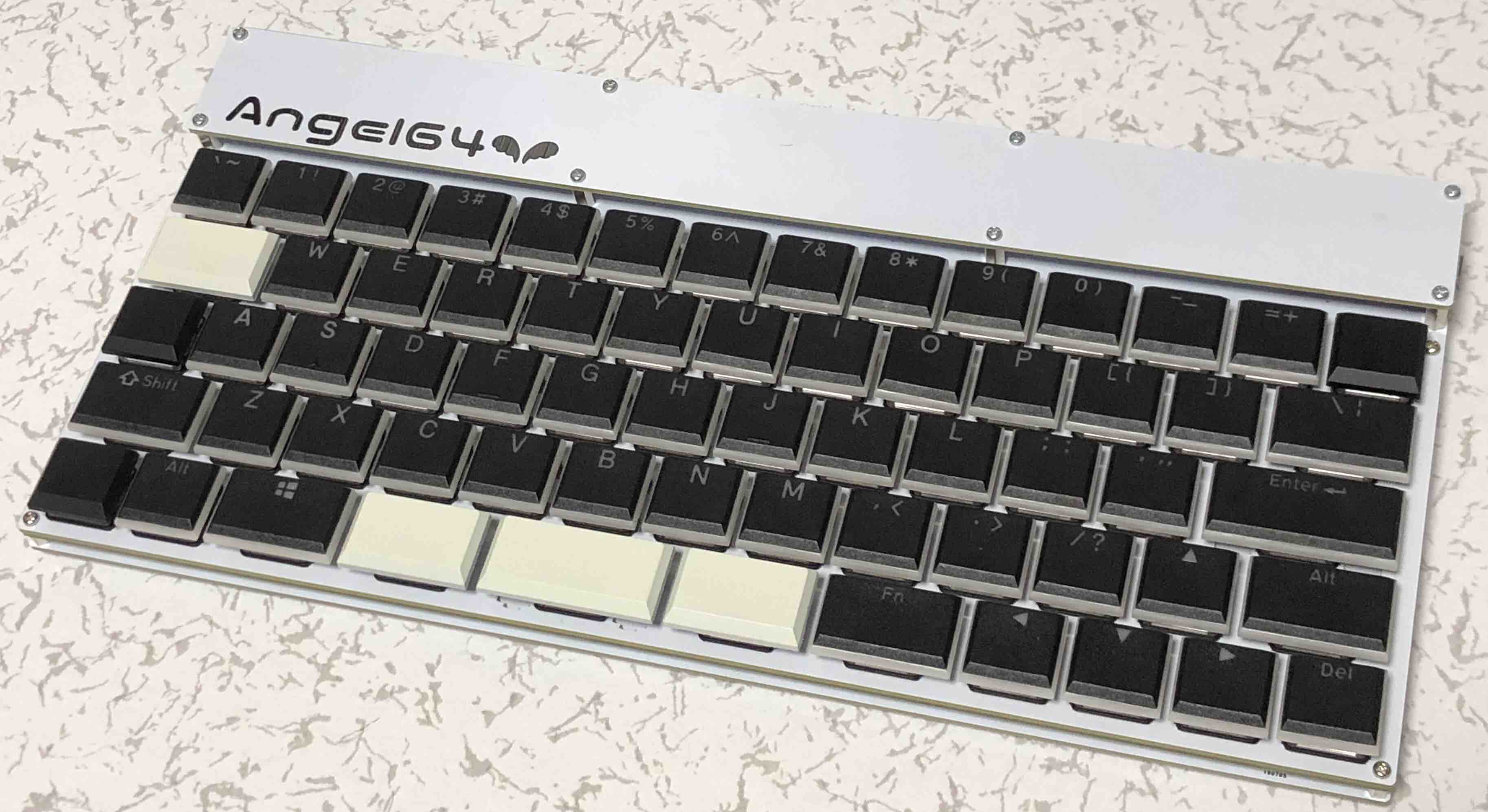
|
||||
|
||||
Keyboard for tablets.
|
||||
|
||||
Keyboard Maintainer: [kakunpc](https://github.com/kakunpc)
|
||||
Hardware Supported: angel64_alpha, promicro
|
||||
Hardware Availability: booth([@kakunpc](https://kakunpc.booth.pm/))
|
||||
|
||||
Make example for this keyboard (after setting up your build environment):
|
||||
|
||||
make angel64:default
|
||||
|
||||
See the [build environment setup](https://docs.qmk.fm/#/getting_started_build_tools) and the [make instructions](https://docs.qmk.fm/#/getting_started_make_guide) for more information. Brand new to QMK? Start with our [Complete Newbs Guide](https://docs.qmk.fm/#/newbs).
|
||||
@@ -1,83 +0,0 @@
|
||||
# MCU name
|
||||
MCU = atmega32u4
|
||||
|
||||
# Processor frequency.
|
||||
# This will define a symbol, F_CPU, in all source code files equal to the
|
||||
# processor frequency in Hz. You can then use this symbol in your source code to
|
||||
# calculate timings. Do NOT tack on a 'UL' at the end, this will be done
|
||||
# automatically to create a 32-bit value in your source code.
|
||||
#
|
||||
# This will be an integer division of F_USB below, as it is sourced by
|
||||
# F_USB after it has run through any CPU prescalers. Note that this value
|
||||
# does not *change* the processor frequency - it should merely be updated to
|
||||
# reflect the processor speed set externally so that the code can use accurate
|
||||
# software delays.
|
||||
F_CPU = 16000000
|
||||
|
||||
|
||||
#
|
||||
# LUFA specific
|
||||
#
|
||||
# Target architecture (see library "Board Types" documentation).
|
||||
ARCH = AVR8
|
||||
|
||||
# Input clock frequency.
|
||||
# This will define a symbol, F_USB, in all source code files equal to the
|
||||
# input clock frequency (before any prescaling is performed) in Hz. This value may
|
||||
# differ from F_CPU if prescaling is used on the latter, and is required as the
|
||||
# raw input clock is fed directly to the PLL sections of the AVR for high speed
|
||||
# clock generation for the USB and other AVR subsections. Do NOT tack on a 'UL'
|
||||
# at the end, this will be done automatically to create a 32-bit value in your
|
||||
# source code.
|
||||
#
|
||||
# If no clock division is performed on the input clock inside the AVR (via the
|
||||
# CPU clock adjust registers or the clock division fuses), this will be equal to F_CPU.
|
||||
F_USB = $(F_CPU)
|
||||
|
||||
# Interrupt driven control endpoint task(+60)
|
||||
OPT_DEFS += -DINTERRUPT_CONTROL_ENDPOINT
|
||||
|
||||
|
||||
# Bootloader selection
|
||||
# Teensy halfkay
|
||||
# Pro Micro caterina
|
||||
# Atmel DFU atmel-dfu
|
||||
# LUFA DFU lufa-dfu
|
||||
# QMK DFU qmk-dfu
|
||||
# atmega32a bootloadHID
|
||||
BOOTLOADER = atmel-dfu
|
||||
|
||||
|
||||
# If you don't know the bootloader type, then you can specify the
|
||||
# Boot Section Size in *bytes* by uncommenting out the OPT_DEFS line
|
||||
# Teensy halfKay 512
|
||||
# Teensy++ halfKay 1024
|
||||
# Atmel DFU loader 4096
|
||||
# LUFA bootloader 4096
|
||||
# USBaspLoader 2048
|
||||
# OPT_DEFS += -DBOOTLOADER_SIZE=4096
|
||||
|
||||
|
||||
# Build Options
|
||||
# change yes to no to disable
|
||||
#
|
||||
BOOTMAGIC_ENABLE = no # Virtual DIP switch configuration(+1000)
|
||||
MOUSEKEY_ENABLE = yes # Mouse keys(+4700)
|
||||
EXTRAKEY_ENABLE = yes # Audio control and System control(+450)
|
||||
CONSOLE_ENABLE = yes # Console for debug(+400)
|
||||
COMMAND_ENABLE = yes # Commands for debug and configuration
|
||||
# Do not enable SLEEP_LED_ENABLE. it uses the same timer as BACKLIGHT_ENABLE
|
||||
SLEEP_LED_ENABLE = no # Breathing sleep LED during USB suspend
|
||||
# if this doesn't work, see here: https://github.com/tmk/tmk_keyboard/wiki/FAQ#nkro-doesnt-work
|
||||
NKRO_ENABLE = no # USB Nkey Rollover
|
||||
BACKLIGHT_ENABLE = no # Enable keyboard backlight functionality on B7 by default
|
||||
RGBLIGHT_ENABLE = no # Enable keyboard RGB underglow
|
||||
MIDI_ENABLE = no # MIDI support (+2400 to 4200, depending on config)
|
||||
UNICODE_ENABLE = no # Unicode
|
||||
BLUETOOTH_ENABLE = no # Enable Bluetooth with the Adafruit EZ-Key HID
|
||||
AUDIO_ENABLE = no # Audio output on port C6
|
||||
FAUXCLICKY_ENABLE = no # Use buzzer to emulate clicky switches
|
||||
HD44780_ENABLE = no # Enable support for HD44780 based LCDs (+400)
|
||||
CUSTOM_MATRIX = yes
|
||||
|
||||
SRC += matrix.c
|
||||
@@ -1 +0,0 @@
|
||||
{"keyboard":"clueboard/66_hotswap/gen1","keymap":"default_66","layout":"LAYOUT","layers":[["KC_GESC","KC_1","KC_2","KC_3","KC_4","KC_5","KC_6","KC_7","KC_8","KC_9","KC_0","KC_MINS","KC_EQL","KC_BSPC","KC_PGUP","KC_TAB","KC_Q","KC_W","KC_E","KC_R","KC_T","KC_Y","KC_U","KC_I","KC_O","KC_P","KC_LBRC","KC_RBRC","KC_BSLS","KC_PGDN","KC_CAPS","KC_A","KC_S","KC_D","KC_F","KC_G","KC_H","KC_J","KC_K","KC_L","KC_SCLN","KC_QUOT","KC_ENT","KC_LSFT","KC_Z","KC_X","KC_C","KC_V","KC_B","KC_N","KC_M","KC_COMM","KC_DOT","KC_SLSH","KC_RSFT","KC_UP","KC_LCTL","KC_LGUI","KC_LALT","KC_SPC","KC_SPC","KC_RALT","KC_RGUI","MO(1)","KC_RCTL","KC_LEFT","KC_DOWN","KC_RGHT"],["KC_GRV","KC_F1","KC_F2","KC_F3","KC_F4","KC_F5","KC_F6","KC_F7","KC_F8","KC_F9","KC_F10","KC_F11","KC_F12","KC_DEL","BL_INC","KC_NO","KC_NO","KC_NO","KC_NO","KC_NO","KC_NO","KC_NO","KC_NO","KC_NO","KC_MPRV","KC_MPLY","KC_MNXT","KC_NO","KC_MUTE","BL_DEC","KC_NO","KC_NO","MO(2)","KC_NO","KC_NO","KC_NO","KC_NO","KC_NO","KC_NO","KC_NO","KC_NO","KC_NO","KC_NO","KC_NO","KC_NO","KC_NO","KC_NO","KC_NO","KC_NO","KC_NO","KC_NO","KC_NO","KC_NO","KC_NO","KC_NO","KC_PGUP","KC_NO","KC_NO","KC_NO","KC_NO","KC_NO","KC_NO","KC_NO","MO(1)","KC_NO","KC_HOME","KC_PGDN","KC_END"],["KC_NO","KC_NO","KC_NO","KC_NO","KC_NO","KC_NO","KC_NO","KC_NO","KC_NO","KC_NO","KC_NO","KC_NO","KC_NO","BL_TOGG","BL_INC","KC_NO","KC_NO","KC_NO","KC_NO","RESET","KC_NO","KC_NO","KC_NO","KC_NO","KC_NO","KC_NO","KC_NO","KC_NO","KC_NO","BL_DEC","KC_NO","KC_NO","MO(2)","KC_NO","KC_NO","KC_NO","KC_NO","KC_NO","KC_NO","KC_NO","KC_NO","KC_NO","KC_NO","KC_NO","KC_NO","KC_NO","KC_NO","KC_NO","KC_NO","KC_NO","KC_NO","KC_NO","KC_NO","KC_NO","KC_NO","KC_NO","KC_NO","KC_NO","KC_NO","KC_NO","BL_STEP","KC_NO","KC_NO","MO(1)","KC_NO","KC_NO","KC_NO","KC_NO"]],"author":"","notes":""}
|
||||
@@ -1,3 +0,0 @@
|
||||
# Vxid crkbd layout
|
||||
|
||||
Inspired by sdothum's wide planck layout.
|
||||
@@ -1,44 +0,0 @@
|
||||
/*
|
||||
This is the c configuration file for the keymap
|
||||
|
||||
Copyright 2012 Jun Wako <wakojun@gmail.com>
|
||||
Copyright 2015 Jack Humbert
|
||||
|
||||
This program is free software: you can redistribute it and/or modify
|
||||
it under the terms of the GNU General Public License as published by
|
||||
the Free Software Foundation, either version 2 of the License, or
|
||||
(at your option) any later version.
|
||||
|
||||
This program is distributed in the hope that it will be useful,
|
||||
but WITHOUT ANY WARRANTY; without even the implied warranty of
|
||||
MERCHANTABILITY or FITNESS FOR A PARTICULAR PURPOSE. See the
|
||||
GNU General Public License for more details.
|
||||
|
||||
You should have received a copy of the GNU General Public License
|
||||
along with this program. If not, see <http://www.gnu.org/licenses/>.
|
||||
*/
|
||||
|
||||
#pragma once
|
||||
|
||||
//#define USE_MATRIX_I2C
|
||||
|
||||
/* Select hand configuration */
|
||||
|
||||
// #define MASTER_LEFT
|
||||
#define MASTER_RIGHT
|
||||
// #define EE_HANDS
|
||||
|
||||
#define SSD1306OLED
|
||||
|
||||
#define USE_SERIAL_PD2
|
||||
|
||||
#define TAPPING_FORCE_HOLD
|
||||
#define TAPPING_TERM 100
|
||||
|
||||
#undef RGBLED_NUM
|
||||
#define RGBLIGHT_ANIMATIONS
|
||||
#define RGBLED_NUM 27
|
||||
#define RGBLIGHT_LIMIT_VAL 120
|
||||
#define RGBLIGHT_HUE_STEP 10
|
||||
#define RGBLIGHT_SAT_STEP 17
|
||||
#define RGBLIGHT_VAL_STEP 17
|
||||
@@ -1,85 +0,0 @@
|
||||
#include QMK_KEYBOARD_H
|
||||
#include "bootloader.h"
|
||||
#ifdef PROTOCOL_LUFA
|
||||
#include "lufa.h"
|
||||
#include "split_util.h"
|
||||
#endif
|
||||
|
||||
extern keymap_config_t keymap_config;
|
||||
|
||||
extern uint8_t is_master;
|
||||
|
||||
#define _QWERTY 0
|
||||
#define _LOWER 1
|
||||
#define _RAISE 2
|
||||
|
||||
enum custom_keycodes {
|
||||
QWERTY = SAFE_RANGE,
|
||||
LOWER,
|
||||
RAISE
|
||||
};
|
||||
|
||||
#define KC______ KC_TRNS
|
||||
#define KC_XXXXX KC_NO
|
||||
#define KC_LOWER LOWER
|
||||
#define KC_RAISE RAISE
|
||||
|
||||
const uint16_t PROGMEM keymaps[][MATRIX_ROWS][MATRIX_COLS] = {
|
||||
[_QWERTY] = LAYOUT_kc( \
|
||||
//,-----------------------------------------. ,-----------------------------------------.
|
||||
Q, W, E, R, T, ESC, DEL, Y, U, I, O, P,\
|
||||
//|------+------+------+------+------+------| |------+------+------+------+------+------|
|
||||
A, S, D, F, G, SPC, BSPC, H, J, K, L, SCLN,\
|
||||
//|------+------+------+------+------+------| |------+------+------+------+------+------|
|
||||
Z, X, C, V, B, TAB, ENT, N, M, COMM, DOT, SLSH,\
|
||||
//|------+------+------+------+------+------+------| |------+------+------+------+------+------+------|
|
||||
LALT, LGUI, LCTL, LSFT, RAISE, LOWER \
|
||||
//`--------------------' `--------------------'
|
||||
),
|
||||
|
||||
[_LOWER] = LAYOUT_kc( \
|
||||
//,-----------------------------------------. ,------------------------------------------.
|
||||
1, 2, 3, 4, 5, XXXXX, XXXXX, XXXXX, XXXXX, XXXXX, XXXXX, XXXXX,\
|
||||
//|------+------+------+------+------+------| |-------+------+------+------+------+------|
|
||||
6, 7, 8, 9, 0, XXXXX, XXXXX, XXXXX, XXXXX, XXXXX, XXXXX, XXXXX,\
|
||||
//|------+------+------+------+------+------| |-------+------+------+------+------+------|
|
||||
EQL, PLUS, MINS, SLSH, ASTR, XXXXX, XXXXX, XXXXX, XXXXX, XXXXX, XXXXX, XXXXX,\
|
||||
//|------+------+------+------+------+------+------| |------+-------+------+------+------+------+------|
|
||||
LALT, LGUI, LCTL, LSFT, RAISE, LOWER \
|
||||
//`--------------------' `--------------------'
|
||||
),
|
||||
|
||||
[_RAISE] = LAYOUT_kc( \
|
||||
//,-----------------------------------------. ,------------------------------------------.
|
||||
EXLM, AT, HASH, DLR, PERC, LPRN, RPRN, XXXXX, XXXXX, XXXXX, XXXXX, XXXXX,\
|
||||
//|------+------+------+------+------+------| |-------+------+------+------+------+------|
|
||||
CIRC, AMPR, ASTR, QUOT, DQUO, LCBR, RCBR, LEFT, DOWN, UP, RIGHT, XXXXX,\
|
||||
//|------+------+------+------+------+------| |-------+------+------+------+------+------|
|
||||
BSLS, TILD, GRV, UNDS, PIPE, LBRC, RBRC, XXXXX, XXXXX, XXXXX, XXXXX, XXXXX,\
|
||||
//|------+------+------+------+------+------+------| |------+-------+------+------+------+------+------|
|
||||
LALT, LGUI, LCTL, LSFT, RAISE, LOWER \
|
||||
//`--------------------' `--------------------'
|
||||
)
|
||||
};
|
||||
|
||||
bool process_record_user(uint16_t keycode, keyrecord_t *record) {
|
||||
switch (keycode) {
|
||||
case LOWER:
|
||||
if (record->event.pressed) {
|
||||
layer_on(_LOWER);
|
||||
} else {
|
||||
layer_off(_LOWER);
|
||||
}
|
||||
return false;
|
||||
break;
|
||||
case RAISE:
|
||||
if (record->event.pressed) {
|
||||
layer_on(_RAISE);
|
||||
} else {
|
||||
layer_off(_RAISE);
|
||||
}
|
||||
return false;
|
||||
break;
|
||||
}
|
||||
return true;
|
||||
}
|
||||
@@ -1,31 +0,0 @@
|
||||
|
||||
# Build Options
|
||||
# change to "no" to disable the options, or define them in the Makefile in
|
||||
# the appropriate keymap folder that will get included automatically
|
||||
#
|
||||
BOOTMAGIC_ENABLE = no # Virtual DIP switch configuration(+1000)
|
||||
MOUSEKEY_ENABLE = no # Mouse keys(+4700)
|
||||
EXTRAKEY_ENABLE = no # Audio control and System control(+450)
|
||||
CONSOLE_ENABLE = no # Console for debug(+400)
|
||||
COMMAND_ENABLE = no # Commands for debug and configuration
|
||||
NKRO_ENABLE = no # Nkey Rollover - if this doesn't work, see here: https://github.com/tmk/tmk_keyboard/wiki/FAQ#nkro-doesnt-work
|
||||
BACKLIGHT_ENABLE = no # Enable keyboard backlight functionality
|
||||
MIDI_ENABLE = no # MIDI controls
|
||||
AUDIO_ENABLE = no # Audio output on port C6
|
||||
UNICODE_ENABLE = no # Unicode
|
||||
BLUETOOTH_ENABLE = no # Enable Bluetooth with the Adafruit EZ-Key HID
|
||||
RGBLIGHT_ENABLE = no # Enable WS2812 RGB underlight.
|
||||
SWAP_HANDS_ENABLE = no # Enable one-hand typing
|
||||
|
||||
# Do not enable SLEEP_LED_ENABLE. it uses the same timer as BACKLIGHT_ENABLE
|
||||
SLEEP_LED_ENABLE = no # Breathing sleep LED during USB suspend
|
||||
|
||||
# If you want to change the display of OLED, you need to change here
|
||||
SRC += ./lib/glcdfont.c \
|
||||
./lib/rgb_state_reader.c \
|
||||
./lib/layer_state_reader.c \
|
||||
./lib/logo_reader.c \
|
||||
./lib/keylogger.c \
|
||||
# ./lib/mode_icon_reader.c \
|
||||
# ./lib/host_led_state_reader.c \
|
||||
# ./lib/timelogger.c \
|
||||
@@ -4,9 +4,9 @@ const uint16_t PROGMEM keymaps[][MATRIX_ROWS][MATRIX_COLS] = {
|
||||
|
||||
/* Qwerty
|
||||
* ,-----------------------------------------------------------------------------------------.
|
||||
* | ` | 1 | 2 | 3 | 4 | 5 | 6 | 7 | 8 | 9 | 0 | - | = | \ |
|
||||
* | ` | 1 | 2 | 3 | 4 | 5 | 6 | 7 | 8 | 9 | 0 | - | = | Bkspc |
|
||||
* |-----------------------------------------------------------------------------------------+
|
||||
* | Tab | Q | W | E | R | T | Y | U | I | O | P | [ | ] | Bkspc |
|
||||
* | Tab | Q | W | E | R | T | Y | U | I | O | P | [ | ] | \ |
|
||||
* |-----------------------------------------------------------------------------------------+
|
||||
* | Fn | A | S | D | F | G | H | J | K | L | ; | ' | Enter |
|
||||
* |-----------------------------------------------------------------------------------------+
|
||||
@@ -17,8 +17,8 @@ const uint16_t PROGMEM keymaps[][MATRIX_ROWS][MATRIX_COLS] = {
|
||||
*/
|
||||
|
||||
LAYOUT_directional(
|
||||
KC_GRAVE, KC_1, KC_2, KC_3, KC_4, KC_5, KC_6, KC_7, KC_8, KC_9, KC_0, KC_MINS, KC_EQL, _______, KC_BSLS,
|
||||
KC_TAB, KC_Q, KC_W, KC_E, KC_R, KC_T, KC_Y, KC_U, KC_I, KC_O, KC_P, KC_LBRC, KC_RBRC, KC_BSPC,
|
||||
KC_GRAVE, KC_1, KC_2, KC_3, KC_4, KC_5, KC_6, KC_7, KC_8, KC_9, KC_0, KC_MINS, KC_EQL, _______, KC_BSPC,
|
||||
KC_TAB, KC_Q, KC_W, KC_E, KC_R, KC_T, KC_Y, KC_U, KC_I, KC_O, KC_P, KC_LBRC, KC_RBRC, KC_BSLS,
|
||||
MO(1), KC_A, KC_S, KC_D, KC_F, KC_G, KC_H, KC_J, KC_K, KC_L, KC_SCLN, KC_QUOT, KC_ENT,
|
||||
KC_LSFT, KC_Z, KC_X, KC_C, KC_V, KC_B, KC_N, KC_M, KC_COMM, KC_DOT, _______, RSFT_T(KC_SLSH) , KC_UP, KC_ESCAPE,
|
||||
KC_LCTL, KC_LALT, KC_LGUI, KC_SPC, KC_SPC, KC_SPC, KC_RALT, MO(1), KC_LEFT, KC_DOWN, KC_RIGHT
|
||||
|
||||
@@ -12,7 +12,6 @@ Settings:
|
||||
* RESET is available as `Fn`+ ` ESC`
|
||||
* Underglow toggle is available as `Fn` + `Q`. Yes your keyboard has lights even if you didn't get the LEDs. Bonus!
|
||||
* vim-style arrow key bindings H J K L in layer 1
|
||||
* The `Bkspc` and `\` keys have been swapped, the reach was too great to have backspace on the top row
|
||||
|
||||
### Initial Installation
|
||||
|
||||
@@ -36,16 +35,16 @@ A hex file `dz60_billiams.hex` will be created in the base qmk_firmware director
|
||||
5. Holding those keys down, plug the keyboard into your computer, which will put the keyboard in bootlegger mode
|
||||
6. If you are using [QMK toolbox](https://github.com/qmk/qmk_toolbox/releases), upload the .hex file you made above, select it and hit the flash button. For the love of all that is good and holy on Earth, don't hit the load button, that will load the default keymap and that's not what you want! Unless it is, in which case click away.
|
||||
|
||||
Note: If you didn't follow my instructions in 4 and accidentally loaded the default keymap, then to `RESET` the keyboard and kick it into bootleg mode again, hold the `down arrow` key and `\`. The default layout is Build 1 and sets the `MENU` key on that build to `Fn`. `MENU` corresponds to `down arrow` in build 4. Note that you don't have to unplug the keyboard.
|
||||
Note: If you didn't follow my instructions in 4 and accidentally loaded the default keymap, then to `RESET` the keyboard and kick it into bootleg mode again, hold the `down arrow` key and `\`. The default layout is Build 1 and sets the `MENU` key on that build to `Fn`. `MENU` corresponds to `down arrow` in build 4. Note that you don't have to unplug the keyboard.
|
||||
|
||||
Hope this helps!
|
||||
|
||||
### 0 Qwerty
|
||||
```
|
||||
,-----------------------------------------------------------------------------------------.
|
||||
| ` | 1 | 2 | 3 | 4 | 5 | 6 | 7 | 8 | 9 | 0 | - | = | \ |
|
||||
| ` | 1 | 2 | 3 | 4 | 5 | 6 | 7 | 8 | 9 | 0 | - | = | Bkspc |
|
||||
|-----------------------------------------------------------------------------------------+
|
||||
| Tab | Q | W | E | R | T | Y | U | I | O | P | [ | ] | Bkspc |
|
||||
| Tab | Q | W | E | R | T | Y | U | I | O | P | [ | ] | \ |
|
||||
|-----------------------------------------------------------------------------------------+
|
||||
| Fn | A | S | D | F | G | H | J | K | L | ; | ' | Enter |
|
||||
|-----------------------------------------------------------------------------------------+
|
||||
@@ -70,3 +69,4 @@ FN Layer
|
||||
| | | | | | | HOME | PG_DN | END |
|
||||
`-----------------------------------------------------------------------------------------'
|
||||
```
|
||||
|
||||
|
||||
@@ -146,7 +146,7 @@ void rgb_matrix_indicators_user(void)
|
||||
break;
|
||||
|
||||
case _RGB: {
|
||||
HSV hsv = { rgb_matrix_config.hsv.h, rgb_matrix_config.hsv.s, rgb_matrix_config.hsv.v };
|
||||
HSV hsv = { rgb_matrix_config.hue, rgb_matrix_config.sat, rgb_matrix_config.val };
|
||||
HSV hui = hsv;
|
||||
HSV hud = hsv;
|
||||
HSV sai = hsv;
|
||||
|
||||
@@ -16,7 +16,6 @@
|
||||
|
||||
# # project specific files
|
||||
SRC += matrix.c
|
||||
QUANTUM_LIB_SRC += i2c_master.c
|
||||
|
||||
# MCU name
|
||||
MCU = atmega32u4
|
||||
@@ -86,4 +85,9 @@ RGBLIGHT_ENABLE = yes
|
||||
RGB_MATRIX_ENABLE = no # enable later
|
||||
DEBOUNCE_TYPE = eager_pr
|
||||
|
||||
ifeq ($(strip $(RGB_MATRIX_ENABLE)), no)
|
||||
SRC += i2c_master.c
|
||||
endif
|
||||
|
||||
|
||||
LAYOUTS = ergodox
|
||||
|
||||
@@ -117,117 +117,6 @@
|
||||
]
|
||||
},
|
||||
|
||||
"LAYOUT_split_bs_joined_right": {
|
||||
"key_count": 100,
|
||||
"layout": [
|
||||
{"label": "K00", "x": 0, "y": 0},
|
||||
{"label": "K01", "x": 1, "y": 0},
|
||||
{"label": "K02", "x": 2, "y": 0},
|
||||
{"label": "K03", "x": 3, "y": 0},
|
||||
{"label": "K04", "x": 4, "y": 0},
|
||||
{"label": "K60", "x": 5, "y": 0},
|
||||
{"label": "K61", "x": 6, "y": 0},
|
||||
{"label": "K62", "x": 7, "y": 0},
|
||||
{"label": "K63", "x": 8, "y": 0},
|
||||
{"label": "K05", "x": 9, "y": 0},
|
||||
{"label": "K06", "x": 10, "y": 0},
|
||||
{"label": "K07", "x": 11, "y": 0},
|
||||
{"label": "K08", "x": 12, "y": 0},
|
||||
{"label": "K72", "x": 13, "y": 0},
|
||||
{"label": "K09", "x": 14, "y": 0},
|
||||
{"label": "K0A", "x": 15, "y": 0},
|
||||
{"label": "K0B", "x": 16, "y": 0},
|
||||
{"label": "K0C", "x": 17, "y": 0},
|
||||
{"label": "K7C", "x": 18, "y": 0},
|
||||
|
||||
{"label": "K10", "x": 0, "y": 1},
|
||||
{"label": "K11", "x": 1, "y": 1},
|
||||
{"label": "K12", "x": 2, "y": 1},
|
||||
{"label": "K13", "x": 3, "y": 1},
|
||||
{"label": "K14", "x": 4, "y": 1},
|
||||
{"label": "K64", "x": 5, "y": 1},
|
||||
{"label": "K65", "x": 6, "y": 1},
|
||||
{"label": "K66", "x": 7, "y": 1},
|
||||
{"label": "K67", "x": 8, "y": 1},
|
||||
{"label": "K15", "x": 9, "y": 1},
|
||||
{"label": "K16", "x": 10, "y": 1},
|
||||
{"label": "K17", "x": 11, "y": 1},
|
||||
{"label": "K18", "x": 12, "y": 1},
|
||||
{"label": "K70", "x": 13, "y": 1},
|
||||
{"label": "K71", "x": 14, "y": 1},
|
||||
{"label": "K19", "x": 15, "y": 1},
|
||||
{"label": "K1A", "x": 16, "y": 1},
|
||||
{"label": "K1B", "x": 17, "y": 1},
|
||||
{"label": "K1C", "x": 18, "y": 1},
|
||||
|
||||
{"label": "K20", "x": 0, "y": 2, "w": 1.5},
|
||||
{"label": "K21", "x": 1.5, "y": 2},
|
||||
{"label": "K22", "x": 2.5, "y": 2},
|
||||
{"label": "K23", "x": 3.5, "y": 2},
|
||||
{"label": "K24", "x": 4.5, "y": 2},
|
||||
{"label": "K68", "x": 5.5, "y": 2},
|
||||
{"label": "K69", "x": 6.5, "y": 2},
|
||||
{"label": "K6A", "x": 7.5, "y": 2},
|
||||
{"label": "K6B", "x": 8.5, "y": 2},
|
||||
{"label": "K25", "x": 9.5, "y": 2},
|
||||
{"label": "K26", "x": 10.5, "y": 2},
|
||||
{"label": "K27", "x": 11.5, "y": 2},
|
||||
{"label": "K28", "x": 12.5, "y": 2},
|
||||
{"label": "K73", "x": 13.5, "y": 2, "w": 1.5},
|
||||
{"label": "K29", "x": 15, "y": 2},
|
||||
{"label": "K2A", "x": 16, "y": 2},
|
||||
{"label": "K2B", "x": 17, "y": 2},
|
||||
{"label": "K2C", "x": 18, "y": 2, "h": 2},
|
||||
|
||||
{"label": "K30", "x": 0, "y": 3, "w": 1.75},
|
||||
{"label": "K31", "x": 1.75, "y": 3},
|
||||
{"label": "K32", "x": 2.75, "y": 3},
|
||||
{"label": "K33", "x": 3.75, "y": 3},
|
||||
{"label": "K34", "x": 4.75, "y": 3},
|
||||
{"label": "K6C", "x": 5.75, "y": 3},
|
||||
{"label": "K75", "x": 6.75, "y": 3},
|
||||
{"label": "K76", "x": 7.75, "y": 3},
|
||||
{"label": "K77", "x": 8.75, "y": 3},
|
||||
{"label": "K35", "x": 9.75, "y": 3},
|
||||
{"label": "K36", "x": 10.75, "y": 3},
|
||||
{"label": "K37", "x": 11.75, "y": 3},
|
||||
{"label": "K38", "x": 12.75, "y": 3, "w": 2.25},
|
||||
{"label": "K39", "x": 15, "y": 3},
|
||||
{"label": "K3A", "x": 16, "y": 3},
|
||||
{"label": "K3B", "x": 17, "y": 3},
|
||||
|
||||
{"label": "K40", "x": 0, "y": 4, "w": 2.25},
|
||||
{"label": "K42", "x": 2.25, "y": 4},
|
||||
{"label": "K43", "x": 3.25, "y": 4},
|
||||
{"label": "K44", "x": 4.25, "y": 4},
|
||||
{"label": "K78", "x": 5.25, "y": 4},
|
||||
{"label": "K79", "x": 6.25, "y": 4},
|
||||
{"label": "K7A", "x": 7.25, "y": 4},
|
||||
{"label": "K7B", "x": 8.25, "y": 4},
|
||||
{"label": "K45", "x": 9.25, "y": 4},
|
||||
{"label": "K46", "x": 10.25, "y": 4},
|
||||
{"label": "K47", "x": 11.25, "y": 4},
|
||||
{"label": "K48", "x": 12.25, "y": 4, "w": 1.75},
|
||||
{"label": "K74", "x": 14, "y": 4},
|
||||
{"label": "K49", "x": 15, "y": 4},
|
||||
{"label": "K4A", "x": 16, "y": 4},
|
||||
{"label": "K4B", "x": 17, "y": 4},
|
||||
{"label": "K4C", "x": 18, "y": 4, "h": 2},
|
||||
|
||||
{"label": "K50", "x": 0, "y": 5, "w": 1.25},
|
||||
{"label": "K51", "x": 1.25, "y": 5, "w": 1.25},
|
||||
{"label": "K52", "x": 2.5, "y": 5, "w": 1.25},
|
||||
{"label": "K59", "x": 3.75, "y": 5, "w": 6.25},
|
||||
{"label": "K55", "x": 10, "y": 5, "w": 1.5},
|
||||
{"label": "K57", "x": 11.5, "y": 5, "w": 1.5},
|
||||
{"label": "K58", "x": 13, "y": 5},
|
||||
{"label": "K53", "x": 14, "y": 5},
|
||||
{"label": "K54", "x": 15, "y": 5},
|
||||
{"label": "K5A", "x": 16, "y": 5},
|
||||
{"label": "K5B", "x": 17, "y": 5}
|
||||
]
|
||||
},
|
||||
|
||||
"LAYOUT_split_shift_and_bs": {
|
||||
"key_count": 104,
|
||||
"layout": [
|
||||
|
||||
@@ -1,4 +1,5 @@
|
||||
#pragma once
|
||||
#ifndef CONFIG_H
|
||||
#define CONFIG_H
|
||||
|
||||
#include "config_common.h"
|
||||
|
||||
@@ -8,225 +9,40 @@
|
||||
#define DEVICE_VER 0x0001
|
||||
#define MANUFACTURER Unikeyboard
|
||||
#define PRODUCT Felix
|
||||
#define DESCRIPTION 4x5 number/macropad
|
||||
#define DESCRIPTION 4x5 number/macropad.
|
||||
|
||||
/* key matrix size */
|
||||
#define MATRIX_ROWS 5
|
||||
#define MATRIX_COLS 4
|
||||
|
||||
/*
|
||||
* Keyboard Matrix Assignments
|
||||
*
|
||||
* Change this to how you wired your keyboard
|
||||
* COLS: AVR pins used for columns, left to right
|
||||
* ROWS: AVR pins used for rows, top to bottom
|
||||
* DIODE_DIRECTION: COL2ROW = COL = Anode (+), ROW = Cathode (-, marked on diode)
|
||||
* ROW2COL = ROW = Anode (+), COL = Cathode (-, marked on diode)
|
||||
*
|
||||
*/
|
||||
/* key matrix pins */
|
||||
#define MATRIX_ROW_PINS { B2, B3, B1, F7, F6 }
|
||||
#define MATRIX_COL_PINS { B5, B4, E6, D7 }
|
||||
#define UNUSED_PINS
|
||||
|
||||
/* COL2ROW, ROW2COL */
|
||||
/* COL2ROW or ROW2COL */
|
||||
#define DIODE_DIRECTION ROW2COL
|
||||
|
||||
/*
|
||||
* Split Keyboard specific options, make sure you have 'SPLIT_KEYBOARD = yes' in your rules.mk, and define SOFT_SERIAL_PIN.
|
||||
*/
|
||||
#define SOFT_SERIAL_PIN D0 // or D1, D2, D3, E6
|
||||
|
||||
#define BACKLIGHT_PIN C6
|
||||
/* number of backlight levels */
|
||||
/* Not sure what pin controls the backlighting, need help for this. */
|
||||
#define BACKLIGHT_PIN
|
||||
#define BACKLIGHT_LEVELS 5
|
||||
//#define BACKLIGHT_BREATHING
|
||||
|
||||
// #define RGB_DI_PIN E2
|
||||
// #ifdef RGB_DI_PIN
|
||||
// #define RGBLED_NUM 16
|
||||
// #define RGBLIGHT_HUE_STEP 8
|
||||
// #define RGBLIGHT_SAT_STEP 8
|
||||
// #define RGBLIGHT_VAL_STEP 8
|
||||
// #define RGBLIGHT_LIMIT_VAL 255 /* The maximum brightness level */
|
||||
// #define RGBLIGHT_SLEEP /* If defined, the RGB lighting will be switched off when the host goes to sleep */
|
||||
// /*== all animations enable ==*/
|
||||
// #define RGBLIGHT_ANIMATIONS
|
||||
// /*== or choose animations ==*/
|
||||
// #define RGBLIGHT_EFFECT_BREATHING
|
||||
// #define RGBLIGHT_EFFECT_RAINBOW_MOOD
|
||||
// #define RGBLIGHT_EFFECT_RAINBOW_SWIRL
|
||||
// #define RGBLIGHT_EFFECT_SNAKE
|
||||
// #define RGBLIGHT_EFFECT_KNIGHT
|
||||
// #define RGBLIGHT_EFFECT_CHRISTMAS
|
||||
// #define RGBLIGHT_EFFECT_STATIC_GRADIENT
|
||||
// #define RGBLIGHT_EFFECT_RGB_TEST
|
||||
// #define RGBLIGHT_EFFECT_ALTERNATING
|
||||
// /*== customize breathing effect ==*/
|
||||
// /*==== (DEFAULT) use fixed table instead of exp() and sin() ====*/
|
||||
// #define RGBLIGHT_BREATHE_TABLE_SIZE 256 // 256(default) or 128 or 64
|
||||
// /*==== use exp() and sin() ====*/
|
||||
// #define RGBLIGHT_EFFECT_BREATHE_CENTER 1.85 // 1 to 2.7
|
||||
// #define RGBLIGHT_EFFECT_BREATHE_MAX 255 // 0 to 255
|
||||
// #endif
|
||||
|
||||
/* Debounce reduces chatter (unintended double-presses) - set 0 if debouncing is not needed */
|
||||
/* Set 0 if debouncing isn't needed */
|
||||
#define DEBOUNCE 5
|
||||
|
||||
/* define if matrix has ghost (lacks anti-ghosting diodes) */
|
||||
//#define MATRIX_HAS_GHOST
|
||||
|
||||
/* Mechanical locking support. Use KC_LCAP, KC_LNUM or KC_LSCR instead in keymap */
|
||||
#define LOCKING_SUPPORT_ENABLE
|
||||
|
||||
/* Locking resynchronize hack */
|
||||
#define LOCKING_RESYNC_ENABLE
|
||||
|
||||
/* If defined, GRAVE_ESC will always act as ESC when CTRL is held.
|
||||
* This is userful for the Windows task manager shortcut (ctrl+shift+esc).
|
||||
*/
|
||||
// #define GRAVE_ESC_CTRL_OVERRIDE
|
||||
/* there is no rgb underglow by default. */
|
||||
#define RGB_DI_PIN
|
||||
#define RGBLIGHT_ANIMATIONS
|
||||
#define RGBLED_NUM 16
|
||||
#define RGBLIGHT_HUE_STEP 8
|
||||
#define RGBLIGHT_SAT_STEP 8
|
||||
#define RGBLIGHT_VAL_STEP 8
|
||||
|
||||
/*
|
||||
* Force NKRO
|
||||
*
|
||||
* Force NKRO (nKey Rollover) to be enabled by default, regardless of the saved
|
||||
* state in the bootmagic EEPROM settings. (Note that NKRO must be enabled in the
|
||||
* makefile for this to work.)
|
||||
*
|
||||
* If forced on, NKRO can be disabled via magic key (default = LShift+RShift+N)
|
||||
* until the next keyboard reset.
|
||||
*
|
||||
* NKRO may prevent your keystrokes from being detected in the BIOS, but it is
|
||||
* fully operational during normal computer usage.
|
||||
*
|
||||
* For a less heavy-handed approach, enable NKRO via magic key (LShift+RShift+N)
|
||||
* or via bootmagic (hold SPACE+N while plugging in the keyboard). Once set by
|
||||
* bootmagic, NKRO mode will always be enabled until it is toggled again during a
|
||||
* power-up.
|
||||
*
|
||||
*/
|
||||
//#define FORCE_NKRO
|
||||
|
||||
/*
|
||||
* Magic Key Options
|
||||
*
|
||||
* Magic keys are hotkey commands that allow control over firmware functions of
|
||||
* the keyboard. They are best used in combination with the HID Listen program,
|
||||
* found here: https://www.pjrc.com/teensy/hid_listen.html
|
||||
*
|
||||
* The options below allow the magic key functionality to be changed. This is
|
||||
* useful if your keyboard/keypad is missing keys and you want magic key support.
|
||||
*
|
||||
*/
|
||||
|
||||
/* key combination for magic key command */
|
||||
/* defined by default; to change, uncomment and set to the combination you want */
|
||||
// #define IS_COMMAND() (get_mods() == (MOD_BIT(KC_LSHIFT) | MOD_BIT(KC_RSHIFT)))
|
||||
|
||||
/* control how magic key switches layers */
|
||||
//#define MAGIC_KEY_SWITCH_LAYER_WITH_FKEYS true
|
||||
//#define MAGIC_KEY_SWITCH_LAYER_WITH_NKEYS true
|
||||
//#define MAGIC_KEY_SWITCH_LAYER_WITH_CUSTOM false
|
||||
|
||||
/* override magic key keymap */
|
||||
//#define MAGIC_KEY_SWITCH_LAYER_WITH_FKEYS
|
||||
//#define MAGIC_KEY_SWITCH_LAYER_WITH_NKEYS
|
||||
//#define MAGIC_KEY_SWITCH_LAYER_WITH_CUSTOM
|
||||
//#define MAGIC_KEY_HELP H
|
||||
//#define MAGIC_KEY_HELP_ALT SLASH
|
||||
//#define MAGIC_KEY_DEBUG D
|
||||
//#define MAGIC_KEY_DEBUG_MATRIX X
|
||||
//#define MAGIC_KEY_DEBUG_KBD K
|
||||
//#define MAGIC_KEY_DEBUG_MOUSE M
|
||||
//#define MAGIC_KEY_VERSION V
|
||||
//#define MAGIC_KEY_STATUS S
|
||||
//#define MAGIC_KEY_CONSOLE C
|
||||
//#define MAGIC_KEY_LAYER0 0
|
||||
//#define MAGIC_KEY_LAYER0_ALT GRAVE
|
||||
//#define MAGIC_KEY_LAYER1 1
|
||||
//#define MAGIC_KEY_LAYER2 2
|
||||
//#define MAGIC_KEY_LAYER3 3
|
||||
//#define MAGIC_KEY_LAYER4 4
|
||||
//#define MAGIC_KEY_LAYER5 5
|
||||
//#define MAGIC_KEY_LAYER6 6
|
||||
//#define MAGIC_KEY_LAYER7 7
|
||||
//#define MAGIC_KEY_LAYER8 8
|
||||
//#define MAGIC_KEY_LAYER9 9
|
||||
//#define MAGIC_KEY_BOOTLOADER B
|
||||
//#define MAGIC_KEY_BOOTLOADER_ALT ESC
|
||||
//#define MAGIC_KEY_LOCK CAPS
|
||||
//#define MAGIC_KEY_EEPROM E
|
||||
//#define MAGIC_KEY_EEPROM_CLEAR BSPACE
|
||||
//#define MAGIC_KEY_NKRO N
|
||||
//#define MAGIC_KEY_SLEEP_LED Z
|
||||
|
||||
/*
|
||||
* Feature disable options
|
||||
* These options are also useful to firmware size reduction.
|
||||
*/
|
||||
|
||||
/* disable debug print */
|
||||
//#define NO_DEBUG
|
||||
|
||||
/* disable print */
|
||||
//#define NO_PRINT
|
||||
|
||||
/* disable action features */
|
||||
//#define NO_ACTION_LAYER
|
||||
//#define NO_ACTION_TAPPING
|
||||
//#define NO_ACTION_ONESHOT
|
||||
//#define NO_ACTION_MACRO
|
||||
//#define NO_ACTION_FUNCTION
|
||||
|
||||
/*
|
||||
* MIDI options
|
||||
*/
|
||||
|
||||
/* Prevent use of disabled MIDI features in the keymap */
|
||||
//#define MIDI_ENABLE_STRICT 1
|
||||
|
||||
/* enable basic MIDI features:
|
||||
- MIDI notes can be sent when in Music mode is on
|
||||
*/
|
||||
//#define MIDI_BASIC
|
||||
|
||||
/* enable advanced MIDI features:
|
||||
- MIDI notes can be added to the keymap
|
||||
- Octave shift and transpose
|
||||
- Virtual sustain, portamento, and modulation wheel
|
||||
- etc.
|
||||
*/
|
||||
//#define MIDI_ADVANCED
|
||||
|
||||
/* override number of MIDI tone keycodes (each octave adds 12 keycodes and allocates 12 bytes) */
|
||||
//#define MIDI_TONE_KEYCODE_OCTAVES 1
|
||||
|
||||
/*
|
||||
* HD44780 LCD Display Configuration
|
||||
*/
|
||||
/*
|
||||
#define LCD_LINES 2 //< number of visible lines of the display
|
||||
#define LCD_DISP_LENGTH 16 //< visibles characters per line of the display
|
||||
|
||||
#define LCD_IO_MODE 1 //< 0: memory mapped mode, 1: IO port mode
|
||||
|
||||
#if LCD_IO_MODE
|
||||
#define LCD_PORT PORTB //< port for the LCD lines
|
||||
#define LCD_DATA0_PORT LCD_PORT //< port for 4bit data bit 0
|
||||
#define LCD_DATA1_PORT LCD_PORT //< port for 4bit data bit 1
|
||||
#define LCD_DATA2_PORT LCD_PORT //< port for 4bit data bit 2
|
||||
#define LCD_DATA3_PORT LCD_PORT //< port for 4bit data bit 3
|
||||
#define LCD_DATA0_PIN 4 //< pin for 4bit data bit 0
|
||||
#define LCD_DATA1_PIN 5 //< pin for 4bit data bit 1
|
||||
#define LCD_DATA2_PIN 6 //< pin for 4bit data bit 2
|
||||
#define LCD_DATA3_PIN 7 //< pin for 4bit data bit 3
|
||||
#define LCD_RS_PORT LCD_PORT //< port for RS line
|
||||
#define LCD_RS_PIN 3 //< pin for RS line
|
||||
#define LCD_RW_PORT LCD_PORT //< port for RW line
|
||||
#define LCD_RW_PIN 2 //< pin for RW line
|
||||
#define LCD_E_PORT LCD_PORT //< port for Enable line
|
||||
#define LCD_E_PIN 1 //< pin for Enable line
|
||||
#endif
|
||||
*/
|
||||
|
||||
/* Bootmagic Lite key configuration */
|
||||
// #define BOOTMAGIC_LITE_ROW 0
|
||||
// #define BOOTMAGIC_LITE_COLUMN 0
|
||||
|
||||
@@ -1,4 +1,5 @@
|
||||
#pragma once
|
||||
#ifndef FELIX_H
|
||||
#define FELIX_H
|
||||
|
||||
#include "quantum.h"
|
||||
|
||||
@@ -17,3 +18,5 @@
|
||||
}
|
||||
|
||||
#define LAYOUT LAYOUT_ortho_5x4
|
||||
|
||||
#endif
|
||||
@@ -6,28 +6,7 @@
|
||||
"height": 5,
|
||||
"layouts": {
|
||||
"LAYOUT_ortho_5x4": {
|
||||
"layout": [
|
||||
{"label":"K000", "x":0, "y":0},
|
||||
{"label":"K001", "x":1, "y":0},
|
||||
{"label":"K002", "x":2, "y":0},
|
||||
{"label":"K003", "x":3, "y":0},
|
||||
{"label":"K100", "x":0, "y":1},
|
||||
{"label":"K101", "x":1, "y":1},
|
||||
{"label":"K102", "x":2, "y":1},
|
||||
{"label":"K103", "x":3, "y":1},
|
||||
{"label":"K200", "x":0, "y":2},
|
||||
{"label":"K201", "x":1, "y":2},
|
||||
{"label":"K202", "x":2, "y":2},
|
||||
{"label":"K203", "x":3, "y":2},
|
||||
{"label":"K300", "x":0, "y":3},
|
||||
{"label":"K301", "x":1, "y":3},
|
||||
{"label":"K302", "x":2, "y":3},
|
||||
{"label":"K303", "x":3, "y":3},
|
||||
{"label":"K400", "x":0, "y":4},
|
||||
{"label":"K401", "x":1, "y":4},
|
||||
{"label":"K402", "x":2, "y":4},
|
||||
{"label":"K403", "x":3, "y":4}
|
||||
]
|
||||
"layout": [{"label":"K000", "x":0, "y":0}, {"label":"K001", "x":1, "y":0}, {"label":"K002", "x":2, "y":0}, {"label":"K003", "x":3, "y":0}, {"label":"K100", "x":0, "y":1}, {"label":"K101", "x":1, "y":1}, {"label":"K102", "x":2, "y":1}, {"label":"K103", "x":3, "y":1}, {"label":"K200", "x":0, "y":2}, {"label":"K201", "x":1, "y":2}, {"label":"K202", "x":2, "y":2}, {"label":"K203", "x":3, "y":2}, {"label":"K300", "x":0, "y":3}, {"label":"K301", "x":1, "y":3}, {"label":"K302", "x":2, "y":3}, {"label":"K303", "x":3, "y":3}, {"label":"K400", "x":0, "y":4}, {"label":"K401", "x":1, "y":4}, {"label":"K402", "x":2, "y":4}, {"label":"K403", "x":3, "y":4}]
|
||||
}
|
||||
}
|
||||
}
|
||||
|
||||
@@ -1,11 +1,22 @@
|
||||
#include QMK_KEYBOARD_H
|
||||
|
||||
const uint16_t PROGMEM keymaps[][MATRIX_ROWS][MATRIX_COLS] = {
|
||||
LAYOUT_ortho_5x4(
|
||||
KC_NLCK, KC_PSLS, KC_PAST, KC_PMNS,
|
||||
KC_P7, KC_P8, KC_P9, KC_PPLS,
|
||||
KC_P4, KC_P5, KC_P6, KC_HOME,
|
||||
KC_P1, KC_P2, KC_P3, KC_END,
|
||||
KC_P0, KC_PEQL, KC_PDOT, KC_PENT
|
||||
)
|
||||
|
||||
LAYOUT(
|
||||
KC_NLCK, KC_PSLS, KC_PAST, KC_PMNS,
|
||||
KC_P7, KC_P8, KC_P9, KC_PPLS,
|
||||
KC_P4, KC_P5, KC_P6, KC_HOME,
|
||||
KC_P1, KC_P2, KC_P3, KC_END,
|
||||
KC_P0, KC_PEQL, KC_PDOT, KC_PENT
|
||||
),
|
||||
|
||||
};
|
||||
|
||||
void persistant_default_layer_set(uint16_t default_layer) {
|
||||
}
|
||||
|
||||
bool process_record_user(uint16_t keycode, keyrecord_t *record) {
|
||||
switch (keycode) {
|
||||
}
|
||||
return true;
|
||||
}
|
||||
|
||||
@@ -10,4 +10,4 @@ Make example for this keyboard (after setting up your build environment):
|
||||
|
||||
make felix:default
|
||||
|
||||
See the [build environment setup](https://docs.qmk.fm/#/getting_started_build_tools) and the [make instructions](https://docs.qmk.fm/#/getting_started_make_guide) for more information. Brand new to QMK? Start with our [Complete Newbs Guide](https://docs.qmk.fm/#/newbs).
|
||||
See [build environment setup](https://docs.qmk.fm/#/getting_started_build_tools) then the [make instructions](https://docs.qmk.fm/#/getting_started_make_guide) for more information.
|
||||
|
||||
@@ -37,34 +37,22 @@ F_USB = $(F_CPU)
|
||||
OPT_DEFS += -DINTERRUPT_CONTROL_ENDPOINT
|
||||
|
||||
|
||||
# Bootloader selection
|
||||
# Teensy halfkay
|
||||
# Pro Micro caterina
|
||||
# Atmel DFU atmel-dfu
|
||||
# LUFA DFU lufa-dfu
|
||||
# QMK DFU qmk-dfu
|
||||
# atmega32a bootloadHID
|
||||
BOOTLOADER = caterina
|
||||
# Boot Section Size in *bytes*
|
||||
OPT_DEFS += -DBOOTLOADER_SIZE=4096
|
||||
|
||||
|
||||
# Build Options
|
||||
# change yes to no to disable
|
||||
# comment out to disable the options.
|
||||
#
|
||||
BOOTMAGIC_ENABLE = yes # Virtual DIP switch configuration(+1000)
|
||||
MOUSEKEY_ENABLE = yes # Mouse keys(+4700)
|
||||
EXTRAKEY_ENABLE = yes # Audio control and System control(+450)
|
||||
CONSOLE_ENABLE = no # Console for debug(+400)
|
||||
COMMAND_ENABLE = no # Commands for debug and configuration
|
||||
# Do not enable SLEEP_LED_ENABLE. it uses the same timer as BACKLIGHT_ENABLE
|
||||
SLEEP_LED_ENABLE = no # Breathing sleep LED during USB suspend
|
||||
NKRO_ENABLE = yes # USB Nkey Rollover - if this doesn't work, see here: https://github.com/tmk/tmk_keyboard/wiki/FAQ#nkro-doesnt-work
|
||||
BACKLIGHT_ENABLE = yes # Enable keyboard backlight functionality
|
||||
RGBLIGHT_ENABLE = no # Enable keyboard RGB underglow
|
||||
MIDI_ENABLE = no # MIDI support (+2400 to 4200, depending on config)
|
||||
UNICODE_ENABLE = no # Unicode
|
||||
BLUETOOTH_ENABLE = no # Enable Bluetooth with the Adafruit EZ-Key HID
|
||||
AUDIO_ENABLE = no # Audio output on port C6
|
||||
FAUXCLICKY_ENABLE = no # Use buzzer to emulate clicky switches
|
||||
HD44780_ENABLE = no # Enable support for HD44780 based LCDs (+400)
|
||||
BOOTMAGIC_ENABLE = yes # Virtual DIP switch configuration(+1000)
|
||||
MOUSEKEY_ENABLE = yes # Mouse keys(+4700)
|
||||
EXTRAKEY_ENABLE = yes # Audio control and System control(+450)
|
||||
CONSOLE_ENABLE = no # Console for debug(+400)
|
||||
COMMAND_ENABLE = no # Commands for debug and configuration
|
||||
SLEEP_LED_ENABLE = no # Breathing sleep LED during USB suspend
|
||||
NKRO_ENABLE = yes # USB Nkey Rollover - if this doesn't work, see here: https://github.com/tmk/tmk_keyboard/wiki/FAQ#nkro-doesnt-work
|
||||
BACKLIGHT_ENABLE = no # Enable keyboard backlight functionality
|
||||
AUDIO_ENABLE = no
|
||||
RGBLIGHT_ENABLE = no
|
||||
|
||||
LAYOUTS = ortho_5x4
|
||||
|
||||
@@ -47,7 +47,7 @@ OPT_DEFS += -DINTERRUPT_CONTROL_ENDPOINT
|
||||
OPT_DEFS += -DBOOTLOADER_SIZE=4096
|
||||
|
||||
# Build Options
|
||||
# change to "no" to disable the options, or define them in the Makefile in
|
||||
# change to "no" to disable the options, or define them in the Makefile in
|
||||
# the appropriate keymap folder that will get included automatically
|
||||
#
|
||||
BOOTMAGIC_ENABLE = no # Virtual DIP switch configuration(+1000)
|
||||
@@ -62,7 +62,7 @@ AUDIO_ENABLE = no # Audio output on port C6
|
||||
UNICODE_ENABLE = no # Unicode
|
||||
UNICODEMAP_ENABLE = yes
|
||||
BLUETOOTH_ENABLE = no # Enable Bluetooth with the Adafruit EZ-Key HID
|
||||
RGBLIGHT_ENABLE = no # Enable WS2812 RGB underlight.
|
||||
RGBLIGHT_ENABLE = no # Enable WS2812 RGB underlight.
|
||||
PS2_MOUSE_ENABLE = yes
|
||||
PS2_USE_INT = yes
|
||||
API_SYSEX_ENABLE = no
|
||||
@@ -76,5 +76,3 @@ SRC += ws2812.c
|
||||
SRC += rgbsps.c
|
||||
SRC += analog.c
|
||||
SRC += matrix.c
|
||||
|
||||
LINK_TIME_OPTIMIZATION_ENABLE = yes
|
||||
|
||||
@@ -1,14 +0,0 @@
|
||||
# wulkan
|
||||
|
||||
Handwired 40% keyboard build with Proton C.
|
||||
|
||||
Keyboard Maintainer: [Napoleon Wulkan](https://github.com/wulkan)
|
||||
Hardware Supported: Proton C
|
||||
Hardware Availability: [OLKB.com](https://olkb.com)
|
||||
|
||||
|
||||
Make example for this keyboard (after setting up your build environment):
|
||||
|
||||
make handwired/wulkan:default:dfu-util
|
||||
|
||||
See the [build environment setup](https://docs.qmk.fm/#/getting_started_build_tools) and the [make instructions](https://docs.qmk.fm/#/getting_started_make_guide) for more information. Brand new to QMK? Start with our [Complete Newbs Guide](https://docs.qmk.fm/#/newbs).
|
||||
@@ -1,23 +0,0 @@
|
||||
#pragma once
|
||||
|
||||
#include "config_common.h"
|
||||
|
||||
/* USB Device descriptor parameter */
|
||||
#define VENDOR_ID 0xFEED
|
||||
#define PRODUCT_ID 0x6060
|
||||
#define DEVICE_VER 0x0001
|
||||
#define MANUFACTURER Wulkan
|
||||
#define PRODUCT Handwired48Keys
|
||||
#define DESCRIPTION A compact ortholinear handwired keyboard
|
||||
|
||||
/* key matrix size */
|
||||
#define MATRIX_ROWS 4
|
||||
#define MATRIX_COLS 12
|
||||
|
||||
#define MATRIX_ROW_PINS { B8, A0, A1, A2 }
|
||||
#define MATRIX_COL_PINS { B13, B14, B15, B9, B7, B6, B5, B4, B3, B2, B1, B0 }
|
||||
|
||||
/* Debounce reduces chatter (unintended double-presses) - set 0 if debouncing is not needed */
|
||||
#define DEBOUNCE 5
|
||||
|
||||
#define FORCE_NKRO
|
||||
@@ -1,13 +0,0 @@
|
||||
{
|
||||
"keyboard_name": "wulkan",
|
||||
"url": "",
|
||||
"maintainer": "Napoleon Wulkan",
|
||||
"width": 12,
|
||||
"height": 4,
|
||||
"layouts": {
|
||||
"LAYOUT_ortho_4x12": {
|
||||
"key_count": 48,
|
||||
"layout": [{"x":0, "y":0}, {"x":1, "y":0}, {"x":2, "y":0}, {"x":3, "y":0}, {"x":4, "y":0}, {"x":5, "y":0}, {"x":6, "y":0}, {"x":7, "y":0}, {"x":8, "y":0}, {"x":9, "y":0}, {"x":10, "y":0}, {"x":11, "y":0}, {"x":0, "y":1}, {"x":1, "y":1}, {"x":2, "y":1}, {"x":3, "y":1}, {"x":4, "y":1}, {"x":5, "y":1}, {"x":6, "y":1}, {"x":7, "y":1}, {"x":8, "y":1}, {"x":9, "y":1}, {"x":10, "y":1}, {"x":11, "y":1}, {"x":0, "y":2}, {"x":1, "y":2}, {"x":2, "y":2}, {"x":3, "y":2}, {"x":4, "y":2}, {"x":5, "y":2}, {"x":6, "y":2}, {"x":7, "y":2}, {"x":8, "y":2}, {"x":9, "y":2}, {"x":10, "y":2}, {"x":11, "y":2}, {"x":0, "y":3}, {"x":1, "y":3}, {"x":2, "y":3}, {"x":3, "y":3}, {"x":4, "y":3}, {"x":5, "y":3}, {"x":6, "y":3}, {"x":7, "y":3}, {"x":8, "y":3}, {"x":9, "y":3}, {"x":10, "y":3}, {"x":11, "y":3}]
|
||||
}
|
||||
}
|
||||
}
|
||||
@@ -1,111 +0,0 @@
|
||||
#include QMK_KEYBOARD_H
|
||||
|
||||
enum layers {
|
||||
_QWERTY,
|
||||
_LOWER,
|
||||
_RAISE,
|
||||
_ADJUST,
|
||||
};
|
||||
|
||||
enum unicode_names {
|
||||
SE_AA_HIGH,
|
||||
SE_AE_HIGH,
|
||||
SE_OE_HIGH,
|
||||
SE_AA_LOW,
|
||||
SE_AE_LOW,
|
||||
SE_OE_LOW,
|
||||
};
|
||||
|
||||
const uint32_t PROGMEM unicode_map[] = {
|
||||
[SE_AA_HIGH] = 0x00C5,
|
||||
[SE_AE_HIGH] = 0x00C4,
|
||||
[SE_OE_HIGH] = 0x00D6,
|
||||
[SE_AA_LOW] = 0x00E5,
|
||||
[SE_AE_LOW] = 0x00E4,
|
||||
[SE_OE_LOW] = 0x00F6,
|
||||
};
|
||||
|
||||
#define LOWER MO(_LOWER)
|
||||
#define RAISE MO(_RAISE)
|
||||
|
||||
const uint16_t PROGMEM keymaps[][MATRIX_ROWS][MATRIX_COLS] = {
|
||||
/* Qwerty
|
||||
* ,-----------------------------------------------------------------------------------.
|
||||
* | Tab | Q | W | E | R | T | Y | U | I | O | P | Bksp |
|
||||
* |------+------+------+------+------+-------------+------+------+------+------+------|
|
||||
* | Esc | A | S | D | F | G | H | J | K | L | ; | " |
|
||||
* |------+------+------+------+------+------|------+------+------+------+------+------|
|
||||
* | Shift| Z | X | C | V | B | N | M | , | . | / |Shift |
|
||||
* |------+------+------+------+------+------+------+------+------+------+------+------|
|
||||
* | | Ctrl | Alt | GUI |Lower |Enter |Space |Raise | Left | Down | Up |Right |
|
||||
* `-----------------------------------------------------------------------------------'
|
||||
*/
|
||||
[_QWERTY] = LAYOUT_ortho_4x12(
|
||||
KC_TAB, KC_Q, KC_W, KC_E, KC_R, KC_T, KC_Y, KC_U, KC_I, KC_O, KC_P, KC_BSPC,
|
||||
KC_ESC, KC_A, KC_S, KC_D, KC_F, KC_G, KC_H, KC_J, KC_K, KC_L, KC_SCLN, KC_QUOT,
|
||||
KC_LSFT, KC_Z, KC_X, KC_C, KC_V, KC_B, KC_N, KC_M, KC_COMM, KC_DOT, KC_SLSH, KC_RSFT,
|
||||
_______, KC_LCTL, KC_LALT, KC_LGUI, LOWER, KC_ENT, KC_SPC, RAISE, KC_LEFT, KC_DOWN, KC_UP, KC_RGHT
|
||||
),
|
||||
|
||||
/* Lower
|
||||
* ,-----------------------------------------------------------------------------------.
|
||||
* | ~ | ! | @ | # | $ | % | ^ | & | * | ( | ) | Bksp |
|
||||
* |------+------+------+------+------+-------------+------+------+------+------+------|
|
||||
* | Del | F1 | F2 | F3 | F4 | F5 | F6 | _ | + | { | } | | |
|
||||
* |------+------+------+------+------+------|------+------+------+------+------+------|
|
||||
* | | F7 | F8 | F9 | F10 | F11 | F12 |ISO ~ |ISO | | | | |
|
||||
* |------+------+------+------+------+------+------+------+------+------+------+------|
|
||||
* | | | | | | | | | Next | Vol- | Vol+ | Play |
|
||||
* `-----------------------------------------------------------------------------------'
|
||||
*/
|
||||
[_LOWER] = LAYOUT_ortho_4x12(
|
||||
KC_TILD, KC_EXLM, KC_AT, KC_HASH, KC_DLR, KC_PERC, KC_CIRC, KC_AMPR, KC_ASTR, KC_LPRN, KC_RPRN, KC_BSPC,
|
||||
KC_DEL, KC_F1, KC_F2, KC_F3, KC_F4, KC_F5, KC_F6, KC_UNDS, KC_PLUS, KC_LCBR, KC_RCBR, KC_PIPE,
|
||||
_______, KC_F7, KC_F8, KC_F9, KC_F10, KC_F11, KC_F12, S(KC_NUHS), S(KC_NUBS), _______, _______, _______,
|
||||
_______, _______, _______, _______, _______, _______, _______, _______, KC_MNXT, KC_VOLD, KC_VOLU, KC_MPLY
|
||||
),
|
||||
|
||||
/* Raise
|
||||
* ,-----------------------------------------------------------------------------------.
|
||||
* | ` | 1 | 2 | 3 | 4 | 5 | 6 | 7 | 8 | 9 | 0 | Del |
|
||||
* |------+------+------+------+------+-------------+------+------+------+------+------|
|
||||
* | Del | F1 | F2 | F3 | F4 | F5 | F6 | - | = | [ | ] | \ |
|
||||
* |------+------+------+------+------+------|------+------+------+------+------+------|
|
||||
* | | F7 | F8 | F9 | F10 | F11 | F12 |ISO # |ISO / | | | |
|
||||
* |------+------+------+------+------+------+------+------+------+------+------+------|
|
||||
* | | | | | | | | | Next | Vol- | Vol+ | Play |
|
||||
* `-----------------------------------------------------------------------------------'
|
||||
*/
|
||||
[_RAISE] = LAYOUT_ortho_4x12(
|
||||
KC_GRV, KC_1, KC_2, KC_3, KC_4, KC_5, KC_6, KC_7, KC_8, KC_9, KC_0, KC_DEL,
|
||||
KC_DEL, KC_F1, KC_F2, KC_F3, KC_F4, KC_F5, KC_F6, KC_MINS, KC_EQL, KC_LBRC, KC_RBRC, KC_BSLS,
|
||||
_______, KC_F7, KC_F8, KC_F9, KC_F10, KC_F11, KC_F12, KC_NUHS, KC_NUBS, _______, _______, _______,
|
||||
_______, _______, _______, _______, _______, _______, _______, _______, KC_MNXT, KC_VOLD, KC_VOLU, KC_MPLY
|
||||
),
|
||||
|
||||
/* Adjust (Lower + Raise)
|
||||
* ,-----------------------------------------------------------------------------------.
|
||||
* | | Reset| | | | | | | | | Å | Del |
|
||||
* |------+------+------+------+------+-------------+------+------+------+------+------|
|
||||
* | | | | | | | | | | Ö | Ä | |
|
||||
* |------+------+------+------+------+------|------+------+------+------+------+------|
|
||||
* | | | | | | | | | | | | |
|
||||
* |------+------+------+------+------+------+------+------+------+------+------+------|
|
||||
* | | | | | | | | | | | | |
|
||||
* `-----------------------------------------------------------------------------------'
|
||||
*/
|
||||
[_ADJUST] = LAYOUT_ortho_4x12(
|
||||
_______, RESET, _______, _______, KC_WH_U, _______, _______, KC_MS_U, _______, _______, XP(SE_AA_LOW, SE_AA_HIGH), KC_DEL,
|
||||
_______, _______, _______, _______, KC_WH_D, _______, KC_MS_L, KC_MS_D, KC_MS_R, XP(SE_OE_LOW, SE_OE_HIGH), XP(SE_AE_LOW, SE_AE_HIGH), _______,
|
||||
_______, KC_ACL0, KC_ACL1, KC_ACL2, _______, _______, KC_BTN1, _______, KC_BTN2, _______, _______, _______,
|
||||
_______, _______, _______, _______, _______, _______, _______, _______, _______, _______, _______, _______
|
||||
)
|
||||
};
|
||||
|
||||
uint32_t layer_state_set_user(uint32_t state) {
|
||||
return update_tri_layer_state(state, _LOWER, _RAISE, _ADJUST);
|
||||
}
|
||||
|
||||
void eeconfig_init_user(void) {
|
||||
set_unicode_input_mode(UC_LNX);
|
||||
}
|
||||
@@ -1 +0,0 @@
|
||||
UNICODEMAP_ENABLE = yes
|
||||
@@ -1,22 +0,0 @@
|
||||
MCU = STM32F303
|
||||
|
||||
# Build Options
|
||||
# comment out to disable the options.
|
||||
#
|
||||
BACKLIGHT_ENABLE = no
|
||||
BOOTMAGIC_ENABLE = yes # Virtual DIP switch configuration
|
||||
MOUSEKEY_ENABLE = yes # Mouse keys
|
||||
EXTRAKEY_ENABLE = yes # Audio control and System control
|
||||
CONSOLE_ENABLE = no # Console for debug
|
||||
COMMAND_ENABLE = no # Commands for debug and configuration
|
||||
NKRO_ENABLE = yes # USB Nkey Rollover
|
||||
AUDIO_ENABLE = no
|
||||
RGBLIGHT_ENABLE = no
|
||||
LAYOUTS = ortho_4x12
|
||||
MIDI_ENABLE = no # MIDI support (+2400 to 4200, depending on config)
|
||||
UNICODE_ENABLE = no # Unicode
|
||||
BLUETOOTH_ENABLE = no # Enable Bluetooth with the Adafruit EZ-Key HID
|
||||
FAUXCLICKY_ENABLE = no # Use buzzer to emulate clicky switches
|
||||
HD44780_ENABLE = no # Enable support for HD44780 based LCDs (+400)
|
||||
NO_SUSPEND_POWER_DOWN = yes
|
||||
UNICODEMAP_ENABLE = no
|
||||
@@ -1,6 +0,0 @@
|
||||
#include "wulkan.h"
|
||||
|
||||
void matrix_init_kb(void) {
|
||||
matrix_init_user();
|
||||
}
|
||||
|
||||
@@ -1,21 +0,0 @@
|
||||
#pragma once
|
||||
|
||||
#include "quantum.h"
|
||||
|
||||
#define ___ KC_NO
|
||||
|
||||
#define LAYOUT_ortho_4x12( \
|
||||
K00, K01, K02, K03, K04, K05, K06, K07, K08, K09, K0A, K0B, \
|
||||
K10, K11, K12, K13, K14, K15, K16, K17, K18, K19, K1A, K1B, \
|
||||
K20, K21, K22, K23, K24, K25, K26, K27, K28, K29, K2A, K2B, \
|
||||
K30, K31, K32, K33, K34, K35, K36, K37, K38, K39, K3A, K3B \
|
||||
) \
|
||||
{ \
|
||||
{ K00, K01, K02, K03, K04, K05, K06, K07, K08, K09, K0A, K0B }, \
|
||||
{ K10, K11, K12, K13, K14, K15, K16, K17, K18, K19, K1A, K1B }, \
|
||||
{ K20, K21, K22, K23, K24, K25, K26, K27, K28, K29, K2A, K2B }, \
|
||||
{ K30, K31, K32, K33, K34, K35, K36, K37, K38, K39, K3A, K3B } \
|
||||
}
|
||||
|
||||
|
||||
#define LAYOUT LAYOUT_ortho_4x12
|
||||
@@ -101,7 +101,7 @@
|
||||
},
|
||||
"",
|
||||
"UP",
|
||||
"PrtScr",
|
||||
"",
|
||||
"H",
|
||||
"J",
|
||||
"K",
|
||||
@@ -182,9 +182,9 @@
|
||||
"c": "#cccccc",
|
||||
"t": "#000000"
|
||||
},
|
||||
"Left",
|
||||
"Down",
|
||||
"Up",
|
||||
"Right"
|
||||
"",
|
||||
"",
|
||||
"",
|
||||
"PrtScr"
|
||||
]
|
||||
]
|
||||
@@ -1,38 +1,40 @@
|
||||
#include QMK_KEYBOARD_H
|
||||
|
||||
enum custom_keycodes {
|
||||
LOWER = SAFE_RANGE,
|
||||
RAISE,
|
||||
};
|
||||
extern keymap_config_t keymap_config;
|
||||
|
||||
enum layer_names {
|
||||
_QWERTY,
|
||||
_LOWER,
|
||||
_RAISE,
|
||||
_ADJUST,
|
||||
#define _QWERTY 0
|
||||
#define _LOWER 1
|
||||
#define _RAISE 2
|
||||
#define _ADJUST 16
|
||||
|
||||
enum custom_keycodes {
|
||||
QWERTY = SAFE_RANGE,
|
||||
LOWER,
|
||||
RAISE,
|
||||
ADJUST,
|
||||
};
|
||||
|
||||
const uint16_t PROGMEM keymaps[][MATRIX_ROWS][MATRIX_COLS] = {
|
||||
|
||||
/* QWERTY
|
||||
* .--------------------------------------------------------------------------------------------------------------------------------------.
|
||||
* | ESC | 1 | 2 | 3 | 4 | 5 | = | | - | 6 | 7 | 8 | 9 | 0 | BACKSP |
|
||||
* | ESC | 1 | 2 | 3 | 4 | 5 | - | | = | 6 | 7 | 8 | 9 | 0 | BACKSP |
|
||||
* |--------+--------+--------+--------+--------+--------+--------+--------+--------+--------+--------+--------+--------+-----------------|
|
||||
* | TAB | Q | W | E | R | T | | | [ | Y | U | I | O | P | ] |
|
||||
* |--------+--------+--------+--------+--------+--------+--------+--------+--------+--------+--------+--------+-----------------+--------|
|
||||
* | RAISE | A | S | D | F | G | | UP | PrtScr | H | J | K | L | ; | ' |
|
||||
* | RAISE | A | S | D | F | G | | UP | | H | J | K | L | ; | ' |
|
||||
* |--------+--------+--------+--------+--------+--------+--------+--------+--------+--------+--------+--------------------------+--------|
|
||||
* | LSHIFT | Z | X | C | V | B | LEFT | DOWN | RIGHT | N | M | , | . | / | RSHIFT |
|
||||
* |--------+--------+--------+--------+--------+-----------------+--------+--------+--------+--------+-----------------+--------+--------|
|
||||
* | ` | \ | LALT | LCTRL | LOWER | SPACE | LGUI | DEL | ENTER | SPACE | RAISE | LEFT | DOWN | UP | RIGHT |
|
||||
* | ` | \ | LALT | LCTRL | LOWER | SPACE | LGUI | DEL | ENTER | SPACE | RAISE | | | | PrtScr |
|
||||
* '--------------------------------------------------------------------------------------------------------------------------------------'
|
||||
*/
|
||||
[_QWERTY] = LAYOUT_ortho_5x15(
|
||||
KC_ESC, KC_1, KC_2, KC_3, KC_4, KC_5, KC_EQL, XXXXXXX, KC_MINS, KC_6, KC_7, KC_8, KC_9, KC_0, KC_BSPC,
|
||||
KC_TAB, KC_Q, KC_W, KC_E, KC_R, KC_T, XXXXXXX, XXXXXXX, KC_LBRC, KC_Y, KC_U, KC_I, KC_O, KC_P, KC_RBRC,
|
||||
RAISE, KC_A, KC_S, KC_D, KC_F, KC_G, XXXXXXX, KC_UP, KC_PSCR, KC_H, KC_J, KC_K, KC_L, KC_SCLN, KC_QUOT,
|
||||
KC_LSFT, KC_Z, KC_X, KC_C, KC_V, KC_B, KC_LEFT, KC_DOWN, KC_RGHT, KC_N, KC_M, KC_COMM, KC_DOT, KC_SLSH, KC_RSFT,
|
||||
KC_GRAVE, KC_BSLS, KC_LALT, KC_LCTL, LOWER, KC_SPC, KC_LGUI, KC_DEL, KC_ENT, KC_SPC, RAISE, KC_LEFT, KC_DOWN, KC_UP, KC_RGHT
|
||||
[_QWERTY] = LAYOUT_ortho_5x15( \
|
||||
KC_ESC, KC_1, KC_2, KC_3, KC_4, KC_5, KC_MINS, XXXXXXX, KC_EQL, KC_6, KC_7, KC_8, KC_9, KC_0, KC_BSPC, \
|
||||
KC_TAB, KC_Q, KC_W, KC_E, KC_R, KC_T, XXXXXXX, XXXXXXX, KC_LBRC, KC_Y, KC_U, KC_I, KC_O, KC_P, KC_RBRC, \
|
||||
RAISE, KC_A, KC_S, KC_D, KC_F, KC_G, XXXXXXX, KC_UP, XXXXXXX, KC_H, KC_J, KC_K, KC_L, KC_SCLN, KC_QUOT, \
|
||||
KC_LSFT, KC_Z, KC_X, KC_C, KC_V, KC_B, KC_LEFT, KC_DOWN, KC_RGHT, KC_N, KC_M, KC_COMM, KC_DOT, KC_SLSH, KC_RSFT, \
|
||||
KC_GRAVE, KC_GRAVE, KC_LALT, KC_LCTL, LOWER, KC_SPC, KC_LGUI, KC_DEL, KC_ENT, KC_SPC, RAISE, XXXXXXX, XXXXXXX, XXXXXXX, KC_PSCR \
|
||||
),
|
||||
|
||||
|
||||
@@ -49,12 +51,12 @@ const uint16_t PROGMEM keymaps[][MATRIX_ROWS][MATRIX_COLS] = {
|
||||
* | | | | | LOWER | | APP | | | | RAISE | | | | |
|
||||
* '--------------------------------------------------------------------------------------------------------------------------------------'
|
||||
*/
|
||||
[_LOWER] = LAYOUT_ortho_5x15(
|
||||
XXXXXXX, KC_F1, KC_F2, KC_F3, XXXXXXX, KC_F5, XXXXXXX, XXXXXXX, XXXXXXX, KC_F6, KC_F7, KC_F8, KC_F9, KC_F10, XXXXXXX,
|
||||
XXXXXXX, XXXXXXX, KC_UP, XXXXXXX, XXXXXXX, XXXXXXX, XXXXXXX, XXXXXXX, XXXXXXX, XXXXXXX, XXXXXXX, XXXXXXX, XXXXXXX, XXXXXXX, XXXXXXX,
|
||||
RAISE, KC_LEFT, KC_DOWN, KC_RGHT, XXXXXXX, XXXXXXX, XXXXXXX, XXXXXXX, XXXXXXX, XXXXXXX, XXXXXXX, XXXXXXX, XXXXXXX, XXXXXXX, XXXXXXX,
|
||||
XXXXXXX, XXXXXXX, XXXXXXX, XXXXXXX, XXXXXXX, XXXXXXX, XXXXXXX, XXXXXXX, XXXXXXX, XXXXXXX, XXXXXXX, XXXXXXX, XXXXXXX, XXXXXXX, XXXXXXX,
|
||||
XXXXXXX, XXXXXXX, XXXXXXX, XXXXXXX, LOWER, XXXXXXX, KC_APP, XXXXXXX, XXXXXXX, XXXXXXX, RAISE, XXXXXXX, XXXXXXX, XXXXXXX, XXXXXXX
|
||||
[_LOWER] = LAYOUT_ortho_5x15( \
|
||||
XXXXXXX, KC_F1, KC_F2, KC_F3, XXXXXXX, KC_F5, XXXXXXX, XXXXXXX, XXXXXXX, KC_F6, KC_F7, KC_F8, KC_F9, KC_F10, XXXXXXX, \
|
||||
XXXXXXX, XXXXXXX, KC_UP, XXXXXXX, XXXXXXX, XXXXXXX, XXXXXXX, XXXXXXX, XXXXXXX, XXXXXXX, XXXXXXX, XXXXXXX, XXXXXXX, XXXXXXX, XXXXXXX, \
|
||||
RAISE, KC_LEFT, KC_DOWN, KC_RGHT, XXXXXXX, XXXXXXX, XXXXXXX, XXXXXXX, XXXXXXX, XXXXXXX, XXXXXXX, XXXXXXX, XXXXXXX, XXXXXXX, XXXXXXX, \
|
||||
XXXXXXX, XXXXXXX, XXXXXXX, XXXXXXX, XXXXXXX, XXXXXXX, XXXXXXX, XXXXXXX, XXXXXXX, XXXXXXX, XXXXXXX, XXXXXXX, XXXXXXX, XXXXXXX, XXXXXXX, \
|
||||
XXXXXXX, XXXXXXX, XXXXXXX, XXXXXXX, LOWER, XXXXXXX, KC_APP, XXXXXXX, XXXXXXX, XXXXXXX, RAISE, XXXXXXX, XXXXXXX, XXXXXXX, XXXXXXX \
|
||||
),
|
||||
|
||||
/* RAISE
|
||||
@@ -70,12 +72,12 @@ const uint16_t PROGMEM keymaps[][MATRIX_ROWS][MATRIX_COLS] = {
|
||||
* | | | | | LOWER | | | | | | RAISE | | | | |
|
||||
* '--------------------------------------------------------------------------------------------------------------------------------------'
|
||||
*/
|
||||
[_RAISE] = LAYOUT_ortho_5x15(
|
||||
XXXXXXX, XXXXXXX, XXXXXXX, XXXXXXX, XXXXXXX, XXXXXXX, XXXXXXX, XXXXXXX, XXXXXXX, XXXXXXX, XXXXXXX, XXXXXXX, XXXXXXX, XXXXXXX, XXXXXXX,
|
||||
XXXXXXX, XXXXXXX, KC_UP, XXXXXXX, XXXXXXX, XXXXXXX, XXXXXXX, XXXXXXX, XXXXXXX, XXXXXXX, XXXXXXX, XXXXXXX, XXXXXXX, XXXXXXX, XXXXXXX,
|
||||
RAISE, KC_HOME, KC_PGDN, KC_END, XXXXXXX, XXXXXXX, XXXXXXX, XXXXXXX, XXXXXXX, XXXXXXX, XXXXXXX, XXXXXXX, XXXXXXX, XXXXXXX, XXXXXXX,
|
||||
XXXXXXX, XXXXXXX, XXXXXXX, XXXXXXX, XXXXXXX, XXXXXXX, XXXXXXX, XXXXXXX, XXXXXXX, XXXXXXX, XXXXXXX, XXXXXXX, XXXXXXX, XXXXXXX, XXXXXXX,
|
||||
XXXXXXX, XXXXXXX, XXXXXXX, XXXXXXX, LOWER, XXXXXXX, XXXXXXX, XXXXXXX, XXXXXXX, XXXXXXX, RAISE, XXXXXXX, XXXXXXX, XXXXXXX, XXXXXXX
|
||||
[_RAISE] = LAYOUT_ortho_5x15( \
|
||||
XXXXXXX, XXXXXXX, XXXXXXX, XXXXXXX, XXXXXXX, XXXXXXX, XXXXXXX, XXXXXXX, XXXXXXX, XXXXXXX, XXXXXXX, XXXXXXX, XXXXXXX, XXXXXXX, XXXXXXX, \
|
||||
XXXXXXX, XXXXXXX, KC_UP, XXXXXXX, XXXXXXX, XXXXXXX, XXXXXXX, XXXXXXX, XXXXXXX, XXXXXXX, XXXXXXX, XXXXXXX, XXXXXXX, XXXXXXX, XXXXXXX, \
|
||||
RAISE, KC_HOME, KC_PGDN, KC_END, XXXXXXX, XXXXXXX, XXXXXXX, XXXXXXX, XXXXXXX, XXXXXXX, XXXXXXX, XXXXXXX, XXXXXXX, XXXXXXX, XXXXXXX, \
|
||||
XXXXXXX, XXXXXXX, XXXXXXX, XXXXXXX, XXXXXXX, XXXXXXX, XXXXXXX, XXXXXXX, XXXXXXX, XXXXXXX, XXXXXXX, XXXXXXX, XXXXXXX, XXXXXXX, XXXXXXX, \
|
||||
XXXXXXX, XXXXXXX, XXXXXXX, XXXXXXX, LOWER, XXXXXXX, XXXXXXX, XXXXXXX, XXXXXXX, XXXXXXX, RAISE, XXXXXXX, XXXXXXX, XXXXXXX, XXXXXXX \
|
||||
),
|
||||
|
||||
|
||||
@@ -92,12 +94,12 @@ const uint16_t PROGMEM keymaps[][MATRIX_ROWS][MATRIX_COLS] = {
|
||||
* | | | | | LOWER | | | | | | RAISE | | | | |
|
||||
* '--------------------------------------------------------------------------------------------------------------------------------------'
|
||||
*/
|
||||
[_ADJUST] = LAYOUT_ortho_5x15(
|
||||
RESET, XXXXXXX, XXXXXXX, XXXXXXX, XXXXXXX, XXXXXXX, XXXXXXX, XXXXXXX, XXXXXXX, RGB_M_P, RGB_M_T, RGB_MOD, XXXXXXX, XXXXXXX, XXXXXXX,
|
||||
XXXXXXX, XXXXXXX, XXXXXXX, XXXXXXX, RGB_TOG, BL_TOGG, XXXXXXX, XXXXXXX, XXXXXXX, XXXXXXX, XXXXXXX, XXXXXXX, XXXXXXX, XXXXXXX, XXXXXXX,
|
||||
RAISE, XXXXXXX, RGB_HUI, RGB_SAI, RGB_VAI, BL_INC, XXXXXXX, XXXXXXX, XXXXXXX, XXXXXXX, XXXXXXX, XXXXXXX, XXXXXXX, XXXXXXX, XXXXXXX,
|
||||
EEP_RST, XXXXXXX, RGB_HUD, RGB_SAD, RGB_VAD, BL_DEC, XXXXXXX, XXXXXXX, XXXXXXX, XXXXXXX, XXXXXXX, XXXXXXX, XXXXXXX, XXXXXXX, XXXXXXX,
|
||||
XXXXXXX, XXXXXXX, XXXXXXX, XXXXXXX, LOWER, XXXXXXX, XXXXXXX, XXXXXXX, XXXXXXX, XXXXXXX, RAISE, XXXXXXX, XXXXXXX, XXXXXXX, XXXXXXX
|
||||
[_ADJUST] = LAYOUT_ortho_5x15( \
|
||||
RESET, XXXXXXX, XXXXXXX, XXXXXXX, XXXXXXX, XXXXXXX, XXXXXXX, XXXXXXX, XXXXXXX, RGB_M_P, RGB_M_T, RGB_MOD, XXXXXXX, XXXXXXX, XXXXXXX, \
|
||||
XXXXXXX, XXXXXXX, XXXXXXX, XXXXXXX, RGB_TOG, BL_TOGG, XXXXXXX, XXXXXXX, XXXXXXX, XXXXXXX, XXXXXXX, XXXXXXX, XXXXXXX, XXXXXXX, XXXXXXX, \
|
||||
RAISE, XXXXXXX, RGB_HUI, RGB_SAI, RGB_VAI, BL_INC, XXXXXXX, XXXXXXX, XXXXXXX, XXXXXXX, XXXXXXX, XXXXXXX, XXXXXXX, XXXXXXX, XXXXXXX, \
|
||||
EEP_RST, XXXXXXX, RGB_HUD, RGB_SAD, RGB_VAD, BL_DEC, XXXXXXX, XXXXXXX, XXXXXXX, XXXXXXX, XXXXXXX, XXXXXXX, XXXXXXX, XXXXXXX, XXXXXXX, \
|
||||
XXXXXXX, XXXXXXX, XXXXXXX, XXXXXXX, LOWER, XXXXXXX, XXXXXXX, XXXXXXX, XXXXXXX, XXXXXXX, RAISE, XXXXXXX, XXXXXXX, XXXXXXX, XXXXXXX \
|
||||
),
|
||||
|
||||
|
||||
@@ -114,6 +116,7 @@ bool process_record_user(uint16_t keycode, keyrecord_t *record) {
|
||||
update_tri_layer(_LOWER, _RAISE, _ADJUST);
|
||||
}
|
||||
return false;
|
||||
break;
|
||||
case RAISE:
|
||||
if (record->event.pressed) {
|
||||
layer_on(_RAISE);
|
||||
@@ -123,6 +126,15 @@ bool process_record_user(uint16_t keycode, keyrecord_t *record) {
|
||||
update_tri_layer(_LOWER, _RAISE, _ADJUST);
|
||||
}
|
||||
return false;
|
||||
break;
|
||||
case ADJUST:
|
||||
if (record->event.pressed) {
|
||||
layer_on(_ADJUST);
|
||||
} else {
|
||||
layer_off(_ADJUST);
|
||||
}
|
||||
return false;
|
||||
break;
|
||||
}
|
||||
return true;
|
||||
}
|
||||
|
||||
@@ -1,5 +1,3 @@
|
||||
# GreenShadowMaker keymap for idobo
|
||||
|
||||
make idobo:greenshadowmaker:dfu
|
||||
|
||||
Note: keyboard-layout-editor-gsm-idobo.json shoudl be the matching layout for http://www.keyboard-layout-editor.com
|
||||
|
||||
@@ -1,67 +0,0 @@
|
||||
/*
|
||||
Copyright 2012 Jun Wako <wakojun@gmail.com>
|
||||
|
||||
This program is free software: you can redistribute it and/or modify
|
||||
it under the terms of the GNU General Public License as published by
|
||||
the Free Software Foundation, either version 2 of the License, or
|
||||
(at your option) any later version.
|
||||
|
||||
This program is distributed in the hope that it will be useful,
|
||||
but WITHOUT ANY WARRANTY; without even the implied warranty of
|
||||
MERCHANTABILITY or FITNESS FOR A PARTICULAR PURPOSE. See the
|
||||
GNU General Public License for more details.
|
||||
|
||||
You should have received a copy of the GNU General Public License
|
||||
along with this program. If not, see <http://www.gnu.org/licenses/>.
|
||||
*/
|
||||
#pragma once
|
||||
|
||||
#include "config_common.h"
|
||||
|
||||
/* USB Device descriptor parameter */
|
||||
#define VENDOR_ID 0x1337
|
||||
#define PRODUCT_ID 0x6012
|
||||
#define MANUFACTURER Maple Computing
|
||||
#define PRODUCT Ivy
|
||||
#define DESCRIPTION A 3 key macro pad
|
||||
|
||||
/* key matrix size */
|
||||
#define MATRIX_ROWS 3
|
||||
#define MATRIX_COLS 3
|
||||
|
||||
/* COL2ROW or ROW2COL */
|
||||
#define DIODE_DIRECTION COL2ROW
|
||||
|
||||
/* define if matrix has ghost */
|
||||
//#define MATRIX_HAS_GHOST
|
||||
|
||||
/* Set 0 if debouncing isn't needed */
|
||||
#define DEBOUNCE 5
|
||||
|
||||
/* Mechanical locking support. Use KC_LCAP, KC_LNUM or KC_LSCR instead in keymap */
|
||||
#define LOCKING_SUPPORT_ENABLE
|
||||
/* Locking resynchronize hack */
|
||||
#define LOCKING_RESYNC_ENABLE
|
||||
|
||||
#define BACKLIGHT_PIN D2
|
||||
|
||||
/* number of backlight levels */
|
||||
#define BACKLIGHT_LEVELS 3
|
||||
|
||||
/*
|
||||
* Feature disable options
|
||||
* These options are also useful to firmware size reduction.
|
||||
*/
|
||||
|
||||
/* disable debug print */
|
||||
//#define NO_DEBUG
|
||||
|
||||
/* disable print */
|
||||
//#define NO_PRINT
|
||||
|
||||
/* disable action features */
|
||||
//#define NO_ACTION_LAYER
|
||||
//#define NO_ACTION_TAPPING
|
||||
//#define NO_ACTION_ONESHOT
|
||||
//#define NO_ACTION_MACRO
|
||||
//#define NO_ACTION_FUNCTION
|
||||
@@ -1 +0,0 @@
|
||||
#include "ivy.h"
|
||||
@@ -1,7 +0,0 @@
|
||||
#pragma once
|
||||
|
||||
#ifdef KEYBOARD_ivy_rev1
|
||||
#include "rev1.h"
|
||||
#endif
|
||||
|
||||
#include "quantum.h"
|
||||
@@ -1,46 +0,0 @@
|
||||
#include QMK_KEYBOARD_H
|
||||
|
||||
extern keymap_config_t keymap_config;
|
||||
|
||||
// Each layer gets a name for readability, which is then used in the keymap matrix below.
|
||||
// The underscores don't mean anything - you can have a layer called STUFF or any other name.
|
||||
// Layer names don't all need to be of the same length, obviously, and you can also skip them
|
||||
// entirely and just use numbers.
|
||||
|
||||
enum pad_layers {
|
||||
_L1,
|
||||
_FUNC
|
||||
};
|
||||
|
||||
// Defines for task manager and such
|
||||
#define CALTDEL LCTL(LALT(KC_DEL))
|
||||
#define TSKMGR LCTL(LSFT(KC_ESC))
|
||||
|
||||
const uint16_t PROGMEM keymaps[][MATRIX_ROWS][MATRIX_COLS] = {
|
||||
|
||||
/* Layer 1
|
||||
* ,------.
|
||||
* | 1 |
|
||||
* |------|
|
||||
* | 2 |
|
||||
* |------|
|
||||
* | FN |
|
||||
* `------'
|
||||
*/
|
||||
[_L1] = LAYOUT( \
|
||||
KC_1, \
|
||||
KC_2, \
|
||||
MO(_FUNC) \
|
||||
),
|
||||
|
||||
[_FUNC] = LAYOUT( \
|
||||
CALTDEL, \
|
||||
TSKMGR, \
|
||||
_______ \
|
||||
)
|
||||
|
||||
};
|
||||
|
||||
void matrix_init_user(void) {
|
||||
|
||||
}
|
||||
@@ -1,22 +0,0 @@
|
||||
|
||||
|
||||
# Build Options
|
||||
# change to "no" to disable the options, or define them in the Makefile in
|
||||
# the appropriate keymap folder that will get included automatically
|
||||
#
|
||||
BOOTMAGIC_ENABLE = no # Virtual DIP switch configuration(+1000)
|
||||
MOUSEKEY_ENABLE = no # Mouse keys(+4700)
|
||||
EXTRAKEY_ENABLE = yes # Audio control and System control(+450)
|
||||
CONSOLE_ENABLE = no # Console for debug(+400)
|
||||
COMMAND_ENABLE = no # Commands for debug and configuration
|
||||
NKRO_ENABLE = yes # Nkey Rollover - if this doesn't work, see here: https://github.com/tmk/tmk_keyboard/wiki/FAQ#nkro-doesnt-work
|
||||
BACKLIGHT_ENABLE = yes # Enable keyboard backlight functionality
|
||||
MIDI_ENABLE = no # MIDI controls
|
||||
AUDIO_ENABLE = no # Audio output on port C6
|
||||
UNICODE_ENABLE = no # Unicode
|
||||
BLUETOOTH_ENABLE = no # Enable Bluetooth with the Adafruit EZ-Key HID
|
||||
RGBLIGHT_ENABLE = no # Enable WS2812 RGB underlight.
|
||||
|
||||
# Do not enable SLEEP_LED_ENABLE. it uses the same timer as BACKLIGHT_ENABLE
|
||||
SLEEP_LED_ENABLE = no # Breathing sleep LED during USB suspend
|
||||
|
||||
@@ -1,15 +0,0 @@
|
||||
IVY
|
||||
===
|
||||
|
||||

|
||||
|
||||
Make example for this keyboard (after setting up your build environment):
|
||||
|
||||
make ivy/rev1:default
|
||||
|
||||
Install examples:
|
||||
|
||||
make ivy/rev1:default:dfu
|
||||
|
||||
See the [build environment setup](https://docs.qmk.fm/#/getting_started_build_tools) and the [make instructions](https://docs.qmk.fm/#/getting_started_make_guide) for more information.
|
||||
Brand new to QMK? Start with our [Complete Newbs Guide](https://docs.qmk.fm/#/newbs).
|
||||
@@ -1,27 +0,0 @@
|
||||
/*
|
||||
Copyright 2012 Jun Wako <wakojun@gmail.com>
|
||||
|
||||
This program is free software: you can redistribute it and/or modify
|
||||
it under the terms of the GNU General Public License as published by
|
||||
the Free Software Foundation, either version 2 of the License, or
|
||||
(at your option) any later version.
|
||||
|
||||
This program is distributed in the hope that it will be useful,
|
||||
but WITHOUT ANY WARRANTY; without even the implied warranty of
|
||||
MERCHANTABILITY or FITNESS FOR A PARTICULAR PURPOSE. See the
|
||||
GNU General Public License for more details.
|
||||
|
||||
You should have received a copy of the GNU General Public License
|
||||
along with this program. If not, see <http://www.gnu.org/licenses/>.
|
||||
*/
|
||||
|
||||
#pragma once
|
||||
|
||||
#define DEVICE_VER 0x0001
|
||||
|
||||
/* Let's Macro V2 pin-out */
|
||||
#define MATRIX_ROW_PINS { F1, B2, D3 }
|
||||
#define MATRIX_COL_PINS { F5, B3, D5 }
|
||||
#define UNUSED_PINS
|
||||
|
||||
#define DIODE_DIRECTION COL2ROW
|
||||
@@ -1,5 +0,0 @@
|
||||
#include "ivy.h"
|
||||
|
||||
void matrix_init_kb(void) {
|
||||
matrix_init_user();
|
||||
};
|
||||
@@ -1,14 +0,0 @@
|
||||
#pragma once
|
||||
|
||||
#include "ivy.h"
|
||||
|
||||
#define LAYOUT( \
|
||||
K00, \
|
||||
K01, \
|
||||
K02 \
|
||||
) \
|
||||
{ \
|
||||
{ K00, KC_NO, KC_NO }, \
|
||||
{ KC_NO, K01, KC_NO }, \
|
||||
{ KC_NO, KC_NO, K02 }, \
|
||||
}
|
||||
@@ -1,3 +0,0 @@
|
||||
BACKLIGHT_ENABLE = yes
|
||||
RGBLIGHT_ENABLE = no
|
||||
AUDIO_ENABLE = no
|
||||
@@ -1,67 +0,0 @@
|
||||
# MCU name
|
||||
#MCU = at90usb1287
|
||||
MCU = atmega32u4
|
||||
|
||||
# Processor frequency.
|
||||
# This will define a symbol, F_CPU, in all source code files equal to the
|
||||
# processor frequency in Hz. You can then use this symbol in your source code to
|
||||
# calculate timings. Do NOT tack on a 'UL' at the end, this will be done
|
||||
# automatically to create a 32-bit value in your source code.
|
||||
#
|
||||
# This will be an integer division of F_USB below, as it is sourced by
|
||||
# F_USB after it has run through any CPU prescalers. Note that this value
|
||||
# does not *change* the processor frequency - it should merely be updated to
|
||||
# reflect the processor speed set externally so that the code can use accurate
|
||||
# software delays.
|
||||
F_CPU = 16000000
|
||||
|
||||
#
|
||||
# LUFA specific
|
||||
#
|
||||
# Target architecture (see library "Board Types" documentation).
|
||||
ARCH = AVR8
|
||||
|
||||
# Input clock frequency.
|
||||
# This will define a symbol, F_USB, in all source code files equal to the
|
||||
# input clock frequency (before any prescaling is performed) in Hz. This value may
|
||||
# differ from F_CPU if prescaling is used on the latter, and is required as the
|
||||
# raw input clock is fed directly to the PLL sections of the AVR for high speed
|
||||
# clock generation for the USB and other AVR subsections. Do NOT tack on a 'UL'
|
||||
# at the end, this will be done automatically to create a 32-bit value in your
|
||||
# source code.
|
||||
#
|
||||
# If no clock division is performed on the input clock inside the AVR (via the
|
||||
# CPU clock adjust registers or the clock division fuses), this will be equal to F_CPU.
|
||||
F_USB = $(F_CPU)
|
||||
|
||||
# Bootloader
|
||||
# This definition is optional, and if your keyboard supports multiple bootloaders of
|
||||
# different sizes, comment this out, and the correct address will be loaded
|
||||
# automatically (+60). See bootloader.mk for all options.
|
||||
BOOTLOADER = caterina
|
||||
|
||||
# Interrupt driven control endpoint task(+60)
|
||||
OPT_DEFS += -DINTERRUPT_CONTROL_ENDPOINT
|
||||
|
||||
# Build Options
|
||||
# change to "no" to disable the options, or define them in the Makefile in
|
||||
# the appropriate keymap folder that will get included automatically
|
||||
#
|
||||
BOOTMAGIC_ENABLE = no # Virtual DIP switch configuration(+1000)
|
||||
MOUSEKEY_ENABLE = no # Mouse keys(+4700)
|
||||
EXTRAKEY_ENABLE = yes # Audio control and System control(+450)
|
||||
CONSOLE_ENABLE = no # Console for debug(+400)
|
||||
COMMAND_ENABLE = yes # Commands for debug and configuration
|
||||
NKRO_ENABLE = no # Nkey Rollover - if this doesn't work, see here: https://github.com/tmk/tmk_keyboard/wiki/FAQ#nkro-doesnt-work
|
||||
BACKLIGHT_ENABLE = no # Enable keyboard backlight functionality
|
||||
MIDI_ENABLE = no # MIDI controls
|
||||
AUDIO_ENABLE = no # Audio output on port C6
|
||||
UNICODE_ENABLE = no # Unicode
|
||||
BLUETOOTH_ENABLE = no # Enable Bluetooth with the Adafruit EZ-Key HID
|
||||
RGBLIGHT_ENABLE = no # Enable WS2812 RGB underlight.
|
||||
API_SYSEX_ENABLE = no
|
||||
|
||||
# Do not enable SLEEP_LED_ENABLE. it uses the same timer as BACKLIGHT_ENABLE
|
||||
SLEEP_LED_ENABLE = no # Breathing sleep LED during USB suspend
|
||||
|
||||
DEFAULT_FOLDER = ivy/rev1
|
||||
@@ -1,19 +0,0 @@
|
||||
#pragma once
|
||||
|
||||
#define FORCE_NKRO
|
||||
|
||||
#define MOUSEKEY_DELAY 50
|
||||
#define MOUSEKEY_INTERVAL 15
|
||||
#define MOUSEKEY_MAX_SPEED 4
|
||||
#define MOUSEKEY_TIME_TO_MAX 50
|
||||
#define MOUSEKEY_WHEEL_MAX_SPEED 1
|
||||
#define MOUSEKEY_WHEEL_TIME_TO_MAX 50
|
||||
|
||||
#define NO_ACTION_FUNCTION
|
||||
#define NO_ACTION_MACRO
|
||||
#define NO_ACTION_ONESHOT
|
||||
|
||||
#define PERMISSIVE_HOLD
|
||||
#define TAPPING_TERM 200
|
||||
#define TAPPING_TOGGLE 2
|
||||
#define TAP_HOLD_CAPS_DELAY 50
|
||||
@@ -1,79 +0,0 @@
|
||||
#include QMK_KEYBOARD_H
|
||||
|
||||
#define FN MO(L_FN)
|
||||
#define FN_CAPS LT(L_FN, KC_CAPS)
|
||||
#define FN_ESC LT(L_FN, KC_ESC)
|
||||
#define FN_FNLK TT(L_FN)
|
||||
|
||||
#define MV_UP LCTL(KC_UP)
|
||||
#define MV_DOWN LCTL(KC_DOWN)
|
||||
#define MV_LEFT LCTL(KC_LEFT)
|
||||
#define MV_RGHT LCTL(KC_RGHT)
|
||||
#define TOP LCTL(KC_HOME)
|
||||
#define BOTTOM LCTL(KC_END)
|
||||
|
||||
enum keycodes {
|
||||
CLEAR = SAFE_RANGE,
|
||||
};
|
||||
|
||||
enum layers {
|
||||
L_BASE,
|
||||
L_FN,
|
||||
};
|
||||
|
||||
bool process_record_user(uint16_t keycode, keyrecord_t *record) {
|
||||
switch (keycode) {
|
||||
case CLEAR:
|
||||
if (record->event.pressed) {
|
||||
SEND_STRING(SS_LCTRL("a") SS_TAP(X_DELETE));
|
||||
}
|
||||
return false;
|
||||
|
||||
default:
|
||||
return true;
|
||||
}
|
||||
}
|
||||
|
||||
const uint16_t PROGMEM keymaps[][MATRIX_ROWS][MATRIX_COLS] = {
|
||||
/* Base layer
|
||||
* ┌───┬───┬───┬───┬───┬───┬───┬───┬───┬───┬───┬───┬───┬───┬───┬───┐
|
||||
* │ ` │ 1 │ 2 │ 3 │ 4 │ 5 │ 6 │ 7 │ 8 │ 9 │ 0 │ - │ = │ \ │ ` │PSc│
|
||||
* ├───┴─┬─┴─┬─┴─┬─┴─┬─┴─┬─┴─┬─┴─┬─┴─┬─┴─┬─┴─┬─┴─┬─┴─┬─┴─┬─┴───┼───┤
|
||||
* │ Tab │ Q │ W │ E │ R │ T │ Y │ U │ I │ O │ P │ [ │ ] │Bspc │Del│
|
||||
* ├─────┴┬──┴┬──┴┬──┴┬──┴┬──┴┬──┴┬──┴┬──┴┬──┴┬──┴┬──┴┬──┴─────┼───┤
|
||||
* │FnEsc │ A │ S │ D │ F │ G │ H │ J │ K │ L │ ; │ ' │ Enter │PgU│
|
||||
* ├──────┴─┬─┴─┬─┴─┬─┴─┬─┴─┬─┴─┬─┴─┬─┴─┬─┴─┬─┴─┬─┴─┬─┴────┬───┼───┤
|
||||
* │ LShift │ Z │ X │ C │ V │ B │ N │ M │ , │ . │ / │RShift│ ↑ │PgD│
|
||||
* ├────┬───┴┬──┴─┬─┴───┴───┴───┴───┴───┴──┬┴───┼───┴┬─┬───┼───┼───┤
|
||||
* │LCtl│LGui│LAlt│ Space │RAlt│FnLk│ │ ← │ ↓ │ → │
|
||||
* └────┴────┴────┴────────────────────────┴────┴────┘ └───┴───┴───┘
|
||||
*/
|
||||
[L_BASE] = LAYOUT(
|
||||
KC_GRV, KC_1, KC_2, KC_3, KC_4, KC_5, KC_6, KC_7, KC_8, KC_9, KC_0, KC_MINS, KC_EQL, KC_BSLS, KC_GRV, KC_PSCR, \
|
||||
KC_TAB, KC_Q, KC_W, KC_E, KC_R, KC_T, KC_Y, KC_U, KC_I, KC_O, KC_P, KC_LBRC, KC_RBRC, KC_BSPC, KC_DEL, \
|
||||
FN_ESC, KC_A, KC_S, KC_D, KC_F, KC_G, KC_H, KC_J, KC_K, KC_L, KC_SCLN, KC_QUOT, KC_ENT, KC_PGUP, \
|
||||
KC_LSFT, KC_Z, KC_X, KC_C, KC_V, KC_B, KC_N, KC_M, KC_COMM, KC_DOT, KC_SLSH, KC_RSFT, KC_UP, KC_PGDN, \
|
||||
KC_LCTL, KC_LGUI, KC_LALT, KC_SPC, KC_RALT, FN_FNLK, KC_LEFT, KC_DOWN, KC_RGHT \
|
||||
),
|
||||
|
||||
/* Function layer
|
||||
* ┌───┬───┬───┬───┬───┬───┬───┬───┬───┬───┬───┬───┬───┬───┬───┬───┐
|
||||
* │ │F1 │F2 │F3 │F4 │F5 │F6 │F7 │F8 │F9 │F10│F11│F12│NLk│SLk│Pau│
|
||||
* ├───┴─┬─┴─┬─┴─┬─┴─┬─┴─┬─┴─┬─┴─┬─┴─┬─┴─┬─┴─┬─┴─┬─┴─┬─┴─┬─┴───┼───┤
|
||||
* │ │M2 │M↑ │M1 │M3 │ │ │ │ │Stp│Ply│Prv│Nxt│Clear│Ins│
|
||||
* ├─────┴┬──┴┬──┴┬──┴┬──┴┬──┴┬──┴┬──┴┬──┴┬──┴┬──┴┬──┴┬──┴─────┼───┤
|
||||
* │ │M← │M↓ │M→ │MW↑│ │ │Mv←│ ↓ │ ↑ │Mv→│ │ │Top│
|
||||
* ├──────┴─┬─┴─┬─┴─┬─┴─┬─┴─┬─┴─┬─┴─┬─┴─┬─┴─┬─┴─┬─┴─┬─┴────┬───┼───┤
|
||||
* │ │MA0│MA2│MW←│MW→│ │ │App│Vo-│Vo+│Mut│ │PgU│Btm│
|
||||
* ├────┬───┴┬──┴─┬─┴───┴───┴───┴───┴───┴──┬┴───┼───┴┬─┬───┼───┼───┤
|
||||
* │ │DtPR│DtNA│ MW↓ │ │ │ │Hom│PgD│End│
|
||||
* └────┴────┴────┴────────────────────────┴────┴────┘ └───┴───┴───┘
|
||||
*/
|
||||
[L_FN] = LAYOUT(
|
||||
_______, KC_F1, KC_F2, KC_F3, KC_F4, KC_F5, KC_F6, KC_F7, KC_F8, KC_F9, KC_F10, KC_F11, KC_F12, KC_NLCK, KC_SLCK, KC_PAUS, \
|
||||
_______, KC_BTN2, KC_MS_U, KC_BTN1, KC_BTN3, _______, _______, _______, _______, KC_MSTP, KC_MPLY, KC_MPRV, KC_MNXT, CLEAR, KC_INS, \
|
||||
_______, KC_MS_L, KC_MS_D, KC_MS_R, KC_WH_U, _______, MV_LEFT, KC_DOWN, KC_UP, MV_RGHT, _______, _______, _______, TOP, \
|
||||
_______, KC_ACL0, KC_ACL2, KC_WH_L, KC_WH_R, _______, _______, KC_APP, KC_VOLD, KC_VOLU, KC_MUTE, _______, KC_PGUP, BOTTOM, \
|
||||
_______, _______, _______, KC_WH_D, _______, _______, KC_HOME, KC_PGDN, KC_END \
|
||||
),
|
||||
};
|
||||
@@ -1,6 +0,0 @@
|
||||
BOOTMAGIC_ENABLE = no
|
||||
COMMAND_ENABLE = yes
|
||||
CONSOLE_ENABLE = yes
|
||||
EXTRAKEY_ENABLE = yes
|
||||
MOUSEKEY_ENABLE = yes
|
||||
NKRO_ENABLE = yes
|
||||
@@ -10,7 +10,6 @@ enum layers_keymap {
|
||||
};
|
||||
|
||||
void eeconfig_init_keymap(void) {
|
||||
rgblight_sethsv(MODERN_DOLCH_RED.h, MODERN_DOLCH_RED.s, MODERN_DOLCH_RED.v);
|
||||
rgblight_mode(RGBLIGHT_MODE_RAINBOW_SWIRL);
|
||||
}
|
||||
|
||||
@@ -57,20 +56,20 @@ const uint16_t PROGMEM keymaps[][MATRIX_ROWS][MATRIX_COLS] = {
|
||||
* ┌───┬───┬───┬───┬───┬───┬───┬───┬───┬───┬───┬───┬───┬───┬───┐
|
||||
* │ │F1 │F2 │F3 │F4 │F5 │F6 │F7 │F8 │F9 │F10│F11│F12│PSc│Ins│
|
||||
* ├───┴─┬─┴─┬─┴─┬─┴─┬─┴─┬─┴─┬─┴─┬─┴─┬─┴─┬─┴─┬─┴─┬─┴─┬─┴─┬─┴───┤
|
||||
* │ │Hom│ ↑ │End│PgU│ │ │ │ │M3 │M1 │M↑ │M2 │ Del │
|
||||
* │ │Hom│ ↑ │End│PgU│ │ │ │ │M1 │M↑ │M3 │M2 │ Del │
|
||||
* ├─────┴┬──┴┬──┴┬──┴┬──┴┬──┴┬──┴┬──┴┬──┴┬──┴┬──┴┬──┴┬──┴─────┤
|
||||
* │ │ ← │ ↓ │ → │PgD│ │ │ │ │MW↑│M← │M→ │ │
|
||||
* │ │ ← │ ↓ │ → │PgD│ │ │ │MW↑│M← │M↓ │M→ │ │
|
||||
* ├──────┴─┬─┴─┬─┴─┬─┴─┬─┴─┬─┴─┬─┴─┬─┴─┬─┴─┬─┴─┬─┴─┬─┴────┬───┤
|
||||
* │ │Mut│Vo-│Vo+│Ply│Prv│Nxt│App│MW←│MW→│M↓ │ │ │
|
||||
* │ │Mut│Vo-│Vo+│Ply│Prv│Nxt│MW←│MW→│M4 │M5 │ │ │
|
||||
* └─────┬──┴┬──┴──┬┴───┴───┴───┴───┴───┴───┴──┬┴───┴┬───┬─┴───┘
|
||||
* │ │ │ MW↓ │MAcl2│ │
|
||||
* └───┴─────┴───────────────────────────┴─────┴───┘
|
||||
*/
|
||||
[L_FN] = LAYOUT(
|
||||
_______, KC_F1, KC_F2, KC_F3, KC_F4, KC_F5, KC_F6, KC_F7, KC_F8, KC_F9, KC_F10, KC_F11, KC_F12, KC_PSCR, KC_INS,
|
||||
_______, KC_HOME, KC_UP, KC_END, KC_PGUP, _______, _______, _______, _______, KC_BTN3, KC_BTN1, KC_MS_U, KC_BTN2, KC_DEL,
|
||||
_______, KC_LEFT, KC_DOWN, KC_RGHT, KC_PGDN, _______, _______, _______, _______, KC_WH_U, KC_MS_L, KC_MS_R, _______,
|
||||
_______, KC_MUTE, KC_VOLD, KC_VOLU, KC_MPLY, KC_MPRV, KC_MNXT, KC_APP, KC_WH_L, KC_WH_R, KC_MS_D, _______, _______,
|
||||
_______, KC_HOME, KC_UP, KC_END, KC_PGUP, _______, _______, _______, _______, KC_BTN1, KC_MS_U, KC_BTN3, KC_BTN2, KC_DEL,
|
||||
_______, KC_LEFT, KC_DOWN, KC_RGHT, KC_PGDN, _______, _______, _______, KC_WH_U, KC_MS_L, KC_MS_D, KC_MS_R, _______,
|
||||
_______, KC_MUTE, KC_VOLD, KC_VOLU, KC_MPLY, KC_MPRV, KC_MNXT, KC_WH_L, KC_WH_R, KC_BTN4, KC_BTN5, _______, _______,
|
||||
XXXXXXX, _______, _______, KC_WH_D, KC_ACL2, _______, XXXXXXX
|
||||
),
|
||||
|
||||
@@ -82,7 +81,7 @@ const uint16_t PROGMEM keymaps[][MATRIX_ROWS][MATRIX_COLS] = {
|
||||
* ├─────┴┬──┴┬──┴┬──┴┬──┴┬──┴┬──┴┬──┴┬──┴┬──┴┬──┴┬──┴┬──┴─────┤
|
||||
* │ │Mv←│Mv↓│Mv→│TNx│ │ │ │ │ │ │ │ │
|
||||
* ├──────┴─┬─┴─┬─┴─┬─┴─┬─┴─┬─┴─┬─┴─┬─┴─┬─┴─┬─┴─┬─┴─┬─┴────┬───┤
|
||||
* │ │RTg│RV-│RV+│RMd│ │ │ │M4 │M5 │ │ │ │
|
||||
* │ │RTg│RV-│RV+│ │ │ │ │ │ │ │ │ │
|
||||
* └─────┬──┴┬──┴──┬┴───┴───┴───┴───┴───┴───┴──┬┴───┴┬───┬─┴───┘
|
||||
* │DPR│DstNA│ │ │ │
|
||||
* └───┴─────┴───────────────────────────┴─────┴───┘
|
||||
@@ -91,7 +90,7 @@ const uint16_t PROGMEM keymaps[][MATRIX_ROWS][MATRIX_COLS] = {
|
||||
_______, _______, _______, _______, _______, _______, _______, _______, _______, _______, _______, _______, _______, _______, CLEAR,
|
||||
_______, TOP, MV_UP, BOTTOM, TAB_PRV, _______, _______, _______, _______, _______, _______, _______, _______, DEL_NXT,
|
||||
_______, MV_LEFT, MV_DOWN, MV_RGHT, TAB_NXT, _______, _______, _______, _______, _______, _______, _______, _______,
|
||||
_______, RGB_TOG, RGB_VAD, RGB_VAI, RGB_MOD, _______, _______, _______, KC_BTN4, KC_BTN5, _______, _______, _______,
|
||||
_______, RGB_TOG, RGB_VAD, RGB_VAI, _______, _______, _______, _______, _______, _______, _______, _______, _______,
|
||||
XXXXXXX, DST_P_R, DST_N_A, _______, _______, _______, XXXXXXX
|
||||
),
|
||||
};
|
||||
|
||||
@@ -1,25 +0,0 @@
|
||||
/*
|
||||
Copyright 2017 Danny Nguyen <danny@keeb.io>
|
||||
|
||||
This program is free software: you can redistribute it and/or modify
|
||||
it under the terms of the GNU General Public License as published by
|
||||
the Free Software Foundation, either version 2 of the License, or
|
||||
(at your option) any later version.
|
||||
|
||||
This program is distributed in the hope that it will be useful,
|
||||
but WITHOUT ANY WARRANTY; without even the implied warranty of
|
||||
MERCHANTABILITY or FITNESS FOR A PARTICULAR PURPOSE. See the
|
||||
GNU General Public License for more details.
|
||||
|
||||
You should have received a copy of the GNU General Public License
|
||||
along with this program. If not, see <http://www.gnu.org/licenses/>.
|
||||
*/
|
||||
|
||||
#pragma once
|
||||
|
||||
// #define USE_I2C
|
||||
#define EE_HANDS
|
||||
|
||||
#undef RGBLED_NUM
|
||||
|
||||
#define RGBLED_NUM 12
|
||||
@@ -1,44 +0,0 @@
|
||||
#include QMK_KEYBOARD_H
|
||||
|
||||
|
||||
enum layer_names {
|
||||
_QWERTY,
|
||||
_LOWER,
|
||||
_RAISE,
|
||||
_ADJUST
|
||||
};
|
||||
|
||||
|
||||
|
||||
|
||||
const uint16_t PROGMEM keymaps[][MATRIX_ROWS][MATRIX_COLS] = {
|
||||
|
||||
[_QWERTY] = LAYOUT(
|
||||
//┌────────┬────────┬────────┬────────┬────────┬────────┐ ┌────────┬────────┬────────┬────────┬────────┬────────┐
|
||||
KC_GESC, KC_1, KC_2, KC_3, KC_4, KC_5, KC_6, KC_7, KC_8, KC_9, KC_0, KC_BSPC,
|
||||
//├────────┼────────┼────────┼────────┼────────┼────────┤ ├────────┼────────┼────────┼────────┼────────┼────────┤
|
||||
KC_TAB, KC_Q, KC_W, KC_E, KC_R, KC_T, KC_Y, KC_U, KC_I, KC_O, KC_P, KC_BSLS,
|
||||
//├────────┼────────┼────────┼────────┼────────┼────────┤ ├────────┼────────┼────────┼────────┼────────┼────────┤
|
||||
KC_CAPSLOCK, KC_A, KC_S, KC_D, KC_F, KC_G, KC_H, KC_J, KC_K, KC_L, KC_SCLN, KC_QUOT,
|
||||
//├────────┼────────┼────────┼────────┼────────┼────────┼────────┐ ┌────────┼────────┼────────┼────────┼────────┼────────┼────────┤
|
||||
KC_LSFT, KC_Z, KC_X, KC_C, KC_V, KC_B, KC_LBRACKET, KC_RBRACKET, KC_N, KC_M, KC_COMM, KC_DOT, KC_SLSH, KC_RSFT,
|
||||
//└────────┴────────┴────────┴───┬────┴───┬────┴───┬────┴───┬────┘ └───┬────┴───┬────┴───┬────┴───┬────┴────────┴────────┴────────┘
|
||||
KC_LALT, KC_LGUI, KC_ENT, MO(_LOWER), KC_SPC, KC_RALT
|
||||
// └────────┴────────┴────────┘ └────────┴────────┴────────┘
|
||||
),
|
||||
|
||||
[_LOWER] = LAYOUT(
|
||||
//┌────────┬────────┬────────┬────────┬────────┬────────┐ ┌────────┬────────┬────────┬────────┬────────┬────────┐
|
||||
_______, _______, _______, _______, _______, _______, _______, _______, _______, _______, _______, _______,
|
||||
//├────────┼────────┼────────┼────────┼────────┼────────┤ ├────────┼────────┼────────┼────────┼────────┼────────┤
|
||||
_______, _______, _______, _______, _______, _______, _______, _______, KC_UP, _______, _______, _______,
|
||||
//├────────┼────────┼────────┼────────┼────────┼────────┤ ├────────┼────────┼────────┼────────┼────────┼────────┤
|
||||
_______, _______, _______, _______, _______, KC_LCBR, KC_RCBR, KC_LEFT, KC_DOWN, KC_RIGHT, _______, _______,
|
||||
//├────────┼────────┼────────┼────────┼────────┼────────┼────────┐ ┌────────┼────────┼────────┼────────┼────────┼────────┼────────┤
|
||||
_______, _______, _______, _______, _______, KC_LPRN, _______, _______, KC_RPRN, _______, _______, _______, _______, _______,
|
||||
//└────────┴────────┴────────┴───┬────┴───┬────┴───┬────┴───┬────┘ └───┬────┴───┬────┴───┬────┴───┬────┴────────┴────────┴────────┘
|
||||
_______, _______, _______, _______, _______, _______
|
||||
// └────────┴────────┴────────┘ └────────┴────────┴────────┘
|
||||
)
|
||||
};
|
||||
|
||||
@@ -1 +0,0 @@
|
||||
RGBLIGHT_ENABLE = yes
|
||||
@@ -1,28 +0,0 @@
|
||||
/*
|
||||
Copyright 2017 Danny Nguyen <danny@keeb.io>
|
||||
|
||||
This program is free software: you can redistribute it and/or modify
|
||||
it under the terms of the GNU General Public License as published by
|
||||
the Free Software Foundation, either version 2 of the License, or
|
||||
(at your option) any later version.
|
||||
|
||||
This program is distributed in the hope that it will be useful,
|
||||
but WITHOUT ANY WARRANTY; without even the implied warranty of
|
||||
MERCHANTABILITY or FITNESS FOR A PARTICULAR PURPOSE. See the
|
||||
GNU General Public License for more details.
|
||||
|
||||
You should have received a copy of the GNU General Public License
|
||||
along with this program. If not, see <http://www.gnu.org/licenses/>.
|
||||
*/
|
||||
|
||||
#pragma once
|
||||
|
||||
// #define USE_I2C
|
||||
#define EE_HANDS
|
||||
|
||||
#undef RGBLED_NUM
|
||||
#define RGBLIGHT_ANIMATIONS
|
||||
#define RGBLED_NUM 12
|
||||
#define RGBLIGHT_HUE_STEP 8
|
||||
#define RGBLIGHT_SAT_STEP 8
|
||||
#define RGBLIGHT_VAL_STEP 8
|
||||
@@ -1,50 +0,0 @@
|
||||
#include QMK_KEYBOARD_H
|
||||
#include "mattly.h"
|
||||
|
||||
// extern keymap_config_t keymap_config;
|
||||
|
||||
const uint16_t PROGMEM keymaps[][MATRIX_ROWS][MATRIX_COLS] = {
|
||||
|
||||
[_QWERTY] = LAYOUT(
|
||||
KC_ESC, KC_1, KC_2, KC_3, KC_4, KC_5, KC_6, KC_7, KC_8, KC_9, KC_0, KC_BSPC,
|
||||
KC_TAB, KC_Q, KC_W, KC_E, KC_R, KC_T, KC_Y, KC_U, KC_I, KC_O, KC_P, KC_SCLN,
|
||||
KC_CAPS, A_CTRL, S_ALT, D_GUI, F_SHFT, KC_G, KC_H, J_SHFT, K_GUI, L_ALT, MINSCTL, KC_QUOT,
|
||||
XXXXXXX, KC_Z, KC_X, KC_C, KC_V, KC_B, SPC_SFT, BSP_NUM, KC_N, KC_M, KC_COMM, KC_DOT, KC_SLSH, KC_ENT,
|
||||
ESC_HYP, BSP_NUM, ENT_SFT, SPC_SFT, TAB_SYM, DEL_WRP
|
||||
),
|
||||
|
||||
[_SYMBOL] = LAYOUT(
|
||||
_______, _______, _______, _______, _______, _______, _______, _______, _______, _______, _______, _______,
|
||||
_______, KC_AMPR, KC_GRV, KC_TILD, KC_LBRC, KC_RBRC, KC_LABK, KC_RABK, KC_PLUS, KC_ASTR, XXXXXXX, _______,
|
||||
_______, KC_DLR, KC_PERC, KC_EQL, KC_LPRN, KC_RPRN, KC_SCLN, KC_COLN, KC_EXLM, KC_AT, KC_UNDS, _______,
|
||||
RESET, XXXXXXX, KC_CIRC, KC_HASH, KC_LCBR, KC_RCBR, _______, _______, KC_QUOT, KC_DQUO, KC_PIPE, KC_BSLS, KC_QUES, _______,
|
||||
_______, _______, _______, _______, _______, _______
|
||||
),
|
||||
|
||||
[_NAVNUM] = LAYOUT(
|
||||
XNOTIFY, XXXXXXX, XPRVSPC, NWIN, XNXTSPC, XXXXXXX, XXXXXXX, KC_SLSH, KC_ASTR, KC_MINS, KC_PLUS, XXXXXXX,
|
||||
XALLWIN, NAVFWD, BWORD, KC_UP, FWORD, KC_PGUP, KC_DLR, KC_P7, KC_P8, KC_P9, KC_DOT, XXXXXXX,
|
||||
XDESKTP, NAVBACK, KC_LEFT, KC_DOWN, KC_RGHT, KC_PGDN, KC_PERC, KC_P4, KC_P5, KC_P6, KC_EQL, XXXXXXX,
|
||||
RESET, PTAB, KC_HOME, PWIN, KC_END, NTAB, _______, _______, XXXXXXX, KC_P1, KC_P2, KC_P3, KC_ENT, XXXXXXX,
|
||||
_______, _______, _______, _______, _______, KC_P0
|
||||
),
|
||||
|
||||
[_FUNCT] = LAYOUT(
|
||||
KC_F12, KC_F1, KC_F2, KC_F3, KC_F4, KC_F5, KC_F6, KC_F7, KC_F8, KC_F9, KC_F10, KC_F11,
|
||||
RESET, XALLWIN, XPRVSPC, NWIN, XNXTSPC, XDESKTP, XXXXXXX, RGB_TOG, RGB_M_P, RGB_M_B, RGB_M_K, RESET,
|
||||
DEBUG, XNOTIFY, PTAB, PWIN, NTAB, XXXXXXX, XXXXXXX, XXXXXXX, XXXXXXX, XXXXXXX, XXXXXXX, XXXXXXX,
|
||||
KC_MUTE, KC_VOLD, KC_VOLU, KC_MRWD, KC_MFFD, KC_MPLY, _______, _______, XXXXXXX, XXXXXXX, XXXXXXX, XXXXXXX, XXXXXXX, XXXXXXX,
|
||||
_______, _______, _______, _______, _______, _______
|
||||
)
|
||||
};
|
||||
|
||||
void encoder_update_user(uint8_t index, bool clockwise) {
|
||||
if (index == 0) {
|
||||
if (clockwise) {
|
||||
tap_code(KC_MS_WH_UP);
|
||||
} else {
|
||||
tap_code(KC_MS_WH_DOWN);
|
||||
}
|
||||
}
|
||||
}
|
||||
|
||||
@@ -1 +0,0 @@
|
||||
See my readme in [users/mattly](../../../../../users/mattly/readme.md)
|
||||
@@ -1,33 +0,0 @@
|
||||
/*
|
||||
Copyright 2019 Khader Syed
|
||||
|
||||
This program is free software: you can redistribute it and/or modify
|
||||
it under the terms of the GNU General Public License as published by
|
||||
the Free Software Foundation, either version 2 of the License, or
|
||||
(at your option) any later version.
|
||||
|
||||
This program is distributed in the hope that it will be useful,
|
||||
but WITHOUT ANY WARRANTY; without even the implied warranty of
|
||||
MERCHANTABILITY or FITNESS FOR A PARTICULAR PURPOSE. See the
|
||||
GNU General Public License for more details.
|
||||
|
||||
You should have received a copy of the GNU General Public License
|
||||
along with this program. If not, see <http://www.gnu.org/licenses/>.
|
||||
*/
|
||||
|
||||
#pragma once
|
||||
|
||||
#define USE_I2C
|
||||
#define EE_HANDS
|
||||
|
||||
#undef RGBLED_NUM
|
||||
#define RGBLIGHT_ANIMATIONS
|
||||
#define RGBLED_NUM 12
|
||||
#define RGBLIGHT_HUE_STEP 8
|
||||
#define RGBLIGHT_SAT_STEP 8
|
||||
#define RGBLIGHT_VAL_STEP 8
|
||||
|
||||
// #undef PERMISSIVE_HOLD
|
||||
//#define TAPPING_FORCE_HOLD
|
||||
//#define RETRO_TAPPING
|
||||
#define PERMISSIVE_HOLD
|
||||
@@ -1,141 +0,0 @@
|
||||
#include QMK_KEYBOARD_H
|
||||
|
||||
extern keymap_config_t keymap_config;
|
||||
|
||||
enum layer_names {
|
||||
_QWERTY,
|
||||
_WORKMAN,
|
||||
_LOWER,
|
||||
_RAISE,
|
||||
_ADJUST
|
||||
};
|
||||
|
||||
enum custom_keycodes {
|
||||
QWERTY = SAFE_RANGE,
|
||||
WORKMAN,
|
||||
LOWER,
|
||||
RAISE
|
||||
};
|
||||
|
||||
#define KC_ KC_TRNS
|
||||
|
||||
#define KC_LOWR LOWER
|
||||
#define KC_RASE RAISE
|
||||
#define KC_RST RESET
|
||||
#define KC_BL_S BL_STEP
|
||||
|
||||
// left control as a left key too - makes perfect sense
|
||||
#define KC_LECL LCTL_T(KC_LEFT)
|
||||
|
||||
|
||||
const uint16_t PROGMEM keymaps[][MATRIX_ROWS][MATRIX_COLS] = {
|
||||
|
||||
[_QWERTY] = LAYOUT_kc(
|
||||
//,----+----+----+----+----+----. ,----+----+----+----+----+----.
|
||||
GESC, 1 , 2 , 3 , 4 , 5 , 6 , 7 , 8 , 9 , 0 ,BSPC,
|
||||
//|----+----+----+----+----+----| |----+----+----+----+----+----|
|
||||
TAB , Q , W , E , R , T , Y , U , I , O , P ,BSLS,
|
||||
//|----+----+----+----+----+----| |----+----+----+----+----+----|
|
||||
LSFT, A , S , D , F , G , H , J , K , L ,SCLN,QUOT,
|
||||
//|----+----+----+----+----+----+----. ,----|----+----+----+----+----+----|
|
||||
LECL, Z , X , C , V , B ,LBRC, RBRC, N , M ,COMM,DOT ,SLSH,RGHT,
|
||||
//`----+----+----+--+-+----+----+----/ \----+----+----+----+----+----+----'
|
||||
LGUI,LOWR,ENT , SPC ,RASE,RALT
|
||||
// `----+----+----' `----+----+----'
|
||||
),
|
||||
|
||||
[_WORKMAN] = LAYOUT_kc(
|
||||
//,----+----+----+----+----+----. ,----+----+----+----+----+----.
|
||||
GESC, 1 , 2 , 3 , 4 , 5 , 6 , 7 , 8 , 9 , 0 ,BSPC,
|
||||
//|----+----+----+----+----+----| |----+----+----+----+----+----|
|
||||
TAB , Q , D , R , W , B , J , F , U , P ,SCLN,BSLS,
|
||||
//|----+----+----+----+----+----| |----+----+----+----+----+----|
|
||||
LSFT, A , S , H , T , G , Y , N , E , O ,I ,QUOT,
|
||||
//|----+----+----+----+----+----+----. ,----|----+----+----+----+----+----|
|
||||
LECL, Z , X , M , C , V ,LBRC, RBRC, K , L ,COMM,DOT ,SLSH,RGHT,
|
||||
//`----+----+----+--+-+----+----+----/ \----+----+----+----+----+----+----'
|
||||
LGUI,LOWR,ENT , SPC ,RASE,RALT
|
||||
// `----+----+----' `----+----+----'
|
||||
),
|
||||
|
||||
[_LOWER] = LAYOUT_kc(
|
||||
//,----+----+----+----+----+----. ,----+----+----+----+----+----.
|
||||
TILD,EXLM, AT ,HASH,DLR ,PERC, CIRC,AMPR,ASTR,LPRN,RPRN,DEL ,
|
||||
//|----+----+----+----+----+----| |----+----+----+----+----+----|
|
||||
, , , , , , , ,BTN1, , , ,
|
||||
//|----+----+----+----+----+----| |----+----+----+----+----+----|
|
||||
, , , , , , MS_L,MS_D,MS_U,MS_R, , ,
|
||||
//|----+----+----+----+----+----+----. ,----|----+----+----+----+----+----|
|
||||
, , , , , UP , , , , , , , , ,
|
||||
//`----+----+----+--+-+----+----+----/ \----+----+----+----+----+----+----'
|
||||
, , , , ,
|
||||
// `----+----+----' `----+----+----'
|
||||
|
||||
),
|
||||
[_RAISE] = LAYOUT_kc(
|
||||
//,----+----+----+----+----+----. ,----+----+----+----+----+----.
|
||||
F12 , F1 , F2 , F3 , F4 , F5 , F6 , F7 , F8 , F9 ,F10 ,F11 ,
|
||||
//|----+----+----+----+----+----| |----+----+----+----+----+----|
|
||||
, ,VOLU, , ,LBRC, RBRC,UNDS,PLUS, , ,MUTE,
|
||||
//|----+----+----+----+----+----| |----+----+----+----+----+----|
|
||||
,MPLY,VOLD,MNXT, ,LPRN, RPRN,MINS,EQL , , , ,
|
||||
//|----+----+----+----+----+----+----. ,----|----+----+----+----+----+----|
|
||||
, , , , , , , ,DOWN, , , , , ,
|
||||
//`----+----+----+--+-+----+----+----/ \----+----+----+----+----+----+----'
|
||||
, , , , ,
|
||||
// `----+----+----' `----+----+----'
|
||||
),
|
||||
|
||||
[_ADJUST] = LAYOUT(
|
||||
//,--------+--------+--------+--------+--------+--------. ,--------+--------+--------+--------+--------+--------.
|
||||
_______, _______, _______, _______, _______, QWERTY, WORKMAN, _______, _______, _______, _______, _______,
|
||||
//|--------+--------+--------+--------+--------+--------| |--------+--------+--------+--------+--------+--------|
|
||||
RGB_TOG, RGB_MOD, RGB_HUI, RGB_SAI, RGB_VAI, _______, _______, _______, _______, _______, _______, _______,
|
||||
//|--------+--------+--------+--------+--------+--------| |--------+--------+--------+--------+--------+--------|
|
||||
RESET , DEBUG , RGB_HUD, RGB_SAD, RGB_VAD, _______, _______, _______, _______, _______, _______, _______,
|
||||
//|--------+--------+--------+--------+--------+--------+--------. ,--------|--------+--------+--------+--------+--------+--------|
|
||||
BL_STEP, _______, _______, _______, _______, _______, _______, _______, _______, _______, _______, _______, _______, _______,
|
||||
//`--------+--------+--------+----+---+--------+--------+--------/ \--------+--------+--------+---+----+--------+--------+--------'
|
||||
_______, _______, _______, _______, _______, _______
|
||||
// `--------+--------+--------' `--------+--------+--------'
|
||||
)
|
||||
|
||||
};
|
||||
|
||||
#ifdef AUDIO_ENABLE
|
||||
float tone_qwerty[][2] = SONG(QWERTY_SOUND);
|
||||
#endif
|
||||
|
||||
bool process_record_user(uint16_t keycode, keyrecord_t *record) {
|
||||
switch (keycode) {
|
||||
case QWERTY:
|
||||
if (record->event.pressed) {
|
||||
set_single_persistent_default_layer(_QWERTY);
|
||||
}
|
||||
return false;
|
||||
case WORKMAN:
|
||||
if (record->event.pressed) {
|
||||
set_single_persistent_default_layer(_WORKMAN);
|
||||
}
|
||||
return false;
|
||||
case LOWER:
|
||||
if (record->event.pressed) {
|
||||
layer_on(_LOWER);
|
||||
update_tri_layer(_LOWER, _RAISE, _ADJUST);
|
||||
} else {
|
||||
layer_off(_LOWER);
|
||||
update_tri_layer(_LOWER, _RAISE, _ADJUST);
|
||||
}
|
||||
return false;
|
||||
case RAISE:
|
||||
if (record->event.pressed) {
|
||||
layer_on(_RAISE);
|
||||
update_tri_layer(_LOWER, _RAISE, _ADJUST);
|
||||
} else {
|
||||
layer_off(_RAISE);
|
||||
update_tri_layer(_LOWER, _RAISE, _ADJUST);
|
||||
}
|
||||
return false;
|
||||
}
|
||||
return true;
|
||||
}
|
||||
@@ -1,11 +0,0 @@
|
||||
# My Iris Layout
|
||||
|
||||

|
||||
|
||||
- mouse keys enabled
|
||||
- includes a QWERTY and a WORKMAN layout now
|
||||
- keys that I need, while removing keys that I don't
|
||||
- more updates with the layout coming soon
|
||||
- the enter needs to move elsewhere, not yet sure where
|
||||
|
||||
See keymap.c for layouts
|
||||
@@ -1,3 +0,0 @@
|
||||
RGBLIGHT_ENABLE = yes
|
||||
BACKLIGHT_ENABLE = yes
|
||||
MOUSEKEY_ENABLE = yes
|
||||
@@ -1,246 +0,0 @@
|
||||
/*
|
||||
Copyright 2019 codybender
|
||||
This program is free software: you can redistribute it and/or modify
|
||||
it under the terms of the GNU General Public License as published by
|
||||
the Free Software Foundation, either version 2 of the License, or
|
||||
(at your option) any later version.
|
||||
This program is distributed in the hope that it will be useful,
|
||||
but WITHOUT ANY WARRANTY; without even the implied warranty of
|
||||
MERCHANTABILITY or FITNESS FOR A PARTICULAR PURPOSE. See the
|
||||
GNU General Public License for more details.
|
||||
You should have received a copy of the GNU General Public License
|
||||
along with this program. If not, see <http://www.gnu.org/licenses/>.
|
||||
*/
|
||||
|
||||
#pragma once
|
||||
|
||||
#include "config_common.h"
|
||||
|
||||
/* USB Device descriptor parameter */
|
||||
#define VENDOR_ID 0xFEED
|
||||
#define PRODUCT_ID 0x6060
|
||||
#define DEVICE_VER 0x0001
|
||||
#define MANUFACTURER KeyHive
|
||||
#define PRODUCT maypad
|
||||
#define DESCRIPTION Budget-friendly numpad
|
||||
|
||||
/* key matrix size */
|
||||
#define MATRIX_ROWS 5
|
||||
#define MATRIX_COLS 4
|
||||
|
||||
/*
|
||||
* Keyboard Matrix Assignments
|
||||
*
|
||||
* Change this to how you wired your keyboard
|
||||
* COLS: AVR pins used for columns, left to right
|
||||
* ROWS: AVR pins used for rows, top to bottom
|
||||
* DIODE_DIRECTION: COL2ROW = COL = Anode (+), ROW = Cathode (-, marked on diode)
|
||||
* ROW2COL = ROW = Anode (+), COL = Cathode (-, marked on diode)
|
||||
*
|
||||
*/
|
||||
#define MATRIX_ROW_PINS { C6, D7, E6, B4, B5 }
|
||||
#define MATRIX_COL_PINS { F6, F7, B1, B3 }
|
||||
#define UNUSED_PINS
|
||||
|
||||
/* COL2ROW, ROW2COL*/
|
||||
#define DIODE_DIRECTION COL2ROW
|
||||
|
||||
/*
|
||||
* Split Keyboard specific options, make sure you have 'SPLIT_KEYBOARD = yes' in your rules.mk, and define SOFT_SERIAL_PIN.
|
||||
*/
|
||||
#define SOFT_SERIAL_PIN D0 // or D1, D2, D3, E6
|
||||
|
||||
// #define BACKLIGHT_PIN B7
|
||||
// #define BACKLIGHT_BREATHING
|
||||
// #define BACKLIGHT_LEVELS 3
|
||||
|
||||
// #define RGB_DI_PIN E2
|
||||
// #ifdef RGB_DI_PIN
|
||||
// #define RGBLED_NUM 16
|
||||
// #define RGBLIGHT_HUE_STEP 8
|
||||
// #define RGBLIGHT_SAT_STEP 8
|
||||
// #define RGBLIGHT_VAL_STEP 8
|
||||
// #define RGBLIGHT_LIMIT_VAL 255 /* The maximum brightness level */
|
||||
// #define RGBLIGHT_SLEEP /* If defined, the RGB lighting will be switched off when the host goes to sleep */
|
||||
// /*== all animations enable ==*/
|
||||
// #define RGBLIGHT_ANIMATIONS
|
||||
// /*== or choose animations ==*/
|
||||
// #define RGBLIGHT_EFFECT_BREATHING
|
||||
// #define RGBLIGHT_EFFECT_RAINBOW_MOOD
|
||||
// #define RGBLIGHT_EFFECT_RAINBOW_SWIRL
|
||||
// #define RGBLIGHT_EFFECT_SNAKE
|
||||
// #define RGBLIGHT_EFFECT_KNIGHT
|
||||
// #define RGBLIGHT_EFFECT_CHRISTMAS
|
||||
// #define RGBLIGHT_EFFECT_STATIC_GRADIENT
|
||||
// #define RGBLIGHT_EFFECT_RGB_TEST
|
||||
// #define RGBLIGHT_EFFECT_ALTERNATING
|
||||
// /*== customize breathing effect ==*/
|
||||
// /*==== (DEFAULT) use fixed table instead of exp() and sin() ====*/
|
||||
// #define RGBLIGHT_BREATHE_TABLE_SIZE 256 // 256(default) or 128 or 64
|
||||
// /*==== use exp() and sin() ====*/
|
||||
// #define RGBLIGHT_EFFECT_BREATHE_CENTER 1.85 // 1 to 2.7
|
||||
// #define RGBLIGHT_EFFECT_BREATHE_MAX 255 // 0 to 255
|
||||
// #endif
|
||||
|
||||
/* Debounce reduces chatter (unintended double-presses) - set 0 if debouncing is not needed */
|
||||
#define DEBOUNCE 5
|
||||
|
||||
/* define if matrix has ghost (lacks anti-ghosting diodes) */
|
||||
//#define MATRIX_HAS_GHOST
|
||||
|
||||
/* number of backlight levels */
|
||||
|
||||
/* Mechanical locking support. Use KC_LCAP, KC_LNUM or KC_LSCR instead in keymap */
|
||||
#define LOCKING_SUPPORT_ENABLE
|
||||
/* Locking resynchronize hack */
|
||||
#define LOCKING_RESYNC_ENABLE
|
||||
|
||||
/* If defined, GRAVE_ESC will always act as ESC when CTRL is held.
|
||||
* This is userful for the Windows task manager shortcut (ctrl+shift+esc).
|
||||
*/
|
||||
// #define GRAVE_ESC_CTRL_OVERRIDE
|
||||
|
||||
/*
|
||||
* Force NKRO
|
||||
*
|
||||
* Force NKRO (nKey Rollover) to be enabled by default, regardless of the saved
|
||||
* state in the bootmagic EEPROM settings. (Note that NKRO must be enabled in the
|
||||
* makefile for this to work.)
|
||||
*
|
||||
* If forced on, NKRO can be disabled via magic key (default = LShift+RShift+N)
|
||||
* until the next keyboard reset.
|
||||
*
|
||||
* NKRO may prevent your keystrokes from being detected in the BIOS, but it is
|
||||
* fully operational during normal computer usage.
|
||||
*
|
||||
* For a less heavy-handed approach, enable NKRO via magic key (LShift+RShift+N)
|
||||
* or via bootmagic (hold SPACE+N while plugging in the keyboard). Once set by
|
||||
* bootmagic, NKRO mode will always be enabled until it is toggled again during a
|
||||
* power-up.
|
||||
*
|
||||
*/
|
||||
//#define FORCE_NKRO
|
||||
|
||||
/*
|
||||
* Magic Key Options
|
||||
*
|
||||
* Magic keys are hotkey commands that allow control over firmware functions of
|
||||
* the keyboard. They are best used in combination with the HID Listen program,
|
||||
* found here: https://www.pjrc.com/teensy/hid_listen.html
|
||||
*
|
||||
* The options below allow the magic key functionality to be changed. This is
|
||||
* useful if your keyboard/keypad is missing keys and you want magic key support.
|
||||
*
|
||||
*/
|
||||
|
||||
/* key combination for magic key command */
|
||||
/* defined by default; to change, uncomment and set to the combination you want */
|
||||
// #define IS_COMMAND() (get_mods() == (MOD_BIT(KC_LSHIFT) | MOD_BIT(KC_RSHIFT)))
|
||||
|
||||
/* control how magic key switches layers */
|
||||
//#define MAGIC_KEY_SWITCH_LAYER_WITH_FKEYS true
|
||||
//#define MAGIC_KEY_SWITCH_LAYER_WITH_NKEYS true
|
||||
//#define MAGIC_KEY_SWITCH_LAYER_WITH_CUSTOM false
|
||||
|
||||
/* override magic key keymap */
|
||||
//#define MAGIC_KEY_SWITCH_LAYER_WITH_FKEYS
|
||||
//#define MAGIC_KEY_SWITCH_LAYER_WITH_NKEYS
|
||||
//#define MAGIC_KEY_SWITCH_LAYER_WITH_CUSTOM
|
||||
//#define MAGIC_KEY_HELP H
|
||||
//#define MAGIC_KEY_HELP_ALT SLASH
|
||||
//#define MAGIC_KEY_DEBUG D
|
||||
//#define MAGIC_KEY_DEBUG_MATRIX X
|
||||
//#define MAGIC_KEY_DEBUG_KBD K
|
||||
//#define MAGIC_KEY_DEBUG_MOUSE M
|
||||
//#define MAGIC_KEY_VERSION V
|
||||
//#define MAGIC_KEY_STATUS S
|
||||
//#define MAGIC_KEY_CONSOLE C
|
||||
//#define MAGIC_KEY_LAYER0 0
|
||||
//#define MAGIC_KEY_LAYER0_ALT GRAVE
|
||||
//#define MAGIC_KEY_LAYER1 1
|
||||
//#define MAGIC_KEY_LAYER2 2
|
||||
//#define MAGIC_KEY_LAYER3 3
|
||||
//#define MAGIC_KEY_LAYER4 4
|
||||
//#define MAGIC_KEY_LAYER5 5
|
||||
//#define MAGIC_KEY_LAYER6 6
|
||||
//#define MAGIC_KEY_LAYER7 7
|
||||
//#define MAGIC_KEY_LAYER8 8
|
||||
//#define MAGIC_KEY_LAYER9 9
|
||||
//#define MAGIC_KEY_BOOTLOADER B
|
||||
//#define MAGIC_KEY_BOOTLOADER_ALT ESC
|
||||
//#define MAGIC_KEY_LOCK CAPS
|
||||
//#define MAGIC_KEY_EEPROM E
|
||||
//#define MAGIC_KEY_EEPROM_CLEAR BSPACE
|
||||
//#define MAGIC_KEY_NKRO N
|
||||
//#define MAGIC_KEY_SLEEP_LED Z
|
||||
|
||||
/*
|
||||
* Feature disable options
|
||||
* These options are also useful to firmware size reduction.
|
||||
*/
|
||||
|
||||
/* disable debug print */
|
||||
//#define NO_DEBUG
|
||||
|
||||
/* disable print */
|
||||
//#define NO_PRINT
|
||||
|
||||
/* disable action features */
|
||||
//#define NO_ACTION_LAYER
|
||||
//#define NO_ACTION_TAPPING
|
||||
//#define NO_ACTION_ONESHOT
|
||||
//#define NO_ACTION_MACRO
|
||||
//#define NO_ACTION_FUNCTION
|
||||
|
||||
/*
|
||||
* MIDI options
|
||||
*/
|
||||
|
||||
/* Prevent use of disabled MIDI features in the keymap */
|
||||
//#define MIDI_ENABLE_STRICT 1
|
||||
|
||||
/* enable basic MIDI features:
|
||||
- MIDI notes can be sent when in Music mode is on
|
||||
*/
|
||||
//#define MIDI_BASIC
|
||||
|
||||
/* enable advanced MIDI features:
|
||||
- MIDI notes can be added to the keymap
|
||||
- Octave shift and transpose
|
||||
- Virtual sustain, portamento, and modulation wheel
|
||||
- etc.
|
||||
*/
|
||||
//#define MIDI_ADVANCED
|
||||
|
||||
/* override number of MIDI tone keycodes (each octave adds 12 keycodes and allocates 12 bytes) */
|
||||
//#define MIDI_TONE_KEYCODE_OCTAVES 1
|
||||
|
||||
/*
|
||||
* HD44780 LCD Display Configuration
|
||||
*/
|
||||
/*
|
||||
#define LCD_LINES 2 //< number of visible lines of the display
|
||||
#define LCD_DISP_LENGTH 16 //< visibles characters per line of the display
|
||||
#define LCD_IO_MODE 1 //< 0: memory mapped mode, 1: IO port mode
|
||||
#if LCD_IO_MODE
|
||||
#define LCD_PORT PORTB //< port for the LCD lines
|
||||
#define LCD_DATA0_PORT LCD_PORT //< port for 4bit data bit 0
|
||||
#define LCD_DATA1_PORT LCD_PORT //< port for 4bit data bit 1
|
||||
#define LCD_DATA2_PORT LCD_PORT //< port for 4bit data bit 2
|
||||
#define LCD_DATA3_PORT LCD_PORT //< port for 4bit data bit 3
|
||||
#define LCD_DATA0_PIN 4 //< pin for 4bit data bit 0
|
||||
#define LCD_DATA1_PIN 5 //< pin for 4bit data bit 1
|
||||
#define LCD_DATA2_PIN 6 //< pin for 4bit data bit 2
|
||||
#define LCD_DATA3_PIN 7 //< pin for 4bit data bit 3
|
||||
#define LCD_RS_PORT LCD_PORT //< port for RS line
|
||||
#define LCD_RS_PIN 3 //< pin for RS line
|
||||
#define LCD_RW_PORT LCD_PORT //< port for RW line
|
||||
#define LCD_RW_PIN 2 //< pin for RW line
|
||||
#define LCD_E_PORT LCD_PORT //< port for Enable line
|
||||
#define LCD_E_PIN 1 //< pin for Enable line
|
||||
#endif
|
||||
*/
|
||||
|
||||
/* Bootmagic Lite key configuration */
|
||||
// #define BOOTMAGIC_LITE_ROW 0
|
||||
// #define BOOTMAGIC_LITE_COLUMN 0
|
||||
@@ -1,16 +0,0 @@
|
||||
{
|
||||
"keyboard_name": "maypad",
|
||||
"url": "https://keyhive.xyz/shop/may-pad",
|
||||
"maintainer": "codybender",
|
||||
"width": 4,
|
||||
"height": 5,
|
||||
"layouts": {
|
||||
"LAYOUT_numpad_5x4": {
|
||||
"layout": [{"label":"Num Lock", "x":0, "y":0}, {"label":"/", "x":1, "y":0}, {"label":"*", "x":2, "y":0}, {"label":"-", "x":3, "y":0}, {"label":"7", "x":0, "y":1}, {"label":"8", "x":1, "y":1}, {"label":"9", "x":2, "y":1}, {"label":"4", "x":0, "y":2}, {"label":"5", "x":1, "y":2}, {"label":"6", "x":2, "y":2}, {"label":"+", "x":3, "y":1, "h":2}, {"label":"1", "x":0, "y":3}, {"label":"2", "x":1, "y":3}, {"label":"3", "x":2, "y":3}, {"label":"0", "x":0, "y":4, "w":2}, {"label":".", "x":2, "y":4}, {"label":"Enter", "x":3, "y":3, "h":2}]
|
||||
},
|
||||
"LAYOUT_ortho_5x4": {
|
||||
"layout": [{"label":"Num Lock", "x":0, "y":0}, {"label":"/", "x":1, "y":0}, {"label":"*", "x":2, "y":0}, {"label":"-", "x":3, "y":0}, {"label":"7", "x":0, "y":1}, {"label":"8", "x":1, "y":1}, {"label":"9", "x":2, "y":1}, {"label":"+", "x":3, "y":1}, {"label":"4", "x":0, "y":2}, {"label":"5", "x":1, "y":2}, {"label":"6", "x":2, "y":2}, {"label":"+", "x":3, "y":2}, {"label":"1", "x":0, "y":3}, {"label":"2", "x":1, "y":3}, {"label":"3", "x":2, "y":3}, {"label":"Enter", "x":3, "y":3}, {"label":"0", "x":0, "y":4, "w":2}, {"label":".", "x":2, "y":4}, {"label":"Enter", "x":3, "y":4}]
|
||||
}
|
||||
|
||||
}
|
||||
}
|
||||
@@ -1,40 +0,0 @@
|
||||
/* Copyright 2019 codybender
|
||||
*
|
||||
* This program is free software: you can redistribute it and/or modify
|
||||
* it under the terms of the GNU General Public License as published by
|
||||
* the Free Software Foundation, either version 2 of the License, or
|
||||
* (at your option) any later version.
|
||||
*
|
||||
* This program is distributed in the hope that it will be useful,
|
||||
* but WITHOUT ANY WARRANTY; without even the implied warranty of
|
||||
* MERCHANTABILITY or FITNESS FOR A PARTICULAR PURPOSE. See the
|
||||
* GNU General Public License for more details.
|
||||
*
|
||||
* You should have received a copy of the GNU General Public License
|
||||
* along with this program. If not, see <http://www.gnu.org/licenses/>.
|
||||
*/
|
||||
#include QMK_KEYBOARD_H
|
||||
|
||||
const uint16_t PROGMEM keymaps[][MATRIX_ROWS][MATRIX_COLS] = {
|
||||
|
||||
LAYOUT_numpad_5x4(
|
||||
KC_NLCK, KC_PSLS, KC_PAST, KC_PMNS,
|
||||
KC_P7, KC_P8, KC_P9,
|
||||
KC_P4, KC_P5, KC_P6, KC_PPLS,
|
||||
KC_P1, KC_P2, KC_P3,
|
||||
KC_P0, KC_PDOT, KC_PENT
|
||||
),
|
||||
};
|
||||
|
||||
|
||||
void matrix_init_user(void) {
|
||||
|
||||
}
|
||||
|
||||
void matrix_scan_user(void) {
|
||||
|
||||
}
|
||||
|
||||
void led_set_user(uint8_t usb_led) {
|
||||
|
||||
}
|
||||
@@ -1 +0,0 @@
|
||||
# The default keymap for maypad
|
||||
@@ -1,51 +0,0 @@
|
||||
/* Copyright 2019 codybender
|
||||
*
|
||||
* This program is free software: you can redistribute it and/or modify
|
||||
* it under the terms of the GNU General Public License as published by
|
||||
* the Free Software Foundation, either version 2 of the License, or
|
||||
* (at your option) any later version.
|
||||
*
|
||||
* This program is distributed in the hope that it will be useful,
|
||||
* but WITHOUT ANY WARRANTY; without even the implied warranty of
|
||||
* MERCHANTABILITY or FITNESS FOR A PARTICULAR PURPOSE. See the
|
||||
* GNU General Public License for more details.
|
||||
*
|
||||
* You should have received a copy of the GNU General Public License
|
||||
* along with this program. If not, see <http://www.gnu.org/licenses/>.
|
||||
*/
|
||||
#include "maypad.h"
|
||||
|
||||
// Optional override functions below.
|
||||
// You can leave any or all of these undefined.
|
||||
// These are only required if you want to perform custom actions.
|
||||
|
||||
/*
|
||||
|
||||
void matrix_init_kb(void) {
|
||||
// put your keyboard start-up code here
|
||||
// runs once when the firmware starts up
|
||||
|
||||
matrix_init_user();
|
||||
}
|
||||
|
||||
void matrix_scan_kb(void) {
|
||||
// put your looping keyboard code here
|
||||
// runs every cycle (a lot)
|
||||
|
||||
matrix_scan_user();
|
||||
}
|
||||
|
||||
bool process_record_kb(uint16_t keycode, keyrecord_t *record) {
|
||||
// put your per-action keyboard code here
|
||||
// runs for every action, just before processing by the firmware
|
||||
|
||||
return process_record_user(keycode, record);
|
||||
}
|
||||
|
||||
void led_set_kb(uint8_t usb_led) {
|
||||
// put your keyboard LED indicator (ex: Caps Lock LED) toggling code here
|
||||
|
||||
led_set_user(usb_led);
|
||||
}
|
||||
|
||||
*/
|
||||
Some files were not shown because too many files have changed in this diff Show More
Reference in New Issue
Block a user